
Auto Industry News: Classic Cars, Nasty Negotiations, More Robotaxis, and One Less Full-Size Truck
From how our vehicles look and what technology propels them, to where they’re made and whether or not we’ll even still be in control of them soon, the future is looking fuzzy. That confusing picture was in stark relief this past week.
California regulators approved 24/7 robotaxi operation in San Francisco, despite loud vocal opposition and a lack of self-driving legislation on the books. Detroit labor relations turned nasty, as the UAW prez made a show of throwing Stellantis’ proposed contract in the trash. And Nissan waved goodbye to the full-size truck market, officially axing the Titan after 20 model years.
Meanwhile, appreciation for automotive days-gone-by stays strong among enthusiasts. Monterey Car Week is officially underway, and experts predict very good things for the upcoming collector car auctions. Over in the go-fast camp, the seventh year of Roadkill Nights wrapped up yesterday – setting a one-day attendance record of 40,000 gearheads (!) and proving that the allure of burnt tires and big engines never actually grows old.
The Engine Block has the details on these headlines and more, so buckle up and let’s dig in.
Monterey Preview

The collector car market’s super bowl started this past weekend, as the 2023 Monterey Car Week kicked off on the Central Coast. In addition to basking in 10 jam-packed days of automotive excess, classic car enthusiasts get to watch many of the world’s most impressive vehicle consignments cross the auction blocks – all while sipping on top-shelf champagne and studiously avoiding unsightly creases in their chic outfits.
Next week, we’ll be rounding up all the nail-biting hammer sells and Pebble Beach Concours winners. But for those of you checking in on the week’s events, here are some things to keep an eye on:
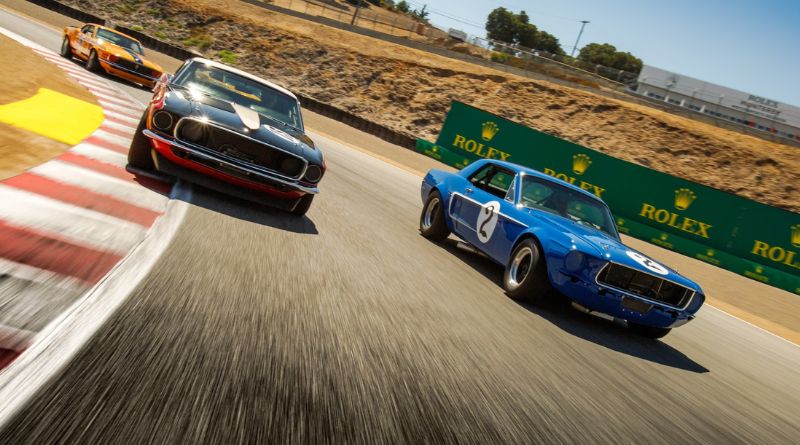
- Racing Royalty. Some of the world’s most significant race cars will compete in the Rolex Monterey Motorsports Reunion at Laguna Seca, which will feature the Corvette in honor of its 70th birthday. Many motorsports icons will also make a splash on the auction docket, reports Hagerty, including several eight-figure star Ferraris and a dozen former Le Mans racecars.
- Prewar Beauties. Speaking of auction juggernauts, pre-WWII consignments should snag some of the biggest sales of the week, much as they have in past years. Expect to see some jaw-dropping Bugattis, Duesenbergs, and Packards, along with a surprising number of Brass Era Simplexes – including a 50 HP Toy-Tonneau going up for sale after 111 years with the same family.
- Modern (Uber) Luxury. Those who can afford to drop multiple millions on a vintage roadster usually don’t blink at shelling out big bucks for new toys as well. They’ll have their pick this year, with Maserati featuring its MCXtrema race car, Bugatti unveiling a special Chiron, Lamborghini debuting its first EV prototype, and Aston Martin celebrating 110 years with the Valour, DBX707, DB12 – and a surprise “world-first new model.”

Other Enthusiast News
Here’s what else you need to know in the world of automotive enthusiasm:
- Roadkill Nights marked its seventh year by setting a one-day attendance record of 40,000-plus performance lovers filling M1 Concourse in Pontiac, Michigan. Fans unable to attend the MotorTrend event, powered by Dodge, left an impression online – to the tune of 1 million+ views.
- Radford Racing School officials announced a collaboration with Wild Horse Pass Motorsports Park in Chandler, Arizona that will see the beloved venue saved from permanent closure. Built more than four decades ago, the racetrack was slated for demolition in 2022 as part of a 3,300-acre development and rumored I-10 expansion.
No More Nissan Titan

After two decades of struggling to gain traction in the full-size truck market, Nissan finally decided to throw in the towel. The automaker announced last week that production of the Titan will end this summer, and its Mississippi plant will shift to making two all-new EVs instead.
For those tuned into the segment, the news doesn’t exactly come as a shock. The Titan has been on the rumored chopping block for at least a year, following a long history of lackluster sales. Despite offering buyers an affordable and dependable full-size option, it simply could not attract a significant following.
Though, with domestic automakers holding roughly 94% of the segment, did it ever really stand a chance? Nissan sold just over 10,000 Titans through the first half of this year. Ford sold 5x that many F-150s during January alone.
The recently-redesigned Nissan Frontier will now be the only pickup in the automaker’s lineup. With a bigger and brawnier footprint, in a segment that has a more level playing field, it should fill the void for the time being. Nissan has teased the idea of an electric truck more than once, and if it retools the Canton plant for such production, it will be eligible for some cushy tax incentives.
Need a little extra bark to accompany your pickup truck’s bite? Check out N-FAB’s Growler Running Boards.

Did you know…?
In a small win for suffering car buyers, Kelley Blue Book reports that average new-vehicle transaction prices experienced their smallest increase in a decade. The average price Americans paid for a new vehicle in July 2023 was just 0.4% higher than one year ago. According to the experts, higher inventories and incentives are to thank for the downward pressure on prices.
Strained Labor Relations in Motor City
As we reported last week, contract negotiations are underway between union workers and Detroit’s Big 3 automakers — and tensions are high. During a Facebook live event on Tuesday, UAW president Shawn Fain literally threw Stellantis’ proposal in a wastebasket, calling it “trash” and a “slap in the face” to union members.
Fain acknowledges the UAW’s list of demands are the most “audacious and ambitious” in decades, including double-digit pay raises, pension plans for all workers, and shorter work weeks (among others, which you can read about here). However, he argues the demands are justified by automakers’ record pandemic-era profits. Profits, which at Stellantis at least, led to a 72% increase in CEO Carlos Tavares’ pay since 2019.

“Rather than honoring the sacrifice made by the employees [during the Covid pandemic], management’s chosen to spit in our faces,” said Fain, who made a point to call out the “pathetic irony” of a company so concerned with absenteeism among its workers that its own CEO “can’t bother to show up to bargaining” and its North America COO [Mark Stewart] arrived late.
“Let’s Be Real”
Stellantis did not immediately respond to Fain’s fiery remarks. Late last week, however, COO Mark Stewart penned a letter to employees in which he criticized the UAW’s demands, expressed disappointment at Fain’s “theatrics and personal insults,” and stressed the importance of “cool heads and a focus on reality from everyone involved.”
“Agreeing to Mr. Fain’s demands could endanger our ability to make decisions in the future that provide job security to our employees,” he wrote. “This is a losing proposition for all of us — employees, families and customers.”
Two people briefed on the matter told Reuters that automakers have estimated the UAW’s contract demands could raise the current mid-$60-per-hour labor rate to more than $150 per hour. The publication also noted Stellantis’ July 27 proposal aimed at reducing absenteeism, which the automaker said cost it more than 16,000 vehicles of lost production, or $217 million in lost revenue.

The company document also sought to cut pension, health-care and other costs, noting the cumulative increase in employee health-care costs over the next four years is expected to be $613 million. It cited government electric vehicle rules as a critical impetus for reducing the company’s overall fixed cost structure.
In his letter, Stewart stressed that negotiations are still in an early stage, and cautioned against jumping to conclusions. However, we think it’s probably safe to assume things will get more heated before that looming Sept. 14 deadline.
Robocars & Robocalls

After a contentious vote in San Francisco, the California Public Utilities Commission (CPUC) has sided with self-driving tech companies Waymo and Cruise, granting them permission to operate their robotaxi services 24/7 in the Bay Area. The move marks a significant milestone on the path to profitability for autonomous ride-hailing services.
City officials have argued – loudly and quite often over the past few years – that the technology isn’t yet ready for such freedom, stressing the risks to the public are too great. They point to dozens of incidents that have happened just this year, where robotaxis clogged up traffic, performed unsafe or illegal maneuvers, impeded emergency vehicles, and even caused collisions.
Having already received the greenlight from the California DMV, which determines when and where these systems can operate, the CPUC’s approval is not unexpected. The decision should make the streets of San Francisco even more interesting than they currently are, as it now allows Waymo and Cruise to directly compete with familiar services Uber and Lyft.

A Win For Humans
We may be facing a steady march toward self-driving cars but at least we can say goodbye to those annoying car warranty robocalls. The FCC just slapped a $300 million fine – the largest in the agency’s history – against Sumco Panama, the company behind those dreaded “extended warranty” telemarketing scams.
According to a lawsuit filed by the state of Ohio, Sumco Panama made more than 5 billion robocalls to more than 500 million phones in the U.S. – in only three months!
The company not only spoofed phone numbers and blatantly ignored the Do Not Call registry (nice to know that holds zero teeth), but also failed to identify its callers or provide recipients with a viable opt-out.
Enforcement of the record fine now moves into the hands of the DOJ.
The Engine Block is your one-stop source for any and all auto industry news. Keep an eye on our weekly round-up of enthusiast coverage, product reviews, vehicle spotlights, auto show/expo features, and more. Check back Wednesday, as we’ll be demystifying off-road angles, and then come back around on Friday for a fun round-up of off-beat destinations for those last trips of summer.


