
Auto Industry News: Electric F-150 Power Boost, Lincoln’s Wacky Concept, AV Anxiety, & Interesting Industry Numbers
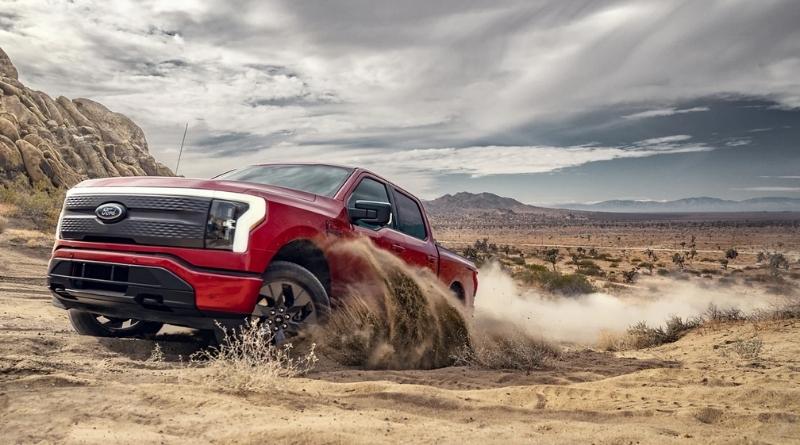
Automotive technology continues to move at lightning speed, as new electric F-150 customers recently discovered. First deliveries started last week, with EV pickups landing in driveways with more power, range, and towing capacity than even the automaker planned for. Meanwhile, Ford’s luxury brand Lincoln pulled the covers off a new concept. Intending to show off the brand’s new design language, it sported some wild comfort and convenience features. These include a see-through front trunk with pull-out drawer, an onboard glass beverage chiller, and three “rejuvenation mood” cabin settings complete with ambient lighting, soothing soundtracks, and even misting fragrances.
Noting the recent advancements rolling out across the industry, lawmakers are again calling for a legitimate regulatory framework around self-driving cars. With about half of U.S. states now allowing testing of autonomous vehicles on public roads, they argue that officials are already behind the eight-ball. Keep reading to learn more about these hot-button issues. But first, check out The Engine Block‘s shortlist of interesting industry numbers and be sure to scroll to the bottom for a traditional ICE upgrade sure to impress.
By the Numbers
With so much happening in the auto industry, sometimes it actually is easier to just crunch the numbers. Here are a few that might interest you.
14.7M – The most recent seasonally adjusted annualized rate of sales (SAAR) for 2022 after LMC, J.D. Power, Cox Automotive and TrueCar had a chance to review April’s numbers. Analysts blame low inventory caused by chip shortages for the lower total, which is down 17% from last April.
$5.51 – The current average price per gallon of diesel in the U.S. – a new all-time high and roughly $2.41 higher than this time last year. Nearly all goods in the U.S. are moved via diesel-powered transportation, indicating further inflation may be in the cards.

$3.1B – The Biden administration’s investment into the EV supply chain, namely to secure raw materials and beef up battery production and recycling capabilities.
$200M – The amount of money that GM’s cobalt supplier Glencore plans to invest in lithium-ion battery recycling firm Li-Cycle Holdings Corp. Li-Cycle is also a partner with GM. In addition to funds, Glencore will supply Li-Cycle with “black mass,” or shredded battery material, which can be processed for reuse.
44 – The number of states to receive technical assistance in the past two months from the new Joint Office of Energy and Transportation, which aims to build a national electric vehicle charging network to the tune of $7.5 billion.

Did you know…?
EV charging stations are emerging as hacker targets. In a few high-profile incidents in the UK and Russia, screens were hacked to display vulgar images and messages. Analysts say ransomware attacks are inevitable, and also fear hackers could use charging stations to access local electrical grids. They call for governments to make equally large investments in securing charging networks, as they spend in building them.
2023 – The year Volvo says each vehicle in its lineup will feature some sort of electrification, either mild hybrid, hybrid, or full EV.
12% – The jump in Stellantis revenue during Q1 2022, despite very low new vehicle inventory.
$29.1M – GM Mary Barra’s total compensation for 2021, including salary, bonuses, stock awards, and benefits.
12 – The number of cylinders confirmed to be present in Ferrari’s first SUV, the Purosangue. The decision breaks with the automaker’s recent approach of using V-8 and V-6 hybrid engines in its lineup.
Ford Announces Fresh Upgrades to F-150 Lightning
Surprise! Those lucky Ford fans about to take ownership of their new F-150 Lightnings are in for a welcome treat. The Blue Oval announced in a press release last week that the company’s first-ever battery-electric pickup will offer customers more power and capability than originally expected.

Both the standard and extended range battery packs will deliver more horsepower than the automaker planned. The standard 98 kilowatt-hour (kWh) lithium battery pack jumps from 426 hp to 452 hp, while the 131-kWh extended range option increases from 563 hp to 580 hp. Ford says both battery packs are capable of producing 775 lbs.-ft. of torque, more than any other F-150 pickup ever.
The power gains translate to better pulling power, as well. The Lightning’s maximum available payload capacity also increased, with Ford noting that “properly equipped F-150 Lightning pickups can now haul an extra 235 pounds for a total 2,235 pounds of maximum available hauling capability.”
These upgrades come on the heels of another unexpected bump in range. Back in March, the automaker released final EPA-estimated range figures – and found the extended range battery options to be even better than predicted. The vehicle offered up to 320 miles on a single charge, up from Ford’s estimated 300.
Did you know…?
Talk about surprises. According to a new report from Autoweek, Ford is skipping the 2022 SEMA Show. Traditionally holding one of the biggest booths at the show, the automaker also boasted a fun outdoor exhibition of go-fast fun in the convention center parking lot. It appears cross-town rival GM will take over both vacated spaces, while Toyota/Lexus will assume GM’s spot. Autoweek notes Hyundai also pulled out of the show, and possibly Honda too.

Lincoln Leans Into the EV Life
Over at Ford’s luxury division, Lincoln recently pulled the covers off its new Star Concept. The vehicle introduces the brand’s new design language for its future EVs, according to the company. By 2025, Lincoln plans to have three fully-electric vehicles in its lineup, with a fourth joining in late 2026.
Take a closer look at the Lincoln Star Concept and you’ll find more than just a new architecture. Featuring a see-through front trunk with electro-chromatic glass and interior “mood settings” that pump soothing soundtracks and fragrances throughout the cabin, the Star takes luxury transport to a new level.
Transparent A- and D-pillars invite unrestricted views, while a full skylight with digital shade brings in plenty of natural light. Inside, digital screens span the entire width of the dashboard, and below the driver is only one pedal. (Many PHEVs and EVs offer one-pedal driving functionality, as the vehicle’s regenerative braking system allows for stop-and-go motion from just the accelerator.)

According to Lincoln, the concept’s new Lincoln Intelligence System “takes the definition of ‘digital assistant’ to a new dimension, enabling experiences such as connected vehicle-to-vehicle and infrastructure capabilities, as well as next-generation leading driver-assist features such as Help Me See and Park for Me.”
It’s worth remembering this is just a concept, and not all features will make it to the final product. Additionally, the company released no information on possible battery capacity, horsepower, or range.
It’s Time to Start Regulating Self-Driving Cars
Did you ever expect to hear that battle cry? Offering proof that life is often stranger than fiction, a group of senators recently applied more pressure to the U.S. Department of Transportation for an update on autonomous vehicle regulations.
Led by Sen. Gary Peters (D-Mich.), who introduced a bipartisan bill regarding self-driving vehicles way back in 2017, the group penned a letter to Transportation Secretary Pete Buttigieg. In it, they acknowledged the “great promise” AVs hold in reducing driver error and expanding mobility options for countless Americans, but stressed that the U.S. “lags behind in shaping a regulatory framework” that could ensure this innovation achieves what it is actually possible of. They note that global competitors – namely, China – already invest heavily in these technologies and the time to engage “the significant technical and economic challenges” is now.
Case in Point…
Just last week GMC announced that the 2023 Yukon will be the second nameplate in the brand’s lineup to receive the Denali Ultimate trim. This uber luxury treatment includes plenty of cushy accents and tech upgrades, but most notably offers Super Cruise driver-assist technology with automatic lane-change capability.
Advertised as “the industry’s first true hands-free driver assistance technology,” Super Cruise allows drivers to travel hands-free on more than 200,000 miles of compatible roads in the U.S. and Canada. The Denali Ultimate trim in particular adds automatic lane changing at highway speeds, as well as a hands-free towing function.

In another recent news announcement, Tesla CEO Elon Musk said his company plans to mass produce a dedicated robotaxi by 2024. The vehicle would have no steering wheel or pedals, and based on Tesla’s projections, would offer rides costing less than a subsidized bus or subway ticket.
While the company sits among leaders in self-driving technology, it has also suffered several high-profile setbacks regarding its driver-assist program, Autopilot. These include accidents – some fatal – leading to intense scrutiny and formal investigations from the National Highway Traffic Safety Administration.
High Stakes
In the letter to USDOT, senators pressed for insight on how the department plans to regulate technologies like those mentioned above. Specifically, they poked officials on how they plan to modernize Federal Motor Vehicle Safety Standards and work with other departments to determine issues like licensing and liability. They also questioned whether or not federal regulators have considered the full ramifications of how new transportation policy will affect overall employment.
Sen. John Thune (R-S.D.), a co-sponsor of Peters’ bill, echoed the letter’s urgency in a recent Senate Commerce Committee hearing. He stressed the importance of remaining “globally competitive” in the AV space, especially as sourcing semiconductors and other raw materials becomes more crucial – and difficult. In the House, Rep. Bob Latta (R-Ohio), reintroduced his own autonomous vehicle bill. The Safely Ensuring Lives Future Deployment and Research in Vehicle Evolution, or SELF DRIVE, Act aims to craft a regulatory framework around AVs by setting testing and deployment standards.

Safety advocates, however, argue that many of these bills are too lenient on AV manufacturers. They caution that urgency should not lead to rushing what will undoubtedly be landmark legislation. Joan Claybrook, former NHTSA Administrator, noted that a recent report ranked the U.S. at #4 in the world regarding AV readiness. As such, she said Americans should be less concerned with technological competitiveness and more concerned “about the U.S. significantly falling behind on establishing minimum standards.”
All Work & No Play Makes Law Enforcement Dull
In more fun recent news, the experts at AWE teamed up with Mustang specialists Steeda to outfit a vehicle from the local Valdosta Police Department in Georgia, USA. The standard 2021 Mustang GT with a 10R80 10-speed transmission received a major overhaul, including suspension, chassis, wheel, tire, powertrain, and of course, exhaust upgrades.
AWE’s contribution to the police cruiser included a Touring Edition Catback Exhaust with quad 4” tips in diamond black, which features AWE’s patented drone-canceling solution, 180 Technology® to ensure a drone-free experience through the entire rev range.

Steeda, meanwhile, significantly bumped up the Mustang’s handling capabilities by adding a new adjustable front and rear sway bar kit, new subframe bushings, subframe alignment kit, subframe support braces, low-profile jacking rails, and a two-point G-Trac brace. Powertrain upgrades include a new cold air intake and custom tune.
The car will in fact be an active part of the department’s fleet, likely making its driver Valdosta Police Sergeant Griffin the envy of the force.
The Engine Block is your one-stop source for any and all auto industry news. Keep an eye on our weekly round-up of enthusiast coverage, product reviews, vehicle spotlights, auto show/expo features, and more. Be sure to check back Friday for a rundown of the hottest performance vehicles currently available on the market.


