
Auto Industry News: ICE Bans, Twitter Takeovers, Rogue Taxis, and a Fresh New Wave of EVs
Another busy week for the auto industry, again dominated by a string of new vehicle debuts. This time, the unveilings belong to those automakers who played hooky from the New York Auto Show. As expected, the lineup is largely electric and quite expensive – with more than a few head-scratching tech features. Speaking of electric vehicles, California makes yet another audacious push to ban anything without a battery, while Tesla CEO Elon Musk attempts a hostile takeover of Twitter?! These are strange times to be sure, and we have even more weird headlines to report in this week’s auto news.
EVs for the VIPs
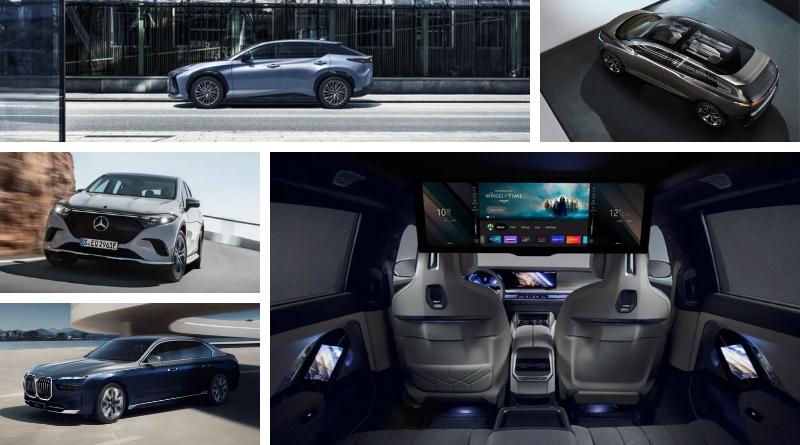
Luxury brands were noticeably absent from the New York Auto Show this year, and it appears they skipped the party to host their own soirees. Several big names unveiled new rides during branded debuts last week. While most were high-dollar, electric-powered options, we rounded up a mixed bag of sorts below, including an out-there concept and yet another off-road capable truck trim.
Audi Urbansphere Concept
Let’s get the wild and weird out of the way first.
The newly-debuted Urbansphere joins Skysphere and Grandsphere to complete Audi’s collector set of futuristic concept vehicles. Developed with “traffic-dense Chinese megacities” in mind, the automaker says the Urbansphere suits any metropolitan center, thanks to its striking and spacious interior.
According to Audi, the vehicle’s design revolves around its passengers by prioritizing occupants’ need to experience “ample space as a distinctive comfort factor,” – which we’re pretty sure is just a fancy way of saying it’s roomy. Indeed, the automaker describes the Urbansphere as “a lounge on wheels and a mobile office, serving as a third living space during the time spent in traffic.”

There’s something a bit ironic in designing an entire vehicle with the intention of making the congestion of vehicles more palatable – especially when that new vehicle is as long as a Hummer, but only seats four people. Regardless, the Urbansphere offers more than just generous proportions and cushy swivel seating.
High-tech features abound, including OLED cinema screens, individual sound zones, personalized AI, a center console water dispenser (??), and of course, automated driving technology. Interestingly, the steering wheel, pedals, and instrument panel are only visible when manual driving functions are activated.
Granted, we don’t expect to ever see this concept enter production. However, it’s safe to assume many of the novelty and infotainment features will begin trickling into the product pipeline – especially on higher trim rides.
BMW 7 Series
The flagship BMW 7 Series showed off its new generational changes, which aim to better compete with EV segment-leader Tesla. Available in internal combustion and all-electric versions, the seventh-generation series introduces a new, gentler design language with larger proportions. Inside, is a roomy cabin appointed in the kind of materials you expect from a $100,000 BMW – as well as an eyebrow-raising amount of tech.
Where to start? How about screens? There are… a lot of them.
Digital displays cover much of the dash, including a 12.3-inch instrument panel behind the driving wheel and a 14.9-inch central screen for infotainment and cabin controls. And speaking of controls, we can’t actually find any? There appear to be absolutely no physical buttons on this puppy, save for the iDrive rotary controller (which now gets a funky transparent glass knob.) For back-seat riders, BMW offers an optional theater screen that measures a massive 31.0 inches and drops down from the roof. To control your premium cinematic experience, just use the 5.5-inch digital control built into the rear door trim.

Other available tech upgrades include power-opening doors, a cloud-based navigation system, a 36-speaker surround system, adaptable lighting technology (once federal regulators finish approving it), and a hands-free driving function that now works at up to 80 mph.
BMW will have its work cut out if it wants to truly outpace Tesla. The all-EV brand just reported this week that its first-quarter net earnings were more than seven times greater than a year ago! Tesla’s total quarterly revenue came in at $18.76 billion – nearly $1 billion over estimates.
Mercedes EQS SUV
Mercedes revealed its EQS SUV, the second premium battery-electric vehicle in the automaker’s lineup. The new model is one of nine EVs that Mercedes plans to make by the end of this year, and the first to be assembled in the U.S.
Available in two- and three-row configurations, the 2023 EQS SUV is essentially a luxury family vehicle with a few soft-roading capabilities. Complete performance specs are still mum, but Mercedes says a few packages will be available, including a 355-hp “base” model and 536-hp “580 4Matic” with a second motor. Range is expected to land over 350 miles per charge.

Other notable features include standard air suspension, rear-wheel steering for additional maneuverability, high-speed charging capability, the automaker’s popular MBUX voice assistant, and — you guessed it — more screens! No word on pricing yet, but the EQS SUV’s sedan sibling has a price tag over $100,000.
Lexus RZ 450e
Lexus pulled the covers off its first production battery-vehicle this week, too. The all-new and difficult to pronounce RZ 450e marks the brand’s entrée to electrification. Alongside Toyota, Lexus aims to have at least 30 BEVs in showrooms by 2030.
Sporting a familiar design language, the RZ 450e prioritizes very sharp angles and aerodynamic lines. Inside, the cabin drips in simple, yet upscale amenities, including a digital gauge cluster, 14.0-inch infotainment touchscreen, panoramic sunroof, and suede/leather seating. The compact five-seater should be good for about 308 hp and 321 lb.-ft. of torque. Driving range comes in a bit of a disappointing number – only 225 miles per charge.

Interestingly, Lexus aims to deliver a version of the RZ 450e to the U.S. with a new “steer-by-wire” system. With no physical linkage between the steering wheel and the tires, the system relies on electrically controlled motors to change the direction of the wheels. Lexus says steer-by-wire offers drivers “a heightened connection” to the vehicle by reducing how much the steering wheel needs to move during turns (similar to an F1 car). The system will be an optional upgrade once it becomes available, and will use a yoke-style steering wheel.
The new RZ goes on sale later this year, and will likely start in the $50k range.
If four is your lucky number, then Toyota might be delivering a sign to play the lotto. Last week, the automaker announced it will invest nearly $400 million into four plants across the U.S. to build a new line of 4-cylinder engines destined for both ICE and hybrid vehicles. The plants are in four states: Alabama, Kentucky, Missouri, and Tennessee.
GMC Canyon AT4X
All these sleek, soft-handed EVs have you itching for something a little more rugged? While the full reveal won’t arrive until summer, this week GMC teased its new Canyon AT4X. The addition brings a little more brawn to the mid-size segment, likely to better compete with the upcoming Ford Ranger Raptor. The Canyon will be the second GMC nameplate to add the AT4X trim, joining its Sierra sibling in bumping up off-road capability.
No real details are available yet, but the teaser image shows rock protectors and 17-inch beadlock-capable wheels.

California Makes Ambitious Zero Emission Goal
Last month, the Biden Administration reinstated California’s authority to determine its own auto emissions standards. It appears the state is wasting absolutely no time in flexing that new muscle.
In an April 12 proposal, the California Air Resources Board announced new state regulations that would require 35% of new-car sales to be zero-emissions vehicles (ZEVs) by 2026. The current requirement is 24%. The ambitious goal – which includes battery EVs, fuel cell EVs, and plug-in hybrid EVs – carves out a pathway for the entire state to reach 70% ZEV new car sales in 2030, and ultimately, 100% by 2035.
Can it work?
Well… just maybe.
Three decades ago, CARB tried enacting a much tamer ZEV requirement – aiming for 10% by 2003. With no mainstream EVs available however, the proposal had no real legs to stand on. When California car dealers launched a lawsuit, it officially fell. Today’s market is a different ballgame, though. And with 60 battery EV and plug-in EV models currently available for sale in the Golden State (plus a very pro-electric White House administration), dealers seem less likely to clap back this time around.
Indeed, 12.4% (or more than 250,000) of the state’s new vehicle sales last year were battery-electric models. As for potential future buyers, a 2020 Consumer Reports survey reported that in California, 74% had at least “some interest” in EVs, with 40% considering purchasing one as their next vehicle.

It will likely come down to good old supply and demand. Manufacturers plan to drop nearly 100 new EV models over the next few years, in an effort to keep consumers interested. Whether or not production will actually be able to keep pace is another story, thanks to parts and labor shortages. Additionally, as clean energy experts have pointed out many times, emissions regulations are only one piece of the puzzle. Investments in infrastructure are key if the power grid is to support all these vehicles coming to market.
Tesla Takes On Twitter
In case you somehow missed it… Tesla CEO and richest man in the world, Elon Musk, recently offered to buy the social media platform Twitter for more than $40 billion. If successful, he said he plans to take the company private and unlock its “extraordinary potential” as a “platform for free speech around the globe.”
Wait, What?
The strange move came after Musk announced he had quietly bought up 9.2% of the social media site, making him the largest shareholder. After turning down a seat on the company’s board (which would have limited his ownership stake to 14.9%), he issued a letter to the chairman and offered the eye-watering sum for purchase.
Twitter responded by filing for a shareholder’s rights agreement – or “poison pill” defense with the SEC. The move allows the company to issue new shares to existing shareholders – except for Musk – at a price worth double what they cost. The end goal is to dilute the billionaire entrepreneur’s stake in the company and prevent a hostile takeover.
Despite the knee-jerk reaction to fight back, however, the board is now considering the offer. According to the New York Times, the 11 members met on Sunday morning to discuss the updated bid after Musk dispelled any doubts that he could front the proposed money. And based on news updates as recent as one hour before this publication, rumors say Twitter will accept Musk’s offer.
I hope that even my worst critics remain on Twitter, because that is what free speech means
— Elon Musk (@elonmusk) April 25, 2022
It’s a Mad, Mad, Mad, Mad World
What exactly a Musk-led Twitterverse would look like is anyone’s guess. Just this week, the Tesla mogul tweeted a crude joke at fellow billionaire Bill Gates. Apparently, the animosity stems from Gates owning a half billion short position on Tesla stock, (meaning he was betting the shares would fall).
Musk has a habit of sounding off on the social media platform. In the past, he has gone so far to call NHTSA the “fun police,” President Biden “a damp sock puppet,” and the Securities and Exchange Commission “b*****ds.”
So, if nothing else, it will certainly still be an interesting place in which to air one’s personal grievances…
We’ll be watching this story and updating accordingly.
SF Cops Pull Over Driverless Car
In more strange news… Earlier this month, San Francisco police officers pulled over a vehicle for driving without headlights at night – only to find no one inside. The autonomous ride was part of GM’s Cruise robotaxi unit. In a now-viral video, a very puzzled cop can be heard saying, “Ain’t nobody in it. This is crazy.”

The car initially yielded to police officers but then continued to slowly drive off, much to the amusement of bystanders. It then stopped at the next block where officers were able to contact the vehicle’s remote operator and alert them the headlights were off.
All’s well that ends well, apparently. The self-driving Cruise car got off with just a warning.
The Engine Block is your one-stop source for any and all auto industry news. Keep an eye on our weekly round-up of enthusiast coverage, product reviews, vehicle spotlights, auto show/expo features, and more. Be sure to check back Wednesday for a buying guide on Jeep soft tops — just in time for the warm weather!


