
Auto Industry News: LA Auto Show Debuts, UAW Election Drama, & Who “Won” the Muscle Car Wars?
As November hits its stride, the auto industry is busy getting ready for the new year. Coming right on the heels of the aftermarket’s annual SEMA Show, the LA Auto Show gives an inside look at what automakers have been up to – and where they plan to go next. Debuts may be fewer than in years’ past, but the short list made a big impact on attendees. The Engine Block has a quick-hit summary of everything you need to know.
If new vehicles aren’t your cup of wishful thinking, you may be interested to know that Hagerty might hold the answer to the age-old question: Who won the horsepower wars? Their formula uses collector car value data to determine which badge enthusiasts are most eager to get their hands on. The answer might just surprise you.
Plus, the UAW faces yet more allegations of corruption. The union’s first-ever direct election process heads to court this week before officials can even start counting votes.

LA Auto Show Debuts
Last week, the LA Auto Show returned to town in celebration of its 115th anniversary. Festivities run Nov. 18-27 for everyday folks, but media personnel got a chance to peek behind the curtain a day early.
Despite the expected comments about auto shows ringing the death knell, many journalists agreed this year’s LA event seemed dressed to impress. There were several debuts on the menu, a few of which are continuing to generate online chatter. And while Mercedes, BMW, and Audi sat out this year, their fellow German, Porsche, pulled out all the stops to fill the void.
Other heavy-hitters at this year’s event include Subaru, Toyota, and Hyundai/Genesis. Keep reading for a quick rundown of what vehicles they brought to the convention floor and why they had so many people oohing and aahing.
Toyota Prius
The Prius is not exactly a vehicle that gets us feeling warm and fuzzy, but there’s no denying the little liftback made an indelible mark on the auto industry by proving that mass-production of hybrids was possible – and profitable.
Long an eyesore, the Prius gets an all-new look for its fifth-gen reveal. The design is definitely an improvement.

Lower and wider, with a dramatically raked front end, the 2023 Prius looks much sleeker and sportier. According to Toyota, it drives in much the same way.
A new 2.0-liter hybrid powertrain delivers 194 horsepower in front-wheel drive variants and 196 hp in AWD models, offering a manufacturer-estimated 57 combined MPG. In the plug-in hybrid version – dubbed “Prius Prime” – the powertrain bumps power further to an impressive 220 hp. Range is extended 50% too, says Toyota, thanks to a larger lithium-ion battery.
A modernized interior adds more tech while tamping down the clutter, but that swoopy roofline means occupants sit lower than ever to retain headspace.
Subaru Impreza
Another redesign that raised eyebrows was the sixth-gen Impreza.
Subaru debuted the new model with a dramatic, on-stage rainstorm (using recycled water, of course) and dropped some dramatic news. The manual option is gone, as is the sedan variant.
However, a new RS model joins the lineup. It ditches the base 152-hp 2.0-liter engine and instead borrows the 2.5-liter boxer four-cylinder from the Forester, to deliver 182 hp and 178 lb-ft of torque.

Dropping the manual is a bit of a sad moment, to be sure. Especially since the automaker has long been a champion of the option and still offers it in the WRX and Crosstrek. All versions of the new hatchback-only Impreza will feature a CVT; the Sport and RS trims add paddle shifters and a simulated eight-speed “manual shifting mode.”
Porsche 911 Dakar
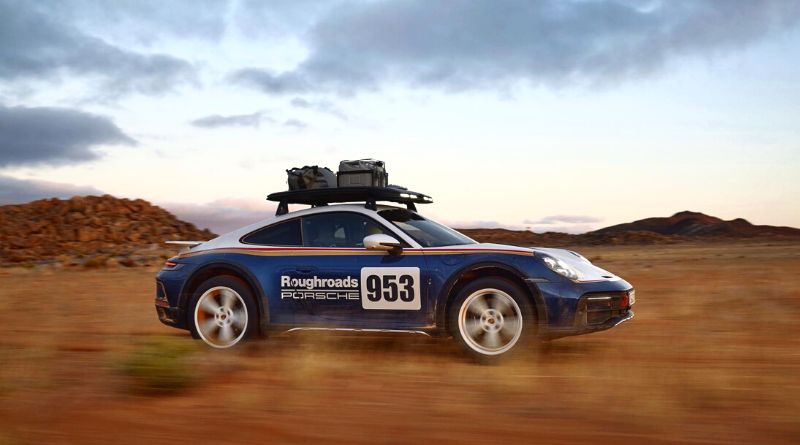
While the entire Porsche display at the LA Auto Show drew excited camera clicks, it was the lifted and rally-ready 911 Dakar that really had folks clamoring.
Essentially a modified Carrera 4 GTS coupe, the Porsche 911 Dakar features:
- a 473-hp 3.0-liter twin-turbo six-cylinder boxer engine,
- 2.0-inch suspension lift plus a specially developed lift system to deliver even more ground clearance if needed,
- an eight-speed PDK automatic transmission,
- Porsche Traction Management all-wheel drive,
- a 0-60 time of 3.2 seconds,
- rugged all-terrain tires
- and an optional cargo basket and/or rooftop tent to really lean into those off-road adventures.

The special edition will be limited to just 2,500 models. Pricing starts at $223,450.
Hyundai Ioniq 6
On its quest to shed its historic budget-brand reputation, Hyundai continues to roll out vehicles that push the boundaries on design, engineering, and technology.
The Ioniq 6 rolled into LA for its U.S. debut, showing off very dramatic aerodynamic styling – all the better to hit that 340-mile driving range, says Hyundai.
The all-new EV comes in single-motor and dual-motor configurations, delivering 225 hp and 320 hp respectively, and is one of the only vehicles on the market to offer a fast 800-volt charging system. Hyundai says the Ioniq was designed “from the inside out” to prioritize the “user experience,” language that reflects its technology-oriented interior. Think: clean lines, flat screens and lots of LEDs.

Other notable debuts at the 2022 LA Auto Show include the refreshed Kia Seltos, which features more power, more tech and a sharper design, as well as the redesigned Nissan Versa and Altima sedans and new Honda Accord.
Chevy pulled the covers off its next-gen Colorado, revealing a much more chiseled design that calls to mind a marathon runner’s physique rather than the traditional roided-out bulking we’ve been seeing. (Suffice to say, we like it.)
And not to forget the little Fiat 500e, which is back for another crack at the U.S. market. Now that EVs are entering the mainstream, there’s a good chance this iconic city car will gain some traction.

Concepts
Most days it feels like we’re living in the future, but automakers are still designing concept vehicles with forward-thinking designs in mind. Though, occasionally, they take a step back to do so.
Genesis X Convertible
Probably the most buzz-worthy vehicle at the show, aside from the Porsche 911 Dakar, Genesis’ electric concept shows off truly fantastic styling that feels both really special and damn-near production-ready.
Genesis head of global design, SangYup Lee, used phrases like “timeless beauty” and “athletic elegance” to describe the X Convertible concept, and we have to agree. The clean lines are exceptionally pleasing to look at, and the minimalistic interior seems calming and comfortable.

Aesthetically, we like how the digital instrument cluster and dashboard controls wrap around the driver’s seat. In real life, though, this feature seems like it could be distracting – especially with no hard knobs to be found.
Toyota bZ Compact SUV
Making its world premier at the show, Toyota’s new concept imagines what extending the bZ “Beyond Zero” brand could look like. Most media outlets are already dubbing this the “bZ3X” and banking on it being the small crossover that inevitably will sit below the automaker’s recent electric offering, the bZ4X.
Toyota didn’t release any powertrain or range details, but did note this concept uses sustainable materials to outfit the minimalistic interior and offers an onboard virtual assistant name “Yui.”

Hyundai N Vision 74
Also drawing eyes was Hyundai’s concept, the N Vision 74.
The “rolling lab” for hydrogen fuel cell tech, as the automaker calls it, hearkens back to the Hyundai Pony concept from 1974 which went on to inspire the iconic DeLorean. By dipping into the old prototype catalog for design inspo, Hyundai really is going back to the future here.
Just imagine what Dr. Emmett Brown could do with a vehicle that uses a 85-kW fuel-cell stack to charge a high-performance 62.4-kWh battery pack which in turn powers two 335-hp motors.

In Case You Missed It
Famed comedian and longtime car guy Jay Leno was injured in a fire at his Burbank, California garage on Sunday, Nov. 13. While expected to make a full recovery, the former Tonight Show host suffered serious third-degree burns to his face, hands and chest during a gasoline fire that occurred when he was repairing a clogged fuel line on his 1907 White Steam Car.
Thankfully, a friend was nearby and smothered the flames. So far, Leno has undergone two surgeries to treat his burns, but seems to be keeping spirits bright. Reports say he was cracking jokes to doctors and nurses, and handing out cookies to kids at the hospital.
Congratulations, Mopar Fans
It looks like Hagerty has found a (possible) answer to the age-old question of who actually won the famed muscle car wars during the peak era of 1968-1972.
The smart folks over at the collector car insurance company ran a special analysis and crunched all kinds of market data on valuation to deliver an answer that aims to look beyond sales numbers or horsepower figures, and take into account what these cars actually mean to enthusiasts. (Which, we’ll be honest, is a pretty great metric to use.)
The winner?
Dodge. It’s Dodge, guys.
We’ll give the Mopar fans a moment to finish with their hootin’ and hollerin’ and general I-told-you-so-in’.

You can learn more about the analysis breakdown HERE, but the crux of the matter is that Dodge has the most sought-after muscle cars on the collector market.
Interestingly, the brand’s high ranking revolves around factors a little less exciting than HEMI power. For one, Dodge was early to VIN game – a keen foresight which really helped these vehicles fetch more money years later. Hagerty also notes that things like colors and options and smaller production numbers contributed too, as did the brand’s late arrival to the pony car game.
Let us know what you think in the comments below.
UAW Historic Election Draws Historic Criticism
The first-ever direct election for the United Auto Workers union is off to a rocky start.
Allegations are emerging that officials misused campaign funds and misinformed rank and file of their voting eligibility. Some members report never even receiving their ballots, which are due to election officials by Nov. 28 so they can start counting votes for a new union president and other top executives.
According to The Detroit Bureau, only about 10% of mailed ballots had been returned as of Nov. 14. One observer told the publication that the statistic suggests a lot of members “have just given up on the UAW.”

Same Ol’ Song & Dance?
Accusations of corruption are nothing new for the union, which is currently under the watchful eye of a federally-appointed monitor after 16 top officials wound up convicted for fraud and embezzlement.
A multiyear investigation found that money earmarked for worker paychecks and training ended up funding officials’ lavish vacations, personal luxuries, liquid lunches with auto execs, and more than a few wild casino nights.
Despite the bombshell revelations and subsequent public declarations of reform, the UAW is still struggling with transparency.
In July, the union’s court-appointed monitor, Neil Barofsky, submitted a 35-page report detailing how union leaders stonewalled his requests for interviews and documents – and even went so far as to conceal evidence in a misconduct investigation. They didn’t begin cooperating, he said, until the U.S. Attorney’s Office in Detroit got involved.
Attempt at Turning Over a New Leaf
This upcoming election was the result of a 2021 court-mandated referendum, written into the UAW’s settlement agreement with the federal government. More than 60% of active and retired union members voted to toss the longstanding delegate selection system and switch to member-voted direct elections instead.
Unfortunately, what was billed as an “historic change” has been marred by multiple allegations of funny business.
Some are minor, like when the candidates running with current UAW President Ray Curry sent email campaign letters to a list of names obtained via union resource. (That’s a no-no, according to election rules.) Others are more head-scratching, like the guy who spent $95,000 of union funds on 1,500 self-branded backpacks.

Still, others are much more serious.
Members complaining that all avenues to request missing ballots are nonfunctional. Temporary part-time workers and retirees not being informed that they have a say in this election. Members admitting that they don’t even know who the candidates are or what they represent, due to poor communication.
As a result of the ongoing issues, UAW presidential candidate Will Lehman filed a lawsuit on Thursday, Nov. 17. He is suing both the union and its court monitor in an effort to extend the voting deadline by 30 days. A judge hears the case this coming Tuesday, Nov. 22.
Lehman likened the disorganized election to a “country in collapse.”
“They’ll point to worker apathy [for the low voting count],” he told The Detroit News, “but for this many people who didn’t know, that’s the leadership’s job. They have not done their job for years. This is part of it.”
The Engine Block is your one-stop source for any and all auto industry news. Keep an eye on our weekly round-up of enthusiast coverage, product reviews, vehicle spotlights, auto show/expo features, and more. Be sure to check back Wednesday for a step-by-step guide on how to get your RV unstuck, should you land in trouble during that last trip of the season. And come back Friday for a round-up of all the must-see auto events left on the 2022 calendar.


