
Auto Industry News: Mercedes Scores Big on Self-Driving, GM Invests Billions in ICE, and Toyota Plans Land Cruiser’s Return
Another strange week for the auto industry as carmakers juggle past, present and future trends.
Mercedes checks off a major milestone in autonomous driving, introducing the first legal Level 3 driving system to the retail market. The “hands-free, eyes-off” technology opens the door to further innovation, greater profitability, and a serious mess of legal complications.
Meanwhile, new investments over at GM show that the automaker’s EV agenda will be buoyed by gas-burning trucks and SUVs for at least another decade, and Toyota gets busy building hype for Land Cruiser’s comeback.
All that and more in this week’s Auto Industry News.
Mercedes Introduces First Level 3 Self-Driving System, California Approves

Another self-driving milestone was unlocked this past week – and it’s a big one.
Mercedes just received clearance from California regulators to sell or lease vehicles equipped with its Level 3 driving system, Drive Pilot. The “hands-free, eyes-off” technology should hit public roads later this year, despite the tangled web of legal complications it creates.
What is Drive Pilot?
Drive Pilot is a Level 3 “conditionally automated” driving system. That means, the software can handle the dynamic tasks of driving (like steering, accelerating and braking) without requiring the active control and attention of the driver.
However, it only operates in and under certain conditions; in this case, on designated highways and at speeds below 40 mph.

Available on the new S-class and EQS electric sedan, Drive Pilot opens the door to some impressive technological possibilities – and more than a few legal quandaries.
Why is it a big deal?
With Waymo and Cruise robotaxis zipping around San Francisco, it’s easy to wonder why Drive Pilot is such a big deal. The answer is pretty simple: money.
Drive Pilot represents the first Level 3 automated driving system to be approved for retail sale. No longer relegated to a painted test track with plastic dummies and foam barriers, this technology is now an onboard system in vehicles available to the everyday public. (Or at least to those who can pony up for a $100K+ equipped Mercedes.)
This marks a big win on autonomous tech’s path to profitability, not just for Mercedes but for the whole industry. So much of the science and engineering behind these systems is still theoretical, meaning R&D is beyond expensive. Automakers and tech companies are eager to start reaping revenue.

So, what’s the problem?
Drive Pilot allows drivers to shift their attention away from the road, and even remove their hands from the steering wheel, begging the question: If the driver is technically not in control of the vehicle when the automated features take over, then who is responsible in case of an accident?
Issues of Responsibility
In an interview with Road & Track last year, Mercedes representatives said the automaker would be liable should Drive Pilot fail. But as anyone who’s ever tried to file a warranty claim knows, the particulars around why and how something exactly fails can be vague. And where there is vagueness, there is wiggle room.
For example, with Drive Pilot engaged, a motorist could – presumably – send emails and text messages, play a game, read a magazine or even watch a TV show. However, unless Mercedes explicitly specifies those activities as permissible, drivers are sitting in some pretty murky legal waters.

The automaker will need to be crystal clear on what users can and cannot do under Drive Pilot if it plans to draw a hard line in the sand on driver responsibility. So far, though, it has deferred to “national road traffic regulations” when pressed for specifics, reports Automotive News.
Lack of Standardization
Frustrating for consumers, the agencies who determine those regulations are not always on the same page.
NHTSA, for example, says even in Level 3 systems, human drivers “must be ready at all times to respond to any cues to intervene,” implying constant attention is necessary. That hardly seems to dovetail with Mercedes’ claim that Drive Pilot allows a driver to “take their mind off traffic.”
Additionally, there are little to no standards regarding those “cues to intervene” – i.e., the bells and whistles that call a driver back to attention. How loud do they need to be? What kind of visual cues should they have? And, most importantly, how much time does a driver have to respond after receiving such an alert?
This last issue is critical, as research scientists at MIT found it took drivers an average 6.1 seconds to regain situational awareness following a system-initiated request – and that was in Level 2 systems. In a system like Mercedes’, which proposes not just hands-free, but eyes-off driving, those response times are expected to be longer.
Despite the wrinkles, Level 3 deployment is moving ahead. We suspect the ironing will be left to the lawyers.

In Case You Missed It…
According to NHTSA data analyzed by The Washington Post last week, Tesla’s Autopilot software has been involved in significantly more deaths and injuries than previously reported: namely, a total of 736 crashes and 17 fatalities since 2019. The information suggests that drivers are mistakenly treating the driver assistance software as if it were fully autonomous – with disastrous consequences.
GM Keeps ICE On The Menu
General Motors may have its eyes – and press releases – focused on the shift to EVs, but a big chunk of its budget is still earmarked for gas-powered technology. Tallying up the automaker’s newly-planned investments shows more than $2 billion will go toward building full-size combustion pickups and SUVs, taking production well into the 2030s.
According to Reuters, this plan will allow the automaker to bring in billions of dollars in additional profit (roughly $7.5 billion a year), before it has to make good on that only-EVs-by-2035 promise.

It’s hard not to notice the other twin benefits of the move: appeasing loyal non-EV customers and allaying concerns of plant workers. The latter issue is looming large as union contract negotiations approach and the UAW adopts a significantly more aggressive stance.
The current collective bargaining agreement between the UAW and Detroit’s Big Three expires on September 14. The union’s new president, Shawn Fain, has already expressed a willingness to strike if demands are not met – a scenario that would cost automakers dearly.
By proactively announcing investments in its Michigan, Texas, Indiana and Ontario plants, GM can better control the fate of the manufacturing facilities when it gets to the bargaining table.
Toyota Land Cruiser Making Comeback
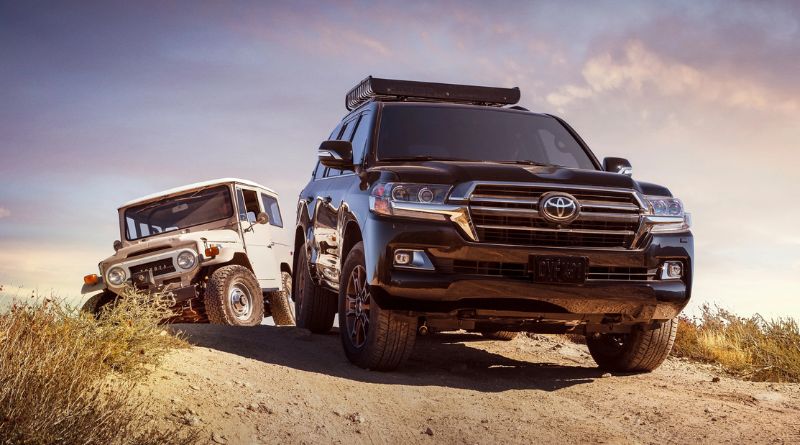
Speaking of highly-profitable vehicles, the Toyota Land Cruiser is set to return to the U.S. market after leaving in 2021. This time, though, it may be smaller than you remember.
On June 13, Toyota dropped a five-second video on its social channels highlighting various Land Cruiser emblems throughout the years. To ensure there were no misunderstandings, the automaker clearly asked “Did you really think we’d be gone for long?” adding, that “the legend returns.”

It appears, however, that the legend may be tweaked this time around.
While Toyota did not reveal any details, sources at Automotive News said the nameplate may return as a redesigned version of the smaller Land Cruiser Prado. Sold in overseas markets, the Prado is essentially a Toyota version of the Lexus GX midsize SUV.
And since the all-new 2024 Lexus GX debuted a mere 5 days before the Land Cruiser announcement, it’s a good bet that AN’s source is on the money.

If so, then it’s fair to assume the new Land Cruiser will be body-on-frame with a square-body profile, seating for up to 7, and likely some version of the turbocharged four-cylinder found in the new Tacoma.
The Engine Block is your one-stop source for any and all auto industry news. Keep an eye on our weekly round-up of enthusiast coverage, product reviews, vehicle spotlights, auto show/expo features, and more. Be sure to check back Wednesday for tips on properly storing and disposing automotive fluids. And come back around on Friday for list of practical ways to protect your wheels from enterprising thieves.


