
Auto Industry News: Nissan Profits Plunge, Diesel Truck Sales Up, and Automakers Strike Deal with California, Plus F1, NASCAR, & NHRA Results
Nissan profits plunge an astounding 99 percent in in fiscal first quarter, resulting in major job loss. Meanwhile, data shows full-size diesel truck sales are up 23 percent, hinting that EVs might not be the only attractive alternate to gasoline. And four automakers strike a deal with California, circumventing the Trump administration’s emissions ruling.
We have all the details here, along with a recap of an exciting weekend of F1, NASCAR, and NHRA.
Nissan Profits Plunge, 12,500 Global Job Cuts
This year has been a rough one for Nissan. After a failed Renault-FCA deal and the PR nightmare that is former chairman Carlos Ghosn, the automaker could use some good news right about now.
Unfortunately, when it rains it pours.
On Thursday, Nissan President and CEO Hiroto Saikawa announced 12,500 job cuts—6,400 of which are already underway. The additional 6,100 are planned through the spring of 2023. Nissan will also reduce global production capacity by 10 percent, down to 6.6 million vehicles a year.
The news comes as Japan’s second largest automaker reported an astounding 99 percent plunge in operating profitability.

According to Automotive News, “Operating profit was nearly wiped out, tumbling to 1.6 billion yen ($14.8 million) in fiscal first quarter ended June 30. Operating profit margin shriveled to a 0.1 percent, compared with 4.0 percent a year earlier. Net income dropped 95 percent to 6.4 billion ($59.3 million) in the April-June period. Nissan’s revenue slid 13 percent to 2.37 trillion yen ($21.97 billion) in the three months, as global retail volume declined 6.0 percent to 1.23 million vehicles.”
With an aging car lineup and a sales strategy that placed quantity over quality, Nissan is feeling the current car market decline harder than the competition.
“Years of heavy discounting to grow sales in the world’s second-biggest auto market [the U.S.] have left Nissan with falling demand … a cheapened brand image, low resale values, and a nearly battered bottom line,” summarizes Reuters.

Saikawa’s plan to correct Nissan’s profit plunge is to increase pure retail sales, by refreshing car models and pivoting away from a singular focus on fleet sales and incentives.
Only time will tell if Nissan’s financial woes will be a bump in the road or the start of a major decline.
Full-Size Diesel Truck Sales Up 23 Percent
While overall new vehicle sales may be in the toilet, one segment is experiencing a recent boon: full-size diesel trucks. New data from the Diesel Technology Forum indicates that diesel truck sales are up 23 percent over the first quarter of 2019. For some perspective, that’s more than double the figure for all cars and trucks in the same quarter (11 percent).
With power, capability, reliable performance, and low fuel emissions to boot, diesel trucks offer an alternative eco-friendly option to consumers leaning away from traditional gasoline-powered options. And while a true EV pickup has yet arrive, “Any consumer looking for a fuel-efficient, powerful option can find one in the diesel option of America’s favorite vehicle,” Allen Schaeffer, executive director of the Diesel Technology Forum told Aftermarket News.

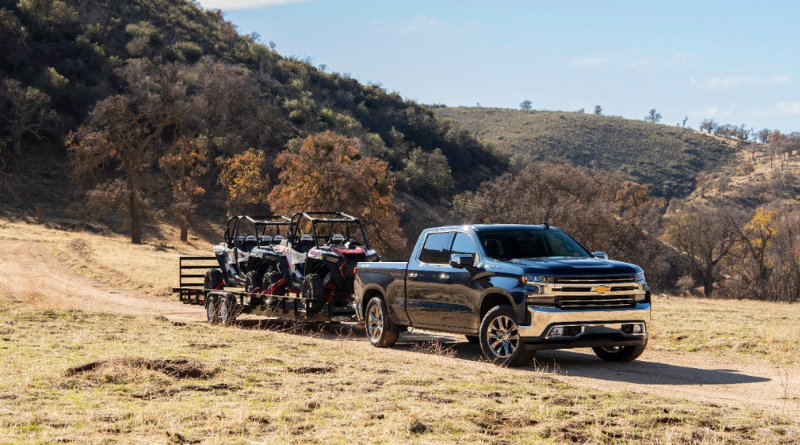
For a fresh example, look at the 2020 Chevy Silverado diesel variant. Packing an all-new Duramax 3.0-liter six-cylinder turbo-diesel unique to the model, it gives drivers 23 mpg city/33 highway for combined 27mpg, making it the highest EPA-certified full-sized pickup on the market when it comes to fuel economy ratings.
“If every full-size pickup sold today in America were a diesel, we could realize more than 500 million gallons of fuel savings in year,” points out Schaeffer. “This would work out to be the same greenhouse gas emission savings gained if all of Toyota’s passenger vehicle sales were all-electric, [demonstrating that] there are many ways to get meaningful reductions in greenhouse gas emissions, and we should embrace them all.”
Automakers Strike Deal with California for Tighter Emissions
Speaking of fuel efficiency and the ever-approaching electric future, it looks like automakers have found a compromise in their emissions dispute.
We’ve reported this before on the blog, but here’s a brief recap.
California and 13 other states challenged the Trump administration’s decision to cap fuel emissions standards at 2020 levels. Since then, there’s been a war of words between California and EPA officials, failed negotiations, and even lawsuits filed. At one point, two sets of grown adults with taxpayer-funded salaries refused to even sit at the same table during hearings last month.
However, recent moves suggest the Golden State might just get to have its cake and eat it too, as four automakers strike a deal with California, agreeing to tighter emissions. The agreement, which includes Ford, BMW, VW, and Honda, is “voluntary for the automakers and not legally binding,” prompting mixed reactions from environmentalists, Reuters reports. But while the regulations are looser than Obama-era standards, they are stricter than those the Trump administration recommended.
Cutting Out the Middle Man
According to Automotive News, “[The deal] would increase stringency of the requirements at a nationwide average annual rate of 3.7 percent starting in the 2022 model year through 2026, and 1 percent of that annual improvement could be covered by credits awarded for building electrified vehicles.”
Mary Nichols, chair of the California Air Resources Board (who filed the lawsuit we mentioned before), told Reuters that the automakers “didn’t want to face the expense, distraction and bad publicity that comes from being part of a big rollback on clean cars.”

While her hope is that the new deal will evolve into “enforceable agreements,” that’s tricky without federal support. And, predictably, administration officials did not take kindly to being turned into the middle man and cut out. EPA spokesman Michael Abboud called the agreement “a PR stunt,” while the White House held firm on its stance that “the federal government, not a single state, should set this standard.”
Automakers striking their own deal with California is surely a new development. But that doesn’t exactly mean this thing is coming to an end anytime soon. Something tells us the federal government isn’t going to give in so easily—even if California is the most populous state and largest auto market in the country. So, expect more updates on this (as well as more squabbling).
Around the Circuit
Formula 1
Red Bull’s Max Verstappen scored his second win of the year in a chaotic German Grand Prix this weekend, finishing ahead of Sebastian Vettel and Daniil Kvyat.
Current points leader Lewis Hamilton had a day to forget, wrecking on the slippery track before finishing 11th. He rose to ninth and picked up points on the day, due to a post-race time penalty levied on team Alfa Romeo. His Mercedes teammate Valtteri Bottas crashed out at the end of the race, with a third-place win in his sights no less.
Verstappen survived his own 360-degree spin in the difficult race conditions as well, but ultimately took the checkered flag in Hockenheim, marking the seventh win of his career. “It was amazing, of course to win, but it was really tricky out there,” he said afterwards. “It was all about trying to not make too many mistakes. I was very happy with the whole performance today.”
Next up for the Formula 1 circuit is the Hungarian Grand Prix on August 4.
NASCAR
It was a big weekend for NASCAR, with all three series hitting the track.
Denny Hamlin recaptured his past form at the Pocono Raceway, finishing first ahead of Erik Jones and Martin Truex Jr. to win Monster Energy Series’ Gander RV 400 on Sunday. This is Hamlin’s third victory of the season and 34th of his career, rebounding from his last-lap loss to Kevin Harvick last week.
The night before, Ross Chastain racked up his third victory of the season and reaffirmed his status as leader of the pack, finishing ahead of Tyler Ankrum and Harrison Burton to take the Gander Outdoor Trucks Series’ Gander RV 150. Chastain used his experience to regain the lead in the 33rd lap and hold it for the remainder of the race.
Afterward, he dedicated the win to the late Nick Harrison, the Kaulig Racing crew chief who passed away at the age of 37 after last Saturday’s XFinity Series win. “I know we were a little mad because we lost Nick Harrison,” Chastain said. “We realize that everybody goes when it’s their time, but, man, we miss that big boy.”
And, after chasing wins all season but never quite making that proper final push, Chase Briscoe won his first race of the season this weekend in the XFinity Series’ U.S. Cellular 250. Briscoe rallied late to beat out Christopher Bell, who had dominated the race throughout. Afterwards, Briscoe savored his victory and took pride in ending Bell’s two-race win streak at Iowa.
Next up for Gander Outdoors Truck Series drivers is the Eldora Dirt Derby in Ohio on August 1, while Xfinity and Monster Energy Series’ drivers hit Watkins Glen in New York on August 3 and 4, respectively.
NHRA
Billy Torrence snagged his third Top Fuel win at the NHRA Sonoma Nationals this past weekend, ending the three-race winning streak of his son, 2018 world champion Steve Torrence.
Robert Hight took the Funny Car win for the second-straight year, marking the 50th win of his career, while Greg Anderson nabbed back-to-back Pro Stock wins and Andrew Hines took his seventh Pro Stock Motorcycle Wally.


