
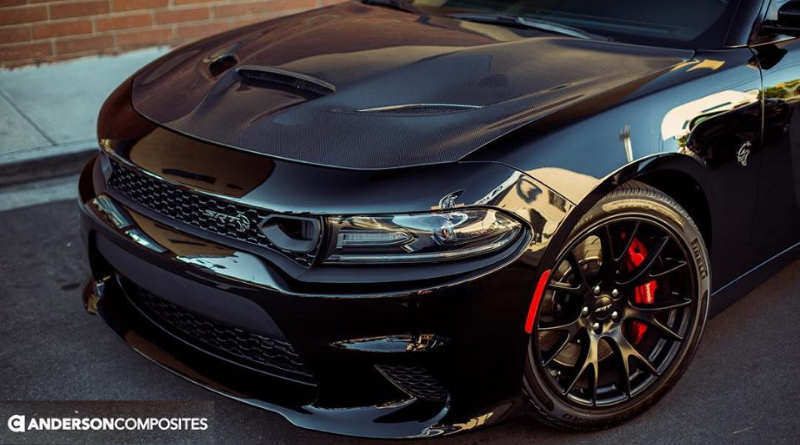
Considering Carbon Fiber? Here’s the Low-Down on this High-End Material
Carbon fiber: just the name makes your toes curl. Is there a sexier material in the automotive world?? Cast iron is for frying pans, aluminum is old news, and ceramic coating doesn’t impress anyone. But carbon fiber? Though it’s been around for a long time, it’ll still knock you dead every time you look at it.
It’s a top-notch material, so you can feel confident in pulling the trigger and grabbing those parts. But carbon fiber isn’t without its naysayers. Perhaps you’ve heard a thing or two about the material that has you feeling leery about the investment. Well, today we plan to get to the heart of the matter and maybe even debunk a few myths in the process.
Here’s what you need to know when considering carbon fiber.
Weight Savings are Substantial
The best thing about carbon fiber is how light it is. Honestly, this is why you’re considering the material in the first place, right? Seventy percent lighter than steel and 40% lighter than aluminum, to be exact. It’s also exceptionally rigid and strong… not to mention lighter than fiberglass, which makes it a popular choice when it comes to high-performance products—from aircraft to race cars to golf clubs.
When shopping for single panels, the weight-savings will be minimal so the additional expense may not be justified. (More on that later.) But in the case of multiple panels being swapped out, those savings will stack up.

According to the United States’ Department of Energy, “The next generation of carbon-fiber composites could reduce passenger car weight by 50 percent and improve fuel efficiency by about 35 percent, without compromising performance or safety — an advancement that would save more than $5,000 in fuel over the life of the car at today’s gasoline prices.”
Strong As An Ox
Carbon fiber may be extremely light, but it’s also extremely stiff. This is important to remember. Fiberglass is an obvious contender in this department because many aftermarket parts are made of both materials in an effort to save weight.
However, the problem with fiberglass is that, over time, when consistent or repetitive stresses are applied, it can lose its shape. It’s natural to assume that carbon fiber, being much lighter, would also suffer from the same flaw. However, because of how stiff the material is, it will not warp or deform with time.
ProTech Composites, a premier supplier of carbon fiber composites in the U.S., explains that, “As one of the strongest of all commercial reinforcing fibers when it comes to tension, carbon fiber is very difficult to stretch or bend.” Unlike steel and aluminum, it reacts less to extreme temperatures and its “superior fatigue properties” mean it “won’t wear out as quickly under the stress of constant use.”
That rigidity does pose one noticeable disadvantage, though. Namely, “carbon fiber will break or shatter when it’s compressed, pushed beyond its strength capabilities, or exposed to high impact,” adds ProTech. This doesn’t make it unsafe, but it does mean cautious construction methods are important. And, you guessed it, that also means higher repair costs. (You can’t hammer out a crack like you can a dent.)
Caring for Carbon Fiber
Most of the issues people seem to have with carbon fiber lay in the realm of caring for the product. These doubts do make sense when you look at the basic composition of the material, but I think it’s fair to say that those concerns die off the further we dive in.
What’s Inside?
Carbon fiber is primarily comprised of a synthetic resin called polyacrylonitrile, with some rayon mixed in. Before the material is cured, it’s almost cloth-like. This state of the material would leave many to assume that it would be hard to care for. In fact, even after being cured with high heat and pressure, it’s easy to jump to conclusions that the material can still easily come apart.
However, the uses of carbon fiber alone should put these concerns to rest. We see the material commonly in the production of F1 cars, Boeing passenger planes, and most recently, in Elon Musk’s Space-X program where the material was used to create an enormous, light-weight cryogenic fuel tank (the largest ever created for space flight).
Besides, when it comes to care, it’s not exactly the carbon fiber we’re even worried about. It’s the finish.
In regards to carbon fiber’s use in automotive applications, an additional layer of protection—or a clear coat—is applied to the body panels’ surface. This is the layer you should truly be concerned about. As long as the clear coat is present and properly maintained, you really only need to concern yourself with keeping up the finish—just as you would on any other car.
According to the car care gurus behind Dr. Beasley’s, “Although carbon fiber wont fade like normal paint, you never want the clear coat to diminish or damage from environmental factors. For these unique panels it’s best to provide the surface with an initial layer of paint sealant, a long-lasting polymer protection that will keep the surface protected from UV rays, environmental debris, and more.”
When it comes to detailing the car, you can go ahead and use the same products you would on the clear coat of any other part of the vehicle. And when it comes time to show off a little, carnauba wax is still the go-to.
“By adding an additional layer of carnauba, the initial polymer protection receives added depth and durability, meaning your finish will stay protected for a longer period of time,” explains Dr. Beasley’s. “If a poly sealant is covered by a carnauba, its integrity and protective qualities increase greatly. Better yet, the finish looks deeper and increasingly clear.”
Cost Will Kill You
Just like the salesperson who withholds the price of that sweet new ride until the end of the test drive, I haven’t been entirely forthcoming…
Carbon fiber really is a miracle material, making it the obvious choice for aftermarket parts. But, it’s very hard to make and this drives the price through the roof.
Consider an S550 Mustang as a prime example. A very popular vehicle with many manufacturers making aftermarket parts, rights? Naturally, owners might be interested in carbon fiber replacements. A fiberglass hood runs around $400-$600. In comparison, a carbon fiber hood will run somewhere around $1300 to $1600—that’s triple the price in some cases. So, unless you have the capital, it’s a modification that’s out of reach for many shoppers. (I know for me it is and I will shamelessly go fiberglass every time because of it, but that doesn’t mean that I don’t appreciate the quality and finish of carbon fiber.)
So what did we learn today?
Carbon fiber is very lightweight, it’s very strong, and it’s not that hard to take care of. The only real thing we need to worry about is protecting the finish—and, of course, there’s that nasty price point. To me, it’s worth it for a top-end car or something you really care about. Or if, you know, you’ve just got fat stacks stashed away.
Just remember that the weight savings are small when panels are done one at a time. So, unless every ounce matters or you’re able to splurge on multiple components, it might be better to invest in fiberglass until cheaper processes for producing carbon fibers bring the overall price down.


