
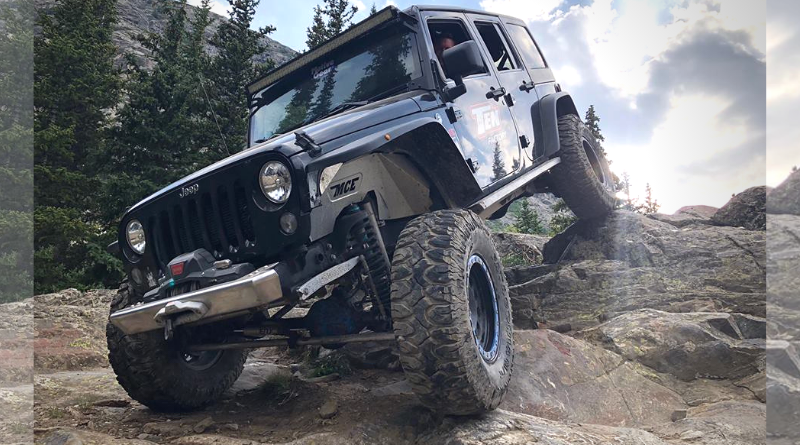
Tech Corner: JK Wrangler Axle Upgrades and How To Do Them
The axle of your JK receives some of the most gruesome mechanical beatings known to man. While there are many failures that will make you cringe, none are as hard as snapped or bent axles. You know it, I know it, and the guy who knows everything about every car may not truly know why, but he definitely will say he told you so when it happens. So, what can we do to shut him up? Well, let’s talk about some of the must-have axle upgrades for JK Wranglers and how you can do them.
The thing about JKs is that they are, for the most part, decently equipped. (After all, they’re meant to be rugged and capable straight from the factory.) While some early 2-door models (2007) bear a Dana 35 in the rear, chances are you have a Dana 44 out back. In the front, you’ll find a Dana 30, which is where we’ll start looking for ways to reinforce your factory differential.
Rubicon owners have the luxury of running Dana 44s in both the front and rear in stock form. While these are strong units, if you’re looking to go beyond a 35-inch tire you’ll need to consider something more durable.
Wait, how do I identify my axle?
If you don’t know your axle—relax. It’s very easy to check your equipment, so you don’t have to worry much about running your vin or casting numbers. Counting bolt holes won’t really help us here, since all three axles that may dwell under the JK will have ten. Instead, we’re going to look at the shape of the differential cover for reference.

The Dana 30 axle cover has a noticeably squared-off shape, while the Dana 35 is wider and shaped more like an oval. The Dana 44 looks almost like an asymmetrical hexagon.
Once you know your JK’s axle, we can start talking upgrades.
To help us break down JK Wrangler axle upgrades, we called upon our good friend and off-road guru, Dan Guyer of Keystone Automotive. Right off the bat, he offered an interesting take on how many JK differential and axle issues come down to the Jeep’s weight.
“People have found that when you actually wheel these things, they’re heavy and the housings bend –especially the front,” says Guyer. The JK’s curb weight starts over 3,800 lbs. (And since curb weight values are often generous, you should realistically expect a number north of that.) This is something to keep in mind before you start adding off-road accessories and equipment.
“The smartest thing you can do with a brand spankin’ new JK, is take it to the shop and sleeve and gusset it,” advises Guyer. “It WILL fail. So, if you’re going to wheel it at all—you need to have that. It doesn’t matter the tire size.”

To sleeve and gusset a differential is to reinforce the assembly. The sleeves provide additional support around the axle tube. A truss and gusset kit adds structural reinforcement to the entire assembly by welding additional framework into place, that will work to prevent deflection and bends.
Moving ‘Round Back
So, we’ve established some axle upgrades you can make to the JK’s front assembly, to prevent the housing from bending. But that’s not all that’s at risk. Even with the strong Dana 44 out back, you’re not invincible. “With the rear axle, the flange can bend, so the axle shafts can bend,” explains Guyer. “That’s why, if you’re doing anything to the back of that thing—chromoly axles should be one of the first upgrades you make. Luckily, they’re not expensive.”
Chromoly axles are made using higher quality materials and state-of-the-art heat processes. This makes them stronger than stock axles, allowing them to withstand harsher trail abuse, higher horsepower, and—of course—bigger tires. With greater resistance to bending and breaking, chromoly axles are a no-brainer upgrade for your JK Wrangler.

Additionally, Guyer points out that it’s worth keeping the old stock axles as spares, on the off-chance you break one on the trail. Granted, no one wants to imagine the scenario where a brand-new upgrade fails. But if it does, being able to rely on your factory axle shafts as spares in a pinch will be a real life-saver.
Regearing Axles
Since we’re on the topic of differentials and spending money on preparation, it’s a smart move to not only reinforce your differential, but actually work it over a little. The guts of the Dana axles are pretty stout, but if you intend on regearing (which you will) or swapping to lockers and installing a lift kit, this is a great time to do so.
As far as regearing goes, it’s not particularly a weak point but will be a defining factor in terms of your JK’s capabilities. As Guyer mentioned earlier, these are heavy rigs. And now you’ve gone and added bigger wheels, a bumper, a winch, and other accessories. You’ll need to add a lower gear ratio just to regain the factory throttle response. But more likely, you’ll be looking to exceed it.

Having the right gear ratio will give you bottom-end power by boosting throttle response. As far as which gearing is appropriate, we got Dan’s input:
“It all depends on the model year. If you have a 3.8—you have to regear it. The 3.6’s have a better chance because they have a little more power, so they’re more forgiving, but either way they should be regeared, as well. I always say whatever the online calculator suggests, go one gear lower [higher, numerically] because the calculator is figuring for stock settings.”
Keep in mind…
Guyer has one final bit of advice for anyone looking to go wheeling with a new-to-them JK Wrangler.
“I would take it to a shop and ask for the front axle to be sleeved and trussed, re-geared, and equipped with new ball joints—because the stock ones are prone to failure. Then, in the rear, I would regear, swap in those chromoly axle shafts we talked about, and probably put a truss on the rear, too. I would feel pretty good with that on a Jeep wearing 35’s maybe 37’s.”
Speaking of bigger tires, it’s important to note that the upgrades we’ve discussed so far are intended for JKs attempting moderate-to-difficult wheeling, with 35-inch tires. Moving out of that realm, we enter a new discussion about greater axle upgrades.
“If you want 37s and an off-road vehicle you can beat on, then right then and there, you need to upgrade to Dana 60s because you will break the 44,” states Guyer. “The way I look at it, the best thing to do is take stuff out and sell it while you can still get something out of it. It’s not a question of “if” you will break it if you’re wheeling hard, it’s when.”
This can sound intimidating, and might force some JK owners into a box. But while knowing the bounds of a vehicle can feel limiting, it’s worth noting that a well-built Wrangler on 35s is a very capable rig that will deliver tons of enjoyment to the average wheeler. If, however, you’re chasing extraordinary amounts of fun, a Dana 60 swap is in order. Either way, the aftermarket is full of ways to make this happen… without too much headache.


