2023 Collector Car Market Trends
As budgets tighten around the country, you might be looking differently at the collector car sitting in your garage. What was once a true passion project may now resemble something more like a passionate investment. Whether or not you’d ever think of selling, it’s useful to have a grasp on how the market’s behaving – especially at a time of high inflation.
Keep reading for a quick update on the collector car market, as well as a rundown of a few major trends impacting buyers and sellers in 2023.
Rationality Returning
With the Amelia Concours and its related auctions now in the rearview, collector car experts seem more comfortable in their predictions for the year ahead. The general opinion is that the feeding frenzy of the past two years is finally settling down and the market is returning to a more familiar landscape.
Overall, prices remain high. (Indeed, finding a “cheap” classic car these days feels a bit like searching for Bigfoot.) But the data-crunchers insist: costs are softening and buyer enthusiasm is coming back down to earth.

Case in point? January marked yet another record-breaker for auction sales, with fan-favorite Mecum raking in $234 million at its 12-day Kissimmee bonanza. However, much of this achievement is owed to the sheer volume of cars that crossed the block.
Mecum had its highest number ever of vehicles consigned – an incredible 4,000 rides. As a result, it also saw the highest number of vehicles sold at 3,180. When looked at as a percentage though, that translates to a lower sell-through rate than we’ve been seeing lately. (Though, admittedly, still an impressive one.)
The auctions in Amelia reflected a similar trend. Quality was high, and the presence of more top-tier vehicles made for a memorable weekend. But overall, sell-through rate was down. According to the event’s host Hagerty, this combination indicates that sellers were “testing the waters” rather than feeling pressured to sell. Similarly, buyers were choosey about where they spent their money.
“In other words, it seemed characteristic of a healthy, rational market.”

Collector Car Market Trends
Economically, the market may be returning to normal but the world is a different place than it was a few years ago. That means, buyers and sellers are changing along with the vehicles deemed collector car worthy.
Here are a few notable trends that have emerged over the past few years, and how they’re playing out so far in 2023.
Younger Crop of Buyers
Let’s start with the obvious – buyers are getting younger, and so are their vehicle preferences.
While Baby Boomers still absolutely dominate the collector car market with their big cache of disposable income, both Gen-X and Millennials are starting to make their appearance known.
Certain segments maintain a stronghold regardless of generation, like classic muscle cars and sports cars. However, vintage 4x4s and square-body pickups skyrocketed in value the past few years, largely thanks to younger buyers – many of whom weren’t even old enough to drive one of these vehicles when first produced. We saw a similar bump in traditionally “non-collectible” cars like Fox-body Mustangs, Pontiac Firebird variants, IROC Camaros, and Buick Grand Nationals.

Heck, even Gen-Z drivers are showing a marked interest in manual transmissions, despite being the generation that is both most likely to put off getting a driver’s license and most likely to own an EV. What can we say? Hard knobs and analog tech still hold some charm.
Gen-X & Millennial Preferences
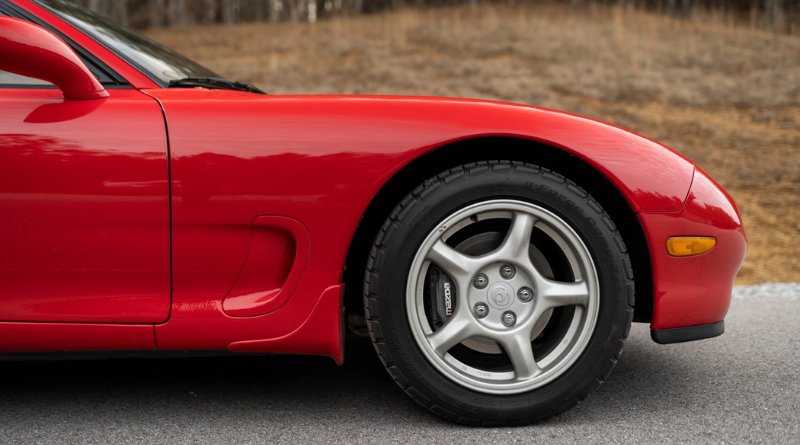
More age-appropriate nostalgia is shining through, too. Millennials weaned on the never-ending Fast and Furious franchise are now seeking out the Japanese tuners of their youthful dreams, pushing up values in 1990s-2000s import performance. In fact, the Toyota Supra, Mazda RX-7, and Mitsubishi Eclipse owe much of their collectability to the film’s success.
Similarly, Gen-X buyers seem to show a particular appreciation for those aforementioned vintage 4x4s. Think: Defenders, Broncos, Scouts, Scramblers, Land Cruisers and K-5 Blazers. (Basically, anything that would have an overland enthusiast drooling.)

In addition to redefining a collector car, these younger generations are also redefining auctions. From online bidding to paying with bitcoin, those who lived through the tech boom are more than willing to embrace modern methods of buying and selling.
Come One, Come All
According to collector car insurer, Hagerty, some vehicles hold onto ownership interest regardless of age. Listed below are the 20 most “equally-beloved” vehicles across generations. Would you have guessed they’d make the list?
| 1968-1976 Mercedes-Benz W114 & W115 | 2003-2004 Mercury Marauder |
| 1971-1977 Mercury Comet | 1980-1986 Datsun/Nissan 720 |
| 1967-1973 Plymouth Valiant | 1970-1976 Plymouth Duster |
| 1995-2004 Toyota Tacoma | 1987-1991 Ford Bronco |
| 1982-1991 Porsche 944 | 2005-2015 Toyota Tacoma |
| 1996-2004 BMW 5 Series | 1996-2002 Dodge Viper |
| 2008-2020 Nissan 370Z | 1996-2002 Toyota 4Runner |
| 2009-2014 Ford F-Series | 2015-2020 Ford F-Series |
| 2000-2006 BMW 3-Series (E46) | 2014-2018 Alfa Romeo 4C |
| 1991-1996 Subaru SVX | 1969-1974 Ford Galaxie |
Click here for the full list of 55 and more information on how these vehicles are ranked.
Larger Presence of “Flippers”
When COVID lockdowns hit, many of the folks looking for new ways to spend their discretionary dollars found the collector car market. This helped drive up interest in the hobby (a good thing), but it also ushered in more “flippers” — or folks who buy cars just to turn around and sell them at a profit (a debatably good thing).
As an aside, when we say “flippers” we mean those people who are solely motivated by money with no deep appreciation for the hobby, i.e., the people who see collector cars as a side hustle. There’s a big difference between the buyer who purchases a vehicle, restores it, and then makes something on the sale and the buyer who purchases a pig, slaps some lipstick on it, and sells it at a profit to an unassuming bidder.

Now, that said, the increase of these “speculators” has had a few effects on the market – both good and bad.
On the good side, it helped bring vehicles to the marketplace that would otherwise be headed to the scrap heap. On the bad side, it drove down quality while also elevating prices, making it much harder for enthusiasts on a budget to afford their dream vehicle (or the parts to repair/restore it).
Regardless where you fall on the pro-con flipper scale, if you’re thinking of selling, get an appraisal. People who play the market can only make a profit if they buy low and sell high.
Rarer Examples Faring Better
Again, this may seem obvious, as rarer examples of just about anything tend to fetch more money. But when you factor in the past few years’ wildly elevated prices for nearly all collector vehicles, it’s actually a sign of a stabilizing market that particularly rare and top-shelf examples are holding steady while more mainstream models are softening.

This also isn’t entirely unexpected, considering the current state of the economy. Blue-chip collectibles are a popular choice among the wealthy looking to hedge inflation. As for the serious top-spec rides, like Ferraris or high-end German collectibles, those owners aren’t generally the type to get “hard-up” for cash. Since they won’t need to sell, those vehicles certainly won’t be changing hands for pennies on the dollar.
Remember: rare and top-shelf are not mutually exclusive.
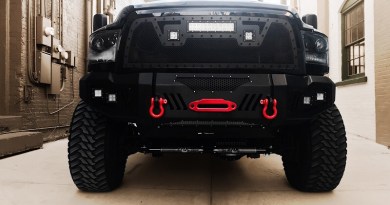
A vehicle can be rare simply because there aren’t many examples left, or because there weren’t many examples to start with. Maybe the restoration efforts were incredibly creative, or maybe some lunatic stuffed an insane motor under the hood, painted flames down the sides, and affixed it with twin vanity plates that say THE SCOURGE. (Alright, that last one is definitely gonna hurt resale, but you get the point.)
Just look at Hagerty’s Bull Market List of the 10 hottest collector cars in 2023, expected to rise in value. While there are certainly some top-dollar rides, there are also plenty of democratic options.
- 1985–93 Saab 900 Turbo
- 1991–98 Suzuki Cappuccino
- 1968–70 AMC AMX
- 2004–10 Mercedes-Benz SLR McLaren
- 1984–88 Toyota Pickup 4×4 SR5
- 2001–10 Lamborghini Murciélago
- 2003–08 Nissan 350Z
- 1992–06 AM General Hummer H1
- 2001–04 Chevrolet Corvette Z06
- 2008–15 Audi R8
Additionally, mainstream collector car prices might be leveling out, but they’re mostly still high compared to pre-pandemic levels. Plus, many familiar faces are still holding steady both at auction and with private sellers – and more than a few budget 90s classics are steadily growing in value, too.
Ultimately, when it comes to collector cars, the best advice we’ve seen is to buy what you love, because even if you end up selling it at a loss, at least you had a helluva time owning it.