
Auto Industry News: Automakers Juggle Expensive EVs & Costly Class Actions While Enthusiasts Say Goodbye to More Beloved Nameplates
LOTS of news spilling out of Detroit this week.
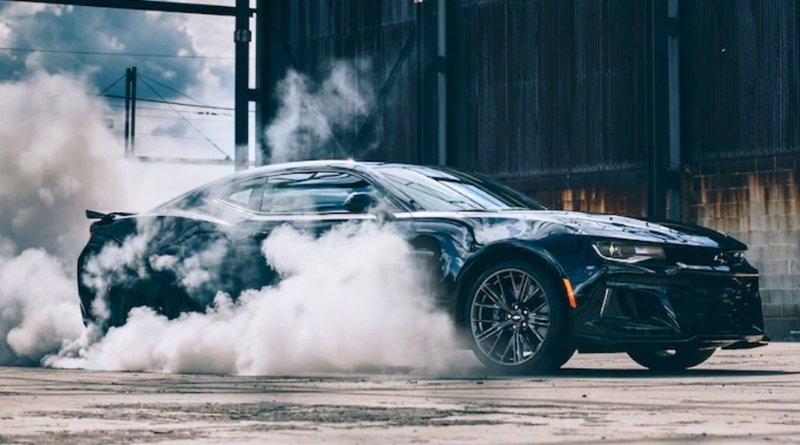
Ford expects to lose a whopping $3 billion on EVs this year, while GM stares down a class-action lawsuit for knowingly installing bum transmissions. The Chevy Camaro will cease production at the end of 2024, following Dodge’s Charger and Challenger models into their internal combustion-shaped coffins.
Over at Stellantis, Dodge unleashes its final Last Call model, Jeep waves goodbye to the beloved Cherokee, and RAM teases an electric midsize pickup. Plus, the United Auto Workers union have a new president – one promising reform and a “more aggressive approach” for upcoming contract negotiations.

Ford: Robbing Peter to Pay Paul?
Ford offered a peak at the balance sheets for its EV division, Model e, revealing a lot of red ink.
According to the figures, the automaker’s EV businesses will lose about $3 billion this year. (Up nearly 50% from last year’s $2.1 billion loss.) Ford’s other two units – which consist of internal combustion and commercial vehicles, respectively – are sustaining the automaker’s investments in electric technology.
The two main drags on budget seem to be coming from production expansion and future product development. Ford currently has three electric vehicles in its stable: Mustang Mach-E, F-150 Lightning, and E-Transit van. It recently announced plans for a second-generation electric truck, code named Project T3, which will be built at a new battery and vehicle factory in Tennessee.

CFO John Lawler told reporters that short-term financial losses are to be expected, likening Model e to an EV startup. “As everyone knows, EV startups lose money while they invest in capabilities, develop knowledge, build volume and gain share,” he said.
Still, the company expects its EV investments to eventually pay dividends. Ford predicts the Model e division to be profitable by 2026, with an 8% pretax profit margin. Additionally, the automaker believes it is on track to meet its 2024 target of producing 600,000 EVs a year globally.
GM: Bad News and More Bad News
Ford’s crosstown rival, GM, captured two big headlines last week. One could mean a headache for consumers, while the other certainly spells heartbreak for muscle car lovers.
‘Shuddering’ Legal Woes
Ford might be bleeding R&D dollars, but GM is staring down a different kind of financial loss. A federal court in Detroit certified class actions against the automaker for knowingly producing and installing faulty transmissions in more than 800,000 vehicles between 2015 and 2019.
The lawsuit involves 39 plaintiffs across 26 states who claim they experienced safety-compromising defects while driving vehicles equipped with GM’s 8L45 and 8L90 8-speed automatic transmissions.

Affected vehicles listed in the court order include:
- 2015 through 2019 model year Chevrolet Silverado
- 2017-19 Chevrolet Colorado
- 2015-19 Chevrolet Corvette
- 2016-19 Chevrolet Camaro
- 2015-19 Cadillac Escalade and Escalade ESV
- 2016-19 Cadillac ATS, ATS-V, CTS, CT6, and CTS-V
- 2015-19 GMC Sierra, Yukon, Yukon XL, and Yukon Denali XL
- 2017-19 GMC Canyon
Plaintiffs said the transmissions will “slip, buck, kick, jerk and harshly engage” while shifting, causing the vehicle to behave erratically. They also said the transmissions will sometimes “shudder” at highway speeds.
The lawsuit alleges that GM knew the transmissions had problems but produced them anyway. They even accuse the automaker of going so far as to direct dealers “to tell the customers that harsh shifts were ‘normal’ or ‘characteristic.’”
Plaintiffs are seeking financial compensation, either to cover repair costs or as simple reimbursement for what they feel was an overpayment for a dud vehicle.

No More Camaro
Last week, GM also confirmed a rumor that had been swirling for some time: The Chevy Camaro will cease production after the 2024 model year.
The decision to end the modern muscle car mirrors that of Dodge, which is currently in the process of throwing a year-long retirement party for its beloved Charger and Challenger models. But while Dodge has been clear about its plans to swap HEMI internal combustion power for electric oomph, Chevy is playing its future cards a little close to the vest.
“While we are not announcing an immediate successor today, rest assured, this is not the end of Camaro’s story,” Scott Bell, vice president of global Chevrolet, said in a statement without elaborating.

Indeed, this is not the first time Chevy discontinued the Camaro nameplate only to bring it back a few years later. However, it is likely to be the last – at least where ICE power is concerned.
Considering GM’s plans to turn the Corvette name into an electrified sub-brand, it’s not a stretch to imagine something similar for the Camaro. For now though, the automaker will mark the end of the sixth generation with a special Collector’s Edition package available on 2024 Camaro RS, SS and select ZL1 models.
In Case You Missed It
Last week, Dodge unveiled its final Last Call model at a special Roadkill Nights Vegas event. The limited-production 2023 Dodge Challenger SRT Demon 170 is the most powerful muscle car in the world, sipping on E85 and churning out an unbelievable 1,025 horsepower that rockets 0-60 mph in only 1.66 seconds. According to the automaker, it is already banned in its stock form by the NHRA thanks to dominating the quarter-mile with a certified 8.91-seconds ET at 151.17 mph. Production is limited to 3,300 and pricing starts just under $100,000.
Stellantis: Hello & Goodbye
This is the year for goodbyes, apparently, as Stellantis retires another nameplate – this time from Jeep. Meanwhile, the RAM badge tests the dealer waters with a new EV.
Jeep Cherokee Ends
Oof, talk about the end of an era. After nearly 50 years, the Jeep Cherokee is leaving the automaker’s lineup.
Like the Camaro’s discontinuation, there were hints this was coming. Jeep dropped the V-6 variant earlier this year, along with several trims, and even idled production at the vehicle’s Belvedere plant in Illinois. Also like the Camaro, it’s likely the Cherokee will return as an EV – though probably with a different name.
Since Jeep plans to hold onto the Grand Cherokee, as well as the Compass, that leaves a gaping hole in their midsize SUV offering. It makes sense that they would choose to fill that popular slot with something electrified, even if it is just a hybrid for the time being.
RAM Teases Electric Midsize Truck

Proving that we should all be careful what we wish for (and specific in our requests), it looks like RAM is, in fact, going to deliver a new midsize truck. However, it will be a far departure from the Dodge Dakota we all knew and loved.
RAM first teased a new midsizer late last year, hinting that it was “looking” at the segment again and would consider giving dealers a “sneak peek” of a concept in March to gauge interest. That sneak peek came last week at the brand’s annual dealer meeting in Vegas.
The concept is a scaled-down version of the all-electric 1500 Revolution that RAM debuted at CES back in January. While brand officials aren’t saying much, dealers who attended the reveal expressed excitement when interviewed by Automotive News.
“We’re going to be back in that [midsize] game,” said Randy Dye, a Florida dealer who described the concept as “spectacular” and “the future” but still “very much a RAM.”
“We see concepts change by the time they get to production, but it’s very, very encouraging,” added Pennsylvania dealer David Kelleher. “I think it keeps the lineage of Ram, which is really exciting, and I think it brings us back to a segment where we’ve been vacant for too long.”

UAW Elects New Prez, Promises Change
With all this talk of discontinued nameplates and new EVs, it’s easy to imagine what kind of tense conversations are happening among the people responsible for making those vehicles.
And while high levels of uncertainty aren’t exactly new for the United Auto Workers union, this week’s revelation that a reform candidate will replace the existing president likely left more than a few folks wondering what comes next.
Shawn Fain, a member of the “UAW Members United” reform group and local leader for a Stellantis parts plant in Indiana, will be the next leader of the prominent union. His victory comes by a narrow margin, winning a runoff against incumbent President Ray Curry by less than 500 votes.
New Boss, Same Story?
Fain ran on a campaign of change, promising an end to top-down rule and a harder line during contract negotiations. His rhetoric has been aggressive, and automakers are likely already preparing for some big demands and contentious meetings this fall.

In the meantime, however, Fain has his work cut out uniting the rank and file. While he won the runoff, his votes represent less than 7% of the UAW’s total membership. (Indeed, voter turnout was abysmally low for both elections. Less than 10% of the UAW’s 1.1 million active and retired workers who were eligible to vote actually cast a ballot in the first election, with around 13% participating in the runoff.)
Additionally, Fain’s personal history with the union shows him to be a little more bureaucrat than maverick.
During the 2009 and 2011 union negotiations, he agreed to cut wages and expand temp work – concessions that may have been necessary at the time, but might not age well as he takes a new aggressive stance. Fain also worked in a department that fell under close federal scrutiny during the corruption scandal, with his own boss serving 15 months in prison.
The Engine Block is your one-stop source for any and all auto industry news. Keep an eye on our weekly round-up of enthusiast coverage, product reviews, vehicle spotlights, auto show/expo features, and more. Be sure to check back Wednesday for a list of the four best “lifestyle” trucks and come see us on Friday for the next installment of Competition Corner, chock full of must-see April automotive events.


