
Auto Industry News: Barrett-Jackson Hits Scottsdale, EJS 2021 Jeep Sneak Peek, & Addressing EV Concerns
Barrett-Jackson celebrates 50 years of legendary collector car auctions this week, kicking off 2021 festivities in Scottsdale, Arizona. Plus, Jeep offers a sneak peek at the custom concept off-roaders set to hit the trails of this year’s Easter Jeep Safari. Interestingly, an all-electric Wrangler tops the lineup – which got us thinking. Consumer responses to EVs currently seem to range from excitement to eye rolls. We thought it might be time to unpack some of the very real concerns enthusiasts have been sharing online about an all-electric world – as well as the solutions suggested by automakers, legislators, and other enterprising folks.

Barrett-Jackson Hits the Big 5-0
Barrett-Jackson’s flagship Scottsdale Auction opened its gates Saturday, March 20, celebrating its 50th anniversary collector car auction. Postponed from its traditional January position on the calendar, the annual event commenced with plenty of fanfare – and a few new health precautions, thanks to COVID.
Despite fewer people in attendance (and fewer vehicles crossing the block) the auction house believes this year will be a smash hit. With a long list of truly spectacular vehicles on the docket – drawn from three major collections, an incredible charity lineup, and a bevy of eager consignors – we can see why.

The Raser Collection serves up 24 show-stopping Chevrolets. Keep an eye out for the multiple award-winning 1957 Chevy Nomad Wagon (pictured). The beautifully detailed restoration took National First Prize at the Antique Automobile Club of America and holds a perfect score from the 39th Annual Eckler’s Chevrolet Classic Club International Convention.
From neon signs to a 1999 Vector M12, the Larry Winkler Collection offers a little bit of everything, including 35 cars, 40 motorcycles, and over 400 pieces of automobilia! Buzzy rides from the collection include a 1997 Lamborghini Diablo VT Convertible and 2020 Ferrari 488 Pista.
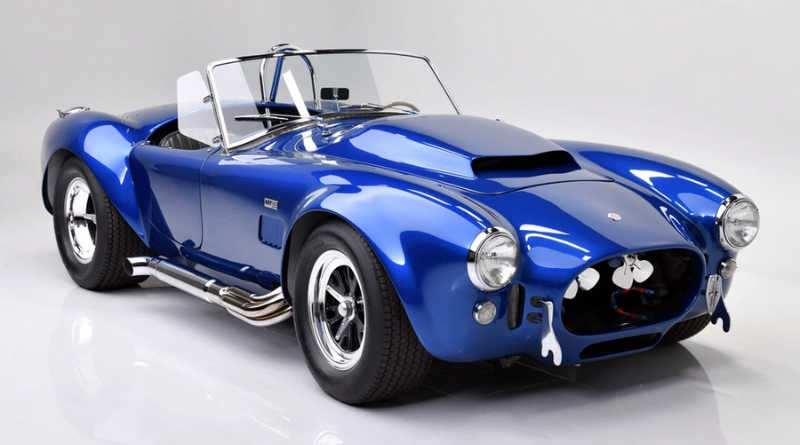
The real draw seems to be the select offering up for grabs from an unnamed, private collection. It consists of 17 show-stoppers, but Carroll Shelby’s fire-breathing “Cobra to End All Cobras” is drawing the most headlines. Already sold by Barrett-Jackson twice before (in 2007 and 2017), it fetched more than $5 million both times.

A Worthy Cause
Also adding to the excitement, America’s top automakers are bringing a record-breaking number of VIN 001 and first-production vehicles to the Scottsdale auction’s charity sale. They include: the first 2022 HUMMER EV Edition 1; VIN 001 of the 2021 Mustang Mach 1; the first 2021 Ford Bronco (fully-loaded to boot); the 2022 Cadillac CT4-V and CT5-V Blackwings – the most powerful Cadillacs ever; and the first 2021 Ram 1500 TRX Launch Edition.
The 2021 Barrett-Jackson Scottsdale Auction runs through March 27. Tune into the Barrett-Jackson Live Stream online at www.barrett-jackson.com/ or watch on the History, FYI, and Velocity networks through your cable provider. The full television schedule is available HERE.
Shelby-Cobra fans may be interested to know that a continuation 1965 Cobra 427 owned by Paul Walker crossed the block at MECUM’s Glendale Arizona auction this past weekend. Selling for $352,000, the vehicle helped contribute to the Wisconsin-based auction house’s record-setting Glendale event.
Easter Jeep Safari 2021: Sneak Peek at Jeep Concepts
Spring has sprung! And we all know what that means: Easter Jeep Safari is set to descend upon Moab, Utah.
Despite some on-again-off-again drama about whether the event – which has been going strong since the early 1980s aside from last year – would actually happen or not, Arches National Park in Utah is set to become a full-fledged, off-roading mecca full of tricked-out, fully kitted adventure rigs once again.

For those who don’t know, Easter Jeep Safari is an annual event hosted by the Red Rock 4-Wheelers off-road club. Fervent off-roaders (mostly Jeep lovers) bring their highly-modified and capable builds to conquer the challenging terrain of Moab’s backcountry. This year’s action runs March 27 – April 4.
Like days of Safaris’ past, the adventure-loving Jeep badge plans some fun concept debuts. Undoubtedly, the most intriguing on the list is the all-electric Wrangler dubbed “Magneto.”
But before we unpack our thoughts on the unconventional EV, let’s take a peek at three other cool new rigs on the docket.
Jeepster Beach Vibes
Have you ever wondered what would happen if the retro bodywork of a 1968 Jeepster Commando were to meet the modern chassis of a 2021 Jeep Wrangler? Wonder no more, because Jeep has manifested this dream into reality and it is a thing of pure chef’s-kiss beauty.

Under the golden two-toned “Hazy IPA” hood lurks a 2.0-liter turbocharged four-cylinder engine with an SRT tune, ensuring the jaw-dropping restomod can push out 340 hp and 369 pound-feet of torque. The two-seater with four-point safety cage boasts impressive rock-climbing prowess thanks to a stock Wrangler Rubicon transfer case with a low 4:1 range. Slapping some style on this vintage dream is a groovy red leather interior with chrome accents.
Orange Peelz Wrangler Concept

This heavily modified two-door Wrangler serves as a rolling advertisement for the Mopar parts and accessories catalog – and we’re here for it.
Prototype JPP half doors and a custom removable one-piece Freedom Top glass sunroof replace traditional side and rear windows to create a unique open-air experience. Other mods, like a two-inch lift kit with Fox shocks, 37-inch BFGoodrich KM3 mud-terrain tires, WARN winch, and off-road auxiliary LED lights showcase just a few of the personalized upgrades Jeep owners can make to ‘have it their way.’
Rubicon Red Bare Gladiator
Another model displaying the world of very attainable Jeep modification, this diesel-powered Fire-Cracker Red Gladiator wears familiar 17-inch matte black wheels and a modest two-inch lift kit with 37-inch beefy mud-terrains. There’s a little more going on here than just what meets the eye, though. This Gladiator’s axles have been re-geared with 4.88 ratios. Combined with the Rubicon transfer case, the truck has a massive 91.1 crawl ratio.
Rounding out the build are steel bumpers, a WARN winch, and factory half-doors. And did we mention that cushy interior? The Katzkin leather seats inlaid with red and black flannel are no doubt a nice touch of luxury on the bumpy trail.

Magneto EV
Much like the X-Men supervillain who shares its name, the Magneto Wrangler is sure to draw some polarizing reactions. A single electric motor and four battery packs replace the traditional 3.6-liter gas V6 on this two-door Rubicon, but the power output remains just about the same at 285 horsepower and 273 pound-feet of torque. However, unlike its gas sibling, this electric off-roader can harness all that torque instantly, resulting in a 6.8-second 0-60 time.
Interestingly, the Magneto has a six-speed manual transmission – an unnecessary addition since the electric motor eliminates the need for one. According to Jeep, this feature offers some familiar drive-feel to off-road traditionalists, while also allowing the motor “to engage in regenerative power collection upon clutch engagement.”

The automaker plans to roll out Magneto at three Easter Jeep Safaris so engineers can get a better understanding of the model’s performance in off-road environments.
Addressing EV Concerns
We hear you, dear readers, and we share your ambivalence for EVs. A LOT is happening in this space – some of it incredible and some it incredibly worrying. In light of Jeep bringing an all-electric Wrangler to the premier off-road event of the season, we thought it high time to unpack a little of the good, the bad, and the ugly around EVs to provide you with a solid snapshot of the industry.

Electric vehicles are exciting to many people. After all, they merge automotive and technology in unprecedented and innovative ways. Despite production waste, they’re still better for the environment than standard combustion engines. Plus, they’re stylish and torquey as all hell.
However, there remain some serious downsides and genuine concerns over a massive automotive shift. We’ve covered a few of these red flags before, like fire hazards and dealer disinterest, as well as fears of job loss and union upset. But there are a few other outstanding issues plaguing the EV industry that you may not even be aware of.
Battery Sourcing & Recycling
First concern? The duality of crafting eco-friendly vehicles out of raw materials that are extracted from the earth via strip mining, deforestation, and factories run by fossil fuels.
Take lithium as an example. This core component of rechargeable batteries, often comes from war-torn countries with little to no worker protections or environmental standards for mining. And then, once those lithium batteries are made, there’s no real plan to recycle them. Not to mention supply chain concerns – which we’re experiencing right now. China currently dominates the market for producing electric-vehicle batteries and our trade relationship has yet to improve.

While there is little to no specific legislation right now governing the sourcing of raw materials for EVs, we do expect this to change. The EU has already taken steps to develop its own socially and environmentally sustainable mining sector. Additionally, the U.S. recently followed suit, seeking $37 billion in funding via legislation to “supercharge” domestic chip manufacturing.
As for recycling…
If we’re being intellectually honest, there are no such things as a clean, green EVs if the batteries can’t have a second life, right?
The technology may still be in its infancy, but big brands like Tesla and Panasonic are working to solve the issue. Enterprising start-ups have jumped on board too, like Redwood, creating a race to recharge. This new generation of battery recyclers are betting that they can find a way to close the loop on the lithium-ion supply chain — and make a buck while they do it. If they’re right, they may turn black mass into a green revolution.
Cost & Market Interest
Another issue to consider is that, up until very recently, EVs simply were not affordable to the average consumer. High prices, coupled with unfamiliar technology, led to low market interest in electric drivetrains as a whole. That problem continues to permeate the industry, as public hand-wringing by dealers and union leaders shows a distinct lack of confidence in consumers’ willingness to buy.

For now, EVs make up less than 2% of U.S. new-vehicle sales and about 3% worldwide. “It’s still a sector that doesn’t have a mass appeal to the entire population,” said Jeff Schuster, president of global vehicle forecasting for LMC Automotive, a consulting firm. “It could be a financial drain if consumers do not buy at the same level [that automakers are producing].
However, studies show that potential EV buyers who are on the fence can be easily persuaded into getting an EV of their own. According to the inaugural J.D. Power U.S. Electric Vehicle Consideration (EVC) Study, more than half (59%) of new-vehicle shoppers fall into the “somewhat likely” or “somewhat unlikely” categories when it comes to considering a BEV for their next purchase or lease—a significant window of opportunity for future EV sales. That means confident automakers will need to prop up their nervous dealers, as it appears the power of persuasion lies largely on them.
Charging Infrastructure
While automakers have poured billions of dollars into creating EVs, there’s been a noticeably less aggressive focus on building a supporting infrastructure. Currently, 80% of EV owners charge at home. That leaves people without garages to depend on public chargers, which according to the Wall Street Journal, are not only few and far between, but also crowded and sometimes broken. Not to mention the “confusing payment systems, exorbitant electricity rates, and uncertainty over how long the cars need to charge.”
Furthermore, if cities do manage to build up their charging infrastructures, can the power grid handle it? California already suffers rolling black-outs during summer. What happens when everyone comes home on a hot July evening, cranks up the A/C, and plugs in their daily driver?
While automakers seem to be slowly addressing infrastructure worries, we’re happy to see Big Electric stepping up to help. Six major utilities announced in early March a plan to ensure that EV drivers have access to a network of nationwide charging stations. The Electric Highway Coalition aims to provide DC fast-charging within the six companies’ combined service area spanning 16 states. Additionally, some utility companies are rolling out incentive programs that offer credits for EV charging during off-peak periods.
Small start-ups are getting in on the action too. At CES 2020, WALLBOX unveiled the first bidirectional charger for home garages. Called “Quaser,” the unit allows EV owners to feed energy back and forth between their car and home. Better yet, they can even send energy back to the grid, potentially helping during major outages.
Truthfully, this is just the tip of the iceberg. EVs are difficult to repair and modify, posing serious concerns for automotive technicians and the entire aftermarket. Where do you fall on the argument? Let us know in the comments below.
The Engine Block is your one-stop source for any and all auto industry news. Keep an eye on our weekly round-up of enthusiast coverage, product reviews, vehicle spotlights, auto show/expo features, and more. Be sure to check back Friday for our April edition of Competition Corner. You won’t want to miss these auto events!


