
It’s Lit: Current Hot Lighting Trends and Future Market Predictions
From headlight conversions to off-road light bars, advancements in LED technology have steadily outpaced HID and halogen. Greater brightness in a smaller package, LED solutions offer more efficiency, a longer lifespan, and when it comes to design—more flexibility.
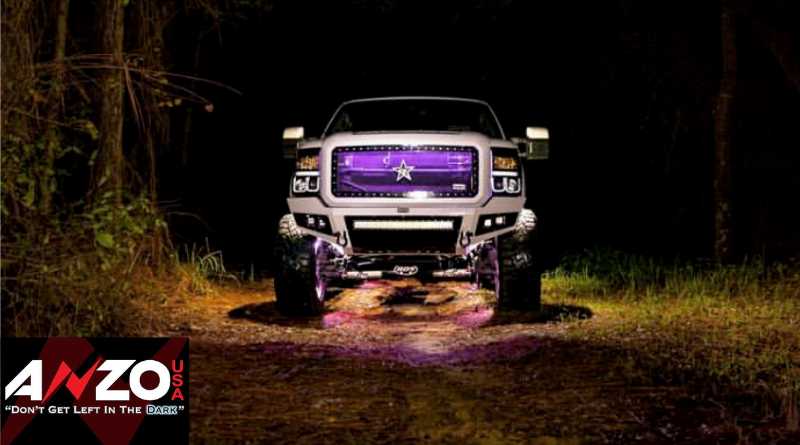
Thanks to both engineering developments and technological breakthroughs, light mount opportunities are seemingly endless these days. But beyond the obvious functional application replacements like reverse lights and turn signals on daily drivers, or light bars and auxiliary lights on trucks and off-road rigs, LEDs are now used for atmospheric purposes as well. Colored underbody and engine bay lighting highlight those carefully-chosen aftermarket mods, while ambient interior lights turn a vehicle from a simple space into an actual place.
And make no mistake, as modern vehicles continue to gain connectivity and artificial intelligence, that sense of “place” will only grow stronger. Mobile living rooms, offices on wheels, roving patios—this is the picture that car show concepts have been painting for the poor shmucks toiling away behind the wheel of a boring sedan.

But while a key component of selling Tomorrowland is—literally—shining the best light on it, let’s take a moment to break down some current trends. Because even if we’re headed for a future of blue-hued and backlit “people-movers,” for now, we’re still driving. And while ambiance certainly has a place among current lighting trends, so do functional upgrades that, you know, actually help you see the things in front of you.
So, from eye-catching makeovers to practical investments, here’s what’s cooking in current automotive lighting trends.
But first, a word from the experts.
Before we jump too far into what lighting trends are changing the current landscape, it would probably help to understand what exactly that landscape looks like, right?
According to SEMA, aftermarket lighting had a $2.09 billion market share in 2017, growing steadily throughout 2018 and 2019. Research also indicates that as advanced driver assistance systems (ADAS) and connected vehicle technologies (CVT) pick up steam, so too will the lighting industry, particularly the application of compact, efficient LEDs. (After all, clever tech such as adaptive and dynamic response headlights, requires clever components.)

Of that $2.09 billion, almost 60% were head and taillight sales, with about 30% left for exterior accessory lighting and the final 10% reserved for interior lighting. And, as you might expect, in niche markets like Off-Road, that percentage of exterior accessory lighting increases dramatically. In fact, 4×4 accessorizers are more likely to purchase lighting upgrades than virtually any other group, as these mods are usually integral to improving off-road trail safety.
But more interesting, is the 2019 SEMA data indicating exterior accessory lighting is showing more growth than traditional headlight/taillight replacement sales across all primary business types.
So, what does all this mean?
It means the lighting market is expanding—a lot. New players, new technology, new products, and new enthusiasts are changing what’s hot and what’s not. Traditional lighting upgrades will remain popular because—let’s face it, swapping in some LED headlights is a cheap and easy way to improve performance, safety, and style on an aging ride. (Look at the continued success of companies like ANZO and Putco for proof.) But as LED components get more advanced and more affordable, potential applications increase, and so does the demand for full-vehicle lighting.
Putco arrived early to the LED party. Their LuminiX line of sleek LED product pushed the envelope of design and function. Putco also took on the task of offering LED headlights for the Jeep® Wrangler JK (2007-2018). Their LuminiX JK headlights are still wildly popular. So much so that they’re regularly “knocked-off” by overseas manufacturers. Proving that they’re still at the cutting edge and that the JK is still king, Putco announced JK-specific Luminix Jeep Tail Lamps at last year’s SEMA Show. Grab some sunglasses, and read on…
Current Lighting Trends
Among lighting trends, something we’ve seen for a while now is the way show trucks adopt accessories generally attributed to hardcore off-roaders. Many of these vehicles have no intention of ever hitting a trail—and yet they are dressed for absolute nighttime desert warfare. This signals to the industry that the realm of personalization has just as much to do with form as it does function.

Basically, our vehicles are an extension of ourselves—and sometimes we simply want them to look really, really good.
But similar to the Wheels and Tires category, in which current enthusiast desires for all-things-options seem to be making short life of certain styles, red-hot lighting trends can be here today and gone tomorrow. Junior Calvert of Westin Automotive explains that, in an effort to avoid filling shelves with obsolete inventory, many manufacturers are playing the long game, investing in smart trends by building upon the basics and innovating in a smaller space.
Applying Industry-Wide Styling Trends to the Lighting Segment
“The industry is really evolving into some truly cool stuff, but it changes so fast. We’ve decided to stay with the core basics. LED light bars (double row, single row), auxiliary lights, work lights—those are the solids,” says Calvert.
So how does a brand like Westin compete with only the core products? By adopting the little trends—the ones that are likely to stick around for a while. Sure, colored lights can really make other vehicle accents pop, but overall, blacked-out textured finishes are still holding strong among many enthusiasts. Therefore, Westin offers its lighting upgrades in a black powder-coated housing, so drivers can keep that “murdered-out” aesthetic, that manages to look both aggressive and refined.

Similarly, SEMA data shows that lighting mods are exceptionally user-friendly, with 69% of lighting purchases from 2018 being installed DIY. Westin gets this, and has made its products truly plug-and-play. Purchases include wiring harnesses with connectors, relays, and in-line fuses, as well as switches and mounting hardware.
Another lighting trend we’re seeing in the industry is pretty simple: LED integration.
“I get asked all the time,” says Calvert, “‘Why would Westin get involved with a category that is so oversaturated with overseas manufacturers?’ And the answer for us is pretty simple. We make products that utilize LED lights—we need LED lights to enhance our products. So, we can offer a complete quality package with cost savings for our customers.”
And complement they do, as the Westin HDX LED Grille proves. Sporting an 11-gauge steel frame, the grille accommodates one double row combo LED light bar and two flood or spot single row LED light bars, in addition to an adjustable center-row LED bar. Oh, and did we mention this thing looks like it conquers the Hell’s Revenge trail for breakfast…?

High-End Exterior Lighting
While many 4×4 enthusiasts are wrenching on a budget, those who do some serious off-roading or take part in high-performance competitions like desert racing and Ultra4, are heading upmarket for more extreme lighting solutions.
High-end manufacturers are answering the call, with top-of-the-line upgrades fetching top-dollar prices. Brands like Vision X and Baja Designs—who have roots in the motorsport scene—are investing in new technology that gives a competitive edge. (Think: military-grade laser beams, guys.)
But even younger companies, like Rigid Industries, are producing top-quality lighting accessories that stand tall amid competitors—even in new-product hot beds, like Easter Jeep Safari and Overland Expo. Take the company’s new RIGID Radiance Pod XL. Packing major output in a small package, the improved cube light measures only 4” x 4”, but uses both spot and flood beam patterns to optimize illumination quality no matter the landscape.

A blacked-out circuit board gives a subtle look, while back-lighting in white, amber, blue, or red, add more personal style options. The RIGID Radiance Pod XL also includes separate backlit rocker switches so that the forward projecting light and the backlight can be controlled independently.
Transportation Transformation
As vehicles become more tech-forward, the ever-expanding lighting market will be ready to accommodate—both at the OE and aftermarket levels.
Colored LEDs
Adding style, luxury, personalization, and even safety during nighttime travel, interior ambiance lights are extending beyond niche markets into more mainstream applications. Ford now offers user-selective ambient lighting through its SYNC 3 infotainment center. Likewise, many luxury badges, like Mercedes and BMW, adopt soft-hued interior glows that fit with their brands.

Exterior colored lighting still belongs to the aftermarket, though, with companies like PlasmaGlow, Oracle Lighting, and XKGlow leading the charge with wild RGB capabilities built into Bluetooth-friendly kits. In fact, the XKchrome App lets users sync their ambient lighting to pre-set patterns or music playlists, taking visual effects to a whole new level.
Brands like Quake LED are integrating multi-color functionality into off-road-ready light bars, foglights, CB antennas, and even headlight replacements. Take the company’s new Jeep RGB LED Halo Headlights. Available for JL Wranglers and JT Gladiators, these first-to-market lights not only greatly improve stock visibility, but also allow for unique color customization. The system is controlled via Bluetooth and offers over 100 advanced lighting effects, so users can dial in how mild or wild they want their Jeep to be. The lights also provide a bright white halo DRL as well as custom amber switchback turn signals, which adds a distinct aftermarket look.

Laser Technology
As we mentioned above, among top-tier manufacturers, laser technology is beginning to creep onto the scene, too, mostly in the form of high-caliber, high-dollar upgrades. Baja Designs is breaking ground in this sector, recently dropping its new OnX6 Hybrid Laser/LED light bar and XL Laser High Speed Spot light for the aftermarket.

On the OE side, luxury brands are the first to adopt this technology. (No real surprise there, considering cost.) In 2014, the BMW i8 and Audi R8 LMX were the first production vehicles to sport laser headlights, followed the next year by the BMW 7 series. Lighting manufacturer OSRAM boasts that, “as a result of this laser technology, the full beam of these vehicles have a range of up to 600 meters—double the distance of current standard LEDs.”
Will laser lighting replace LEDs? Doubtful. Likely, the development of that market will be more tangential than sequential.
But check back on the blog soon, as we’ll be sitting down with Junior Calvert of Westin Automotive for a more in-depth look at how his company is innovating LED lighting trends, where he sees the industry heading, and what he thinks about all these laser beams…


