
Auto Industry News: Daytona Doubleheader, Chinese EVs Coming to America, & More Bad PR for Self-Driving Vehicles
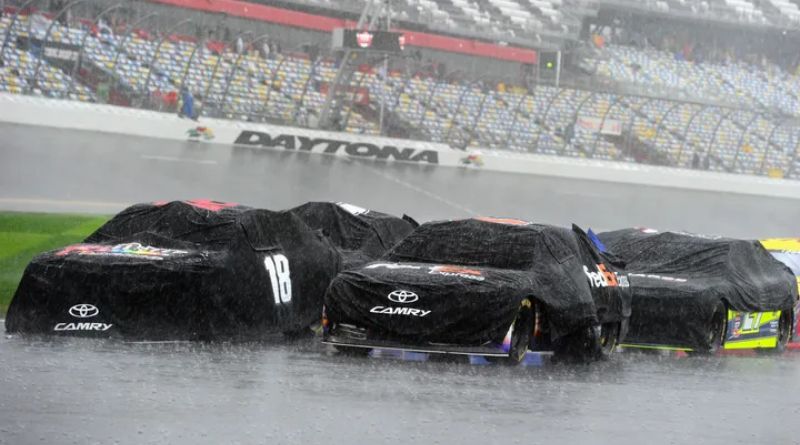
A weekend of Florida downpours reveals a silver lining – the first-ever Daytona 500/Xfinity Series doubleheader. While ticketholders settle in for a long day of high-octane fun, automakers in Detroit are letting out another beleaguered sigh. China’s BYD, now the world’s largest seller of EVs, is planning a factory in Mexico, allowing it to get around those pesky 25% American tariffs. Over in San Francisco, it’s more bad news for self-driving vehicles as the city launches a lawsuit against the California Public Utilities Commission and Waymo faces more scrutiny after two robotaxis hit the same pickup truck as it was being towed.
Plus, Shell shutters nearly all its light-duty hydrogen stations in California, EV public chargers get more reliable but harder to access, and drivers in Italy are shaking their fists at a new city speed limit.
Delay in Daytona Makes For Historic Doubleheader
The Daytona 500, NASCAR’s premier event, faces a historic delay this year thanks to days of unrelenting rain. The 2024 running will mark the first time the race joins the Xfinity Series in a doubleheader at Daytona International Speedway – a special treat for those ticket-holders able to accommodate the schedule change.

Originally slated for Sunday, the 66th running of the Great American Race now kicks off on Monday February 19 at 4 p.m. ET, following the United Rentals 300 at 11 a.m. ET. This unprecedented move comes after an entire weekend washout of events, forcing officials to reschedule both races.
Notable drivers, including former Daytona 500 champion Joey Logano and Michael McDowell, who clinched the victory in 2021, are poised to lead the pack. Tyler Reddick and Christopher Bell secure starting spots behind the front row, setting the stage for an exciting showdown.
Pre-race festivities, such as Pitbull’s concert, have been canceled, but Dwayne “The Rock” Johnson will still serve as grand marshal for the Daytona 500, lending his signature voice to the command for drivers to start their engines.

Detroit Starts to Panic as BYD Makes Moves into America
China’s leading electric vehicle manufacturer, BYD, is now emerging as the world’s leading electric vehicle manufacturer – and it has its sights set on the lucrative U.S. market.
According to a report from Japan’s leading stock index, Nikkei, China’s BYD plans to set up a new EV plant in Mexico, with official negotiations underway to determine a site.
The company already boasts significantly lower production costs than its Western counterparts (roughly 30%), thanks to its ownership of almost the entire battery supply chain. By setting up shop in Mexico, BYD could circumvent the 25% tariff on vehicles made in China, intensifying competition in the North American market.

U.S. Automakers Shift Gears
Detroit automakers, aware that China has been interested in Mexico for some time, are making bolder moves to recalibrate their EV strategies.
During an investor conference last week, Ford CEO Jim Farley called low-cost Chinese EVs a “colossal strategic threat” and revealed his company has been “secretly” working on a new affordable platform to compete. Farley, along with GM CEO Mary Barra, also told investors that they were “all in” on new partnerships aimed at lowering EV technology costs.
The two legacy automakers are hardly alone in their efforts. Stellantis is keeping its “eyes open” for potential merger and acquisitions opportunities, said CFO Natalie Knight, doubling down on the company’s intentions to be a “consolidator” as the industry struggles to adapt to a new EV paradigm shift. There has been speculation that Stellantis is considering a merger with Renault, but both companies played down the rumors this past week. Knight said short-term goals lie in “small deals,” mostly regarding software or battery materials.

Tesla continues doing what Tesla does best – fanning the flames of the EV price war. The automaker temporarily slashed prices by about 2% on select Model Y vehicles, translating to a Valentine’s Day discount of about $1,000. The price cuts are part of Tesla’s plan to build demand as the EV market cools and Chinese competition heats up. In January, CEO Elon Musk told analysts that Chinese automakers would “demolish” global rivals without trade barriers.
More Than Just Materials
BYD’s advantage – and indeed, that of all Chinese automakers – lies in more than just quick access to low-cost manufacturing materials. Labor dynamics add another layer of complexity to the equation.
Last year’s six-week United Auto Workers’ strike hit Detroit hard, costing Ford, GM, and Stellantis a combined $3.6B in lost profit. Additionally, the new labor agreement is expected to cost billions over the life of the contract. Ford places its estimates at $8.8 billion – roughly $900 per vehicle by 2028.

Nonunion companies will feel the burn too. The UAW has been clear about its expansion plans, with organization efforts well under way (and building traction). As a result, automakers like Toyota, Volkswagen, and Tesla have been quick to hand out raises. Hyundai went so far as to match the 25% wage increase the union secured in its contracts with the Big 3.
While the automakers’ concessions were a major victory for labor advocates, the aggressive rhetoric and targeted strike strategy reshaped relationships – particularly at Ford. CEO Jim Farley told investors that the company will need to “think carefully” about future factory locations in light of the strike’s impact.
Despite Ford’s historical reliance on unionized labor, rising manufacturing costs have become a significant concern, contributing to the automaker’s $7 billion annual cost disadvantage compared to competitors.

More Self-Driving Speed Bumps
The autonomous vehicle industry finds itself under intense scrutiny again as safety concerns and regulatory challenges mount, impacting major players Waymo and Cruise.
Waymo Recall
Most recently, Waymo announced the recall of 444 self-driving vehicles due to a software error that could lead to inaccuracies in predicting the movement of towed vehicles. The move follows two minor collisions in Arizona, during which two Waymo AVs struck the same off-angle towed pickup truck in quick succession. The incident, once again, raises questions about the reliability of autonomous technology.
It’s poor timing for Waymo too, which is still reeling from watching a crowd destroy one of its robotaxis during a San Francisco Lunar New Year celebration. Critics acknowledge the severity of the vandalism – which included lighting the vehicle on fire – but rightfully question why the autonomous vehicle was driving through a crowded intersection when human drivers knew to avoid the pedestrian traffic.

Cruise Departure
Meanwhile, GM’s Cruise unit experienced some upheaval last week with the resignation of Carl Jenkins, the company’s head of hardware. His exit comes amidst a series of departures following the suspension of the unit’s U.S. operations. Cruise was forced to halt testing after one of its robotaxis dragged a jaywalking pedestrian that was hit by another vehicle and thrown into its path.
Jenkins’ team was responsible for developing self-driving hardware, which includes microchips, sensors, and computers. He worked with GM on product development, and no doubt provided important insight and expertise that CEO Mary Barra will be unhappy to see go away (and potentially wind up at a rival company).
Fresh Lawsuits
The Washington Post recently learned that the city of San Francisco filed a lawsuit in December against the California Public Utilities Commission (CPUC) over the expansion of autonomous vehicle testing. The lawsuit challenges the CPUC’s decision to allow companies like Waymo and Cruise to operate self-driving vehicles without sufficient regulation, underscoring the tension between local authorities and self-driving tech companies where safety and oversight are concerned.

Legal experts say the chances of the city’s attorney getting the commission to overturn its decision are slim, but not impossible. Should he succeed, Cruise would be unaffected since it already lost its operation license in the city, but Waymo would be forced to roll back its expansion plans. The company would also likely see other AV-friendly states, like Texas and Arizona, adopt more cautious legislation regarding self-driving vehicles.
Speaking of legislation, California lawmakers and labor unions rallied last week for stricter regulation of autonomous vehicles, specifically for laws prohibiting autonomous trucks without human drivers.
They are pushing for greater control through two bills. The first would give cities – rather than state regulators – authority over autonomous vehicle permits and enforcement of AV-related laws. The second is a repeat of the bill Governor Gavin Newsom vetoed last year, requiring a trained human driver to be behind the wheel of all self-driving rigs over 10,001 pounds.

Did you know…?
Despite the negative attention on GM’s self-driving robotaxis, the company is moving forward with expanding its Super Cruise hands-free driving technology in mainstream vehicles. Previously available on 400,000 miles of North American roads, the system now works on 750,000 miles of roads in the U.S. and Canada – including some non-major rural highways and other less prominent thoroughfares.
What Else You Need To Know This Week
Here are a few headlines we’re keeping an eye on and think you should too.
Shell Shutters California Hydrogen Fueling Stations
While the industry was waffling back and forth on whether hydrogen technology was a worthwhile investment, oil juggernaut Shell got tired of waiting. The company decided to shutter almost its entire hydrogen fueling station network in California. Citing “supply complications and other external market factors,” Shell made the decision shortly after announcing the discontinuation of its network build-out.

It’s an interesting move, since last summer the federal government committed nearly $8 billion to promote the alternative fuel and help ensure its use among consumers. Shell’s closure will certainly disrupt adoption efforts of the nascent technology, as those seven stations represent about 12% of the public hydrogen fueling stations in the United States. The company does plan to keep its heavy-duty hydrogen fueling stations, which cater to commercial operations.
Reliability of EV Chargers Up, But Availability Down
According to new data from J.D. Power, public electric vehicle chargers are becoming more reliable, but the availability of those chargers is declining.
In the fourth quarter, 18% of public charging attempts failed, an improvement from previous months. The main cause remains station outages and malfunctions, responsible for 71% of failed visits during the time period. However, there is now a growing concern about the lack of charger availability — as well as the long wait times. These issues account for 20% of failed attempts, J.D. Power says, up from 10% in 2021.

This shortage is particularly alarming as EV adoption outpaces charging infrastructure growth. Feedback indicates dissatisfaction, especially with slower Level 2 chargers, which saw a 28-point decrease in satisfaction compared to the previous year.
Despite major initiatives like the Biden administration’s goal for 500,000 nationwide EV chargers by 2030, investments primarily focus on DC fast-charging systems, neglecting the slower but still heavily used Level 2 chargers. The discrepancy raises concerns about the overall EV charging experience, both now and looking forward.
Italians Not Loving Bologna’s New Slow Speed Limit
In late January, Bologna became the first major Italian city to impose a 30 km/h limit on most streets (down from 50 km/h). That translates to less than 20 mph in American speed terms… and noisy grumblings from critics.

Bologna’s authorities say the new limit will help improve safety and livability in the bustling city – a city which was never built with automobiles in mind but now plays home to legendary brands Ferrari, Lamborghini, and Pagani.
Indeed, Bologna has been an urban center since the 9th century BC and that kind of infrastructure is difficult to retrofit for quick-moving traffic. Detractors don’t seem to care about pleas for safety, health, or even historical preservation though. They point to the near standstill traffic that is adding to their commute times, and argue that the city risks losing out on visitors due to enforcement. Currently, fines are quite low, costing drivers €29 (or about $30 American dollars) if caught driving over 36km/h.
Petitions and social media memes have already escalated to protests. However, city officials are quick to point out that within just two weeks of the new limit, traffic accidents dropped 21%. Additionally, the city is not alone in its efforts. Similar speed changes are in effect in Amsterdam, Spain, Brussels, and France.
The Engine Block is your one-stop source for any and all auto industry news. Keep an eye on our weekly round-up of enthusiast coverage, product reviews, vehicle spotlights, auto show/expo features, and more. Be sure to check back tomorrow for a list of the must-have chemicals in your garage this season, then return on Wednesday for some great tips when shopping for a new fuel pump. On Friday, don’t miss our next installment of Competition Corner. It includes all the must-see auto enthusiast events for March.


