
Auto Industry News: Fast Ferraris, Fresh Fords, & EV Tax Credit Changes
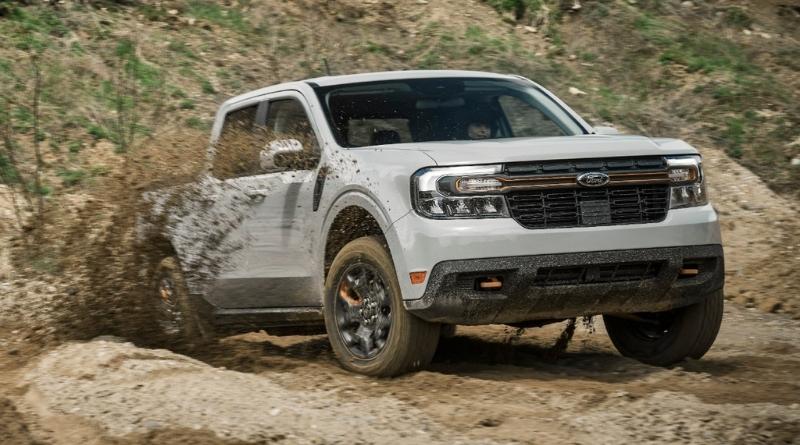
Ford nabbed a number of headlines last week, mostly for two new truck debuts. The automaker treated its compact Maverick to an exciting new Tremor off-road package, ensuring it can hit the trails right alongside its bigger, upmarket siblings. Meanwhile, the Ford F-150 Lightning received its own makeover, with a new Pro SSV model becoming the first U.S.-produced electric pickup for police. Wondering if EVs will actually make good police cars? The Engine Block breaks down some of the pros and cons, and shows how the technology is currently faring in some departments across the nation. And speaking of EVs, it appears the squabbling in D.C. over those pesky incentives may finally be over. Keep reading to learn what’s changed… and which automakers find themselves left out of the party.
But first… we have some go-fast updates from the world of racing, including Ferrari’s latest race car debut and NHRA’s new fuel engine program.
Ferrari Unveils 296 GT3 Car
Ferrari pulled the covers off its new competitor in GT racing at the 24 hours of Spa in Belgium. While not too far removed from the 296 GTB hybrid it’s based on, the new 296 GT3 wears a more aggressive and race-worthy design that looks straight out of a video game. All those swoops and angles pay off, apparently. Ferrari says the 296 GT3 produces 20% more downforce than the outgoing 488 GT3.
The Prancing Horse’s new race car features the same 3.0-liter twin-turbo V6 as its roadgoing sibling, but drops the electric motor in order to comply with FIA regulations. The decision knocks off about 200-hp in the process, but the 296 GT3 still puts out about 600-hp and 524 pound-feet of torque. Ferrari positioned the engine further forward and lower down versus the road car, as well. The automaker says this lowers the center of gravity, making the vehicle more drivable (and reliable) in 24-hour races.

Set to make its racing debut at the Daytona 24 Hours in January 2023, the new 296 GT3 is aimed at professional race teams but Ferrari says it will also be available to “gentleman drivers” looking for a little more hardcore performance (and who can pony up the cash, of course). No word on pricing yet, but the automaker’s street-legal GTB starts around $318,000.
NHRA Adds A/Fuel Engine Program to Top Alcohol Funny Car
Drivers and race teams in the Top Alcohol Funny Car class will have another engine option to run for the 2023 NHRA Lucas Oil Drag Racing Series. Officials announced the addition of a new A/Fuel engine program designed to increase participation by offering interested participants something new – as well as economically efficient.
The ruleset allows race teams to purchase vehicle and engine parts from nitro teams, which not only allows for significant cost savings but also creates a “stepping stone” for drivers, crew chiefs, and crew members who hope to eventually race in nitro Funny Car themselves.
“This is something we’ve been working on for several years, and it’s all about building new excitement and a sustainable business model for the category,” NHRA Technical Services/ Top Alcohol Rules Committee Chairman Josh Hamming said. “We believe there is going to be strong interest right off the bat [and it] will reduce costs for interested teams, and we’re eager to see this class continue to grow.”

Dodge “Speed Week” Kicks Off Woodward Dream Cruise
This weekend, the 2022 Woodward Dream Cruise takes over metro Detroit for the world’s largest one-day automotive event. To kick off the infamous festivities, Dodge organized a special, multi-day Speed Week highlighted by three different product unveilings scheduled to take place over three separate evenings, August 15-17.
According to Tim Kuniskis, Dodge//SRT CEO, “the future of [the] brand will be on display,” with the debuts signaling Dodge’s new performance direction. (Spoiler alert: It’s electric.)
The reveals are also part of the automaker’s “Never Lift” business plan, a two-year roadmap for announcing new products and automotive-enthusiast-related content. Named for Dodge owners who never have to lift their foot off the gas pedal (or EV accelerator), the “Never Lift” campaign intends to culminate with the introduction of Dodge’s first pure electric car in 2024.
The 2022 Woodward Dream Cruise runs August 20, and involves nine participating communities in Oakland County along a 16-mile radius of historic Woodward Avenue.

Ford Maverick Receives Tremor Treatment
Ford’s littlest hauler gets a big dose of off-road capability. Starting this September, Blue Oval fans can order the compact Ford Maverick with a special new Tremor off-road package.
Available for XLT and Lariat series trucks equipped with the 2.0-liter EcoBoost engine, the Tremor treatment builds upon the automaker’s existing FX4 Off-Road Package. It adds a new all-wheel-drive system with a twin-clutch rear-drive locking differential, which Ford says will allow greater off-road capability by diverting virtually all rear axle torque to either wheel. The package also includes five selectable drive modes for greater customization to the terrain, as well as Ford’s exclusive Trail Control, which operates like cruise control for off-road driving.
Special front and rear springs and dampers, together with a 1-inch lift, improve the Maverick’s stance off-road. A heavy-duty transmission cooler and upgraded half-shafts further bolsters durability off-road.

Other features of the Maverick Tremor include:
- Unique grille finish, plus blacked-out Ford logos, headlamps and taillamps
- Two front tow hooks with signature Tremor Orange accents
- Available Tremor Appearance Package, which includes a Carbonized Gray-painted roof and mirror caps, as well as black side graphics on the hood and lower body
- Standard all-terrain tires wrapped around unique 17-inch aluminum wheels featuring new Tremor Orange and dark gray anodized finish
- New lower front fascia with a more aggressive approach angle and steel skid plates
- Black Onyx seats featuring stitched Tremor logos and signature Tremor Orange accents
The 2023 Ford Maverick Tremor Off-Road Package costs $2,995 MSRP and Tremor Appearance Package costs $1,495.
Did you know…?
The National Highway Traffic Safety Administration officially opened an investigation into reports of catastrophic engine failures in 2021 Ford Bronco models powered by the 2.7-liter EcoBoost V6. The government agency began evaluating the issue back in May, after receiving dozens of customer complaints that Bronco SUVs were losing motive power at highway speeds without any warning. According to Ford representatives, the issue is related to a valve-keeper problem. NHTSA says the investigation isn’t a recall but rather an assessment of “the scope, frequency, and potential safety-related consequences of the alleged defect.”

EVs on the Beat
Late last month, Ford unveiled another noteworthy truck – the 2023 Ford F-150 Lightning Pro Special Service Vehicle. The debut marks the first domestic-made electric pickup for police departments.
Like the regular consumer version of the F-150 Lightning, the Pro SSV boasts a standard 452-hp and 775 lb-ft of torque, with 580-hp and 775 lb-ft of torque in the extended battery version. Despite the impressive performance specs – and sub-four-second 0-60 mph acceleration capabilities – Ford says the EV is designed to assist police outside of pursuit situations.
These less-exciting scenarios include towing trailers and boats, or assisting at an accident or crime scene. (For example, the Pro Power Onboard can serve as a mobile power source to light up evening accident scenes on the highway.) Additionally, law enforcement officers often have their vehicles idling when securing a scene or watching traffic, which wastes gasoline. An electric powertrain would allow them to keep the vehicle running – as well as any necessary sirens, lights, radios, or other equipment – without burning costly fuel or releasing harmful emissions.

Cost-Saving Benefits for Departments
Police departments across the country are beginning to eye up electric vehicles – and not just for stationary or light-duty work, but also full-on patrolling.
“There are so many benefits, the huge savings in maintenance costs, the [lower] cost of a kilowatt-hour compared to fuel. The interest is there,” Greg Ebel, marketing manager for Ford Motor Co.’s police vehicles, told Automotive News back in February.
Indeed, the automaker scored big in December 2021 when New York City purchased 184 Mustang Mach-E GTs for $11.5 million. The high-performance all-electric crossovers provide 480-hp, 600 lb-ft of torque, and a supposed 0-60 time of 3.5 seconds. The NYPD Mustang Mach-Es hit the streets this summer.
Still Some Challenges to Overcome
If that Mustang Mach-E price tag had you raising your eyebrows, then you’ve zeroed in on one of the major talking points against EV use in public safety fleets: Cost.
Electric vehicles have a higher initial price tag than their gasoline-powered counterparts, and they are also more expensive to upfit for police use. However, as mentioned, many departments believe the reduced fuel and maintenance costs will offset upfront costs by the time the EVs age out of the fleet. For small municipalities that have a pretty limited patrol area, this could be a big help to their annual budgets.

Departments that cover highway patrol functions, wide-ranging rural areas or multiple jurisdictions face a bigger issue: Range.
In the absence of frequent, dependable charging stations, these officers would require an electric vehicle with at least 400 miles of range. This feature would allow someone like a state trooper – who covers multiple counties in one shift – to return to the barracks (or even their home), clock out, and then charge up the vehicle before their next shift.
Those charge times are another challenge for EVs pressed into service. Whereas a gas-vehicle can refuel completely in mere minutes, electric vehicles need substantially more time just to top up. Officers currently using EVs find ways to work around this downtime by working through it – filling out reports and making calls – but it’s still a time eater.
In short, it seems that EV technology is simply not yet ready for long-range work. However, for the average municipality – which only puts about 100 miles on the odometer during a shift – electric options could be a major money saver. (Assuming the previous driver remembers to plug it in at the end of their shift!)
EV Incentive Update
About a month ago, we reported on some of debates happening on Capitol Hill regarding EV tax credits. You can catch up on all the drama HERE, but essentially, the House passed some ambitious Build Back Better legislation that would have increased the incentive, only to see the bill die in the Senate when it failed to win the support of West Virginia Democrat Joe Manchin.
Since then, there has been plenty of back-and-forth in Washington as legislators continued to battle over bill revisions. Last week, the Senate finalized its proposal – with Manchin’s enthusiastic support.
The new bill – called the Inflation Reduction Act – is a trimmed down version of the initial Build Back Better agenda and covers everything from prescription drug prices to corporate tax rates. It also finally seems to iron out those pesky EV incentives.

Here’s what changed:
- The $7,500 electric vehicle tax credit will be renewed starting in January 2023 and will last for one decade until the end of 2032.
- The tax credit cap will be eliminated. (Previously, manufacturers faced a 200,000-vehicle threshold which triggered a tax credit phase-out.)
- The credit will be available at point-of-sale, rather than the following year during tax time.
- To qualify for the full credit, vehicles must be assembled in North America with the majority of the battery components coming from the U.S. or from countries that have free trade agreements with the U.S. Those sourcing requirements will increase to 100% by 2029. Additionally, the bill would disallow any batteries after 2023 with any Chinese components.
- While the tax credit has been standardized at a flat $7,500, it is only available to individual buyers with an income of less than $150,000 or family income of less than $300,000.
- The credits also do not apply to certain high-MSRP vehicles, as they cap at $80k for pickups, SUVs and vans, and at $55k for sedans.
Unhappy Automakers
According to Reuters, automakers worry the percentage targets for critical minerals and battery components sourcing are too high and rise too quickly. Some, like Rivian, are not happy that the price limits will exclude their USA-built vehicles. (Because of the young automaker’s high starting costs, Rivian does not plan to sell a vehicle under $80k until 2025.)
Their calls for changes to the proposal went unanswered. The bill passed the Senate on Sunday afternoon, August 7, with a vote of 51-50. All Democrats voted for the bill, with all Republicans opposed and VP Kamala Harris breaking the tie. The bill next goes to the House (where it is expected to pass) and then to President Biden’s desk.
The Engine Block is your one-stop source for any and all auto industry news. Keep an eye on our weekly round-up of enthusiast coverage, product reviews, vehicle spotlights, auto show/expo features, and more. Be sure to check back Friday for an update on the how the Outdoor Recreation industry is faring post-COVID.


