
Auto Industry News: High-Profit Collector Cars, Tesla Recall, New Scouts, and No More Junk Fees
With exactly one week till Christmas, the auto industry isn’t letting off the gas. Both the FTC and NHTSA dropped some big news – one, a finalized rule banning those dealer junk fees and the other, a notice that alcohol-detection technology will eventually be a new-car requirement.
Plus, news on Tesla’s very big recall, VW’s upcoming Scout prototype, the U.S. power grid’s bleak outlook, and more. But first… Hagerty released its annual Bull Market List last week. The roundup represents which collector cars stand a good chance of holding or even appreciating in value. So, if you planned to hit the auction circuit in 2024, this is a list you’ll want to see.

Hagerty 2024 Bull Market List
Generally speaking, the collector car hobby thrives more on passion than practicality. People invest in classic rides because they love something about the vehicle, like its history, style, or performance capabilities. It’s less likely someone makes the purchase with the sole intention of turning a profit later.
However, budgets always play a role – and there’s no reason you can’t invest in a fun car that will also hold its value in the coming years. That’s the rough-idea reasoning behind Hagerty’s Bull Market List. Started in 2017, this annual roundup accurately predicts cars that not only stay popular but also appreciate.
The list takes into consideration a variety of data, from maritime shipping numbers to public auction sales and requested insurance quotes. It also taps into enthusiast knowledge, and looks at shifting demographics, market trends, and good old supply and demand.

Check out this year’s list below, and let us know what you think in the comments.
- 1989 Lamborghini Countach 25th Anniversary
- 1946–1950 Chrysler Town & Country
- 2008–2013 BMW M3
- 1997–1999 Mitsubishi Pajero Evolution
- 2011–2016 Ferrari FF
- 2000–2005 Jaguar XKR
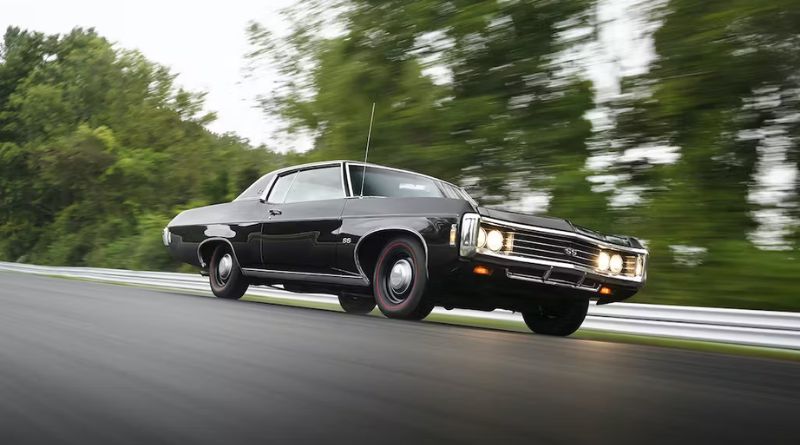
- 1965–1970 Chevrolet Impala SS
- 1981–1986 Jeep CJ-8 Scrambler
- 1964–1966 Ford Thunderbird
- 1997–2002 Plymouth Prowler
FTC New Cars Rule Passed
If a new vehicle purchase is on your upcoming to-do list, then it might interest you to learn that the U.S. Federal Trade Commission finalized its car-buying rule on Tuesday, which aims to crack down on deceptive sales tactics used by dealers. It is expected to save consumers nationwide more than $3.4 billion and an estimated 72 million hours each year shopping for vehicles.
The Combating Auto Retail Scams (CARS) Rule, first announced in 2022, bans hidden junk fees and “bait-and-switch” claims, two illegal tactics commonly used by unscrupulous dealers to inflate final car costs. Prioritizing transparency, the rule also requires dealers provide upfront pricing, straightforward financing terms, and no more “bogus” add-ons – like service contracts for oil changes on an electric vehicle.

Dealers will need your explicit agreement before charging you for any additional products or services, and you’ll have the right to cancel these within a specific period. Likewise, certain financing arrangements will include a limited time period where you can back out of the deal if it’s not the right fit. The CARS rule also lays out a clear dispute-resolution process, so if any issues do arise, you know how to handle them.
The FTC carved out clear protections for military members and their families, who the agency says are regularly targeted by false advertising and questionable financing terms. Under the CARS rule, dealers must be honest and clear about pricing and military affiliations, as well as out-of-state vehicle relocation rules and repossession possibilities — safeguarding servicemembers and their families who often relocate due to duty assignments.
Unfortunately, it will take some time for shoppers to see these changes. The new rule won’t take effect until 18 months after its publication in the Federal Register, which is expected to happen sometime in early 2024. Additionally, the U.S. auto dealer lobby strongly objects to the new rule and said it will explore all options to stop it from taking effect.

In Case You Missed It
The National Highway Traffic Safety Administration (NHTSA) also had big news to share last week. The safety regulators announced on Dec. 12 that they are starting the process to put a new federal safety standard in place requiring devices in all new passenger vehicles that prevent drunken or impaired driving. Since this type of regulation can take years to finalize, safety officials are hoping to expedite matters by introducing the rule while alcohol monitoring technology is still developing.
Tesla’s Very Big Recall
Tesla is recalling over 2 million vehicles in the U.S. – nearly every car it’s produced – to revise the system that monitors whether drivers are paying attention when using Autopilot. Safety regulators found it to be inadequate in ensuring driver engagement, potentially leading to safety risks.
While the EV maker disagreed with NHTSA’s findings, it is voluntarily complying with the recall demand by issuing an over-the-air software fix. This is the same action Tesla took back in February with its “Full Self-Driving” software, which NHTSA found could cause cars to violate traffic laws, such as failing to stop at intersections or turning into the wrong lane.

Believe it or not, NHTSA’s decision actually works in Tesla’s favor.
As Reuters points out, while safety regulators criticized “the prominence and scope” of Autopilot’s controls and driver warnings, they never actually deemed the system as fundamentally unsafe – which is the charge brought forth by accident victims’ lawyers and some safety advocates.
By requiring that the system be more assertive with drivers, NHTSA is essentially agreeing with Tesla’s defense that the person behind the wheel is always responsible for the vehicle’s operation, even when Autopilot is engaged.
For context, Tesla’s Autopilot system is designed to assist drivers with semi-automated driving features like maintaining speed and lane centering, similar to advanced cruise control. The system’s name, which seems to imply much more automation, has come under fire for false advertising.

Did You Know…?
Tesla’s Autopilot technology has been linked to another fatal car crash, this time in Virginia. A data recorder showed the Tesla Model Y was traveling 70 mph in a 45-mph zone, with Autopilot engaged, when it ran underneath a crossing tractor-trailer, killing the Tesla driver. This death is the third since 2016 in which a Tesla using Autopilot collided with a semi-truck in this fashion. The crash remains under investigation by NHTSA.
VW Scout On Track for 2024 Prototype Debut
The Scout brand, resurrected by Volkswagen in May 2022, plans to deliver two off-road-ready vehicles to the U.S. market: a pickup truck and SUV. They promise to be rugged, American, and 100% electric.
Yes, the nameplate best known for being affixed to the beloved International Harvester Scout, is now an independent EV brand. And despite the German parent company, it is focused specifically on American buyers – with a strategy that includes homegrown manufacturing.

The company announced Blythewood, South Carolina as its production site, and plans to break ground on its new $2B assembly plant in just a few months. Design and engineering will be U.S. based as well; and thanks to a cushy $10 million grant from the state of Michigan this past week, it appears Scout Motors has found the perfect location in Novi, a suburb about 30 miles northwest of Detroit.
While production won’t come online until 2026, CEO Scott Keogh said a prototype will debut in the third quarter of 2024. “Since Scout was iconically a rugged SUV brand, that’s what we’ll bring to life first,” he told Automotive News, noting the full-size pickup would be quick to follow.
Those hoping for a true-to-form retro Scout should prepare themselves. “The concept is to take some of those core things but bring them into the 21st century,” Keogh said. “We wanted to make sure we kept the integrity and the romance of the Scout II. We think we have something cool.”
Time will tell on the design – as well as the price tag. Scout Motors reaffirmed its plans to target a $40,000 starting price; but with current new-vehicle prices being what they are and production still a few years out, we find that number to be ambitious bordering on the absurd.
Upgrade your existing truck’s style and functionality with N-FAB ROAN Running Boards. Check out the video below for details.

What Else You Need To Know This Week
Here are a few headlines we’re keeping an eye on and think you should too.
U.S. Power Grid’s Rough Assessment
The rapid acceleration of electrification is causing demand to rise faster than U.S. power grids can realistically provide – especially as fossil-fuel based generators are forced to retire amid new environmental regulations. As a result, says the North American Electric Reliability Corporation (NERC), certain power markets could face an unreliable electricity supply in the coming years.
The nonprofit group’s 2023 Long-Term Reliability Assessment painted a pretty grim picture if energy policymakers, regulators, and the overall industry do not take action. Specifically, by adding new resources, properly managing generator retirements, and making sure existing resources are more dependable. Additionally, NERC stressed the importance of strengthening the nation’s electric transmission capacity, as well as addressing the growing interdependence of the U.S. power and natural gas systems, since each one often relies on the other for backup.
Needless to say, it appears America has some serious foundational kinks to iron out before adding more electric-powered window dressings.
Cruise’s Christmas Layoffs
Last week, GM announced its plans to lay off one quarter of the workforce at its self-driving unit, Cruise. Roughly 900 employees will lose their jobs.

The subsidiary has been floundering of late, ever since a high-profile incident with a pedestrian in October. After losing public support – along with its license to operate robotaxis in San Francisco – Cruise began damage control by grounding all its fleets nationwide, hastening the resignation of its founder and CEO Kyle Vogt, and dismissing nine senior leaders across the company.
As words like “restructuring,” “simplifying,” and “preserving cash” began hitting press releases, the decision to downsize regular workers doesn’t come as too much of a surprise. Still, the timing is unfortunate for those on the chopping block.
UAW’s Charges Against Non-Union Automakers
Last Monday, the United Auto Workers union filed unfair labor practice charges against Honda, Hyundai, and Volkswagen, accusing the automakers of employing illegal union-busting and intimidation tactics to stop workers from organizing.

According to the UAW, management at a Honda plant in Indiana told workers they had to remove union support stickers while an Alabama-based Hyundai factory confiscated union materials and polled employees to gauge where they stood on UAW support. At a Tennessee Volkswagen plant, where more than 1,000 factory workers recently signed union rep cards, the UAW accused management of “illegally intimidating, interfering with, and spying on pro-union workers.”
The companies all denied the claims.
The Engine Block is your one-stop source for any and all auto industry news. Keep an eye on our weekly round-up of enthusiast coverage, product reviews, vehicle spotlights, auto show/expo features, and more. Check back Wednesday for some myth-busting on drop-in truck bed liners and then return Friday to learn about conversion essentials when upgrading to EFI.


