
Auto Industry News: UAW Pushes Organizing Efforts, Dealers Beg Biden to Slow EVs, and Cybertruck Underdelivers on Promises
The UAW takes center stage again this week, as it capitalizes on the recent success in Detroit to extend its influence – and expand its numbers – by organizing nonunion auto workers. The union’s strategy, which pulls inspiration from the Stand-Up Strike, is already proving effective.
On the dealer front, 4,000 dealerships across the country have appealed to the president for a slowdown on the administration’s bullish electric push, as they struggle to sell EVs amid sluggish consumer demand. Meanwhile, a vehicle with plenty of demand – the much-anticipated Cybertruck – had a less-than-promising delivery event at a Tesla factory this past week. Discover why the avant-garde electric truck’s debut left many fans underwhelmed, with unexpected challenges in range and pricing.
Join us as we unpack these stories and more.
UAW Eyes Expansion
With the ink still drying on its new contracts, the United Auto Workers union is eyeing up the opportunity to organize at 13 nonunion automakers across the U.S.
On Wednesday, UAW President Shawn Fain urged workers at these assembly plants to sign electronic union cards. Pointing to the record concessions wrenched from Detroit’s Big 3, Fain told the nonunion workers that “the money is there; the time is right” and it is now their turn to reap the benefits of union representation.

The UAW’s organizing plans are not unlike its Stand-Up Strike strategy. Similar to how the Detroit automakers could not predict where a work stoppage would occur, nonunion companies will be kept on their toes about where a union campaign may pop up since the UAW is rallying workers at multiple automakers simultaneously.
Generally, labor movements tend to keep quiet until union organizers are sure they have overwhelming support from interested workers. But the tides are turning, and the UAW is acting fast to capitalize on the momentum of its Detroit victories.
Under the current strategy, the union said if 30% of workers at any given plant sign the electronic cards to join, then the effort will be made public. At 50%, the UAW will host a rally with Fain. When support reaches 70% — and an organizing committee is established – the union will seek formal recognition from the company or file for an election vote with the National Labor Relations Board.
“UAW Bump”
Shortly after the UAW’s record deals in Detroit went public, nonunion automakers began scrambling to boost wages. Toyota bumped pay 9%, while Honda raised wages 11%. Hyundai went further and matched what the UAW negotiated in Detroit — 25% over the next four years.
Fain told nonunion workers they were receiving the “UAW bump,” and pointed out “if this is what Toyota gives you when the Big 3 stand up and fight, imagine what you could accomplish if you join the UAW and stand up and fight for yourselves.”

Additionally, while the Big 3 have complained about the hit their revenue and profits took as a result of the new labor contracts, the CEOs are still expecting strong profits – and returns for investors.
Last week, GM CEO Mary Barra told analysts that the new contracts (which include a three-year deal with the Unifor union in Canada) would increase costs by $9.3 billion, or an average of $575 per vehicle. However, she still expects the company to earn a net income this year of $9.1 billion to $9.7 billion and to “fully offset” the higher labor costs. Not only that, GM also plans to buy back $10 billion of its shares over the next year and will raise its dividend in January by 33% to 12 cents per share.
Ford also aimed to assuage shareholders last week with confident full-year projections. While the new UAW contract stands to cost the automaker double what it expected – $8.8 billion or an average of $900 per vehicle by 2028 – the company’s adjusted earnings before interest and taxes are still projected to hit $10 billion to $10.5 billion.
Did You Know…?
Detroit just finished installing the country’s first wireless electric vehicle charging road. The quarter-mile stretch took a little over two years to complete and uses electromagnetic induction to transfer energy from the city’s electricity grid to receivers installed in the floor of an electric vehicle passing over it. The project is funded by the Michigan Department of Transportation, with some help from Electreon – the Israeli startup responsible for developing the technology. For now, only Electreon test pilots will use the road as they refine the tech for public use and commercial monetization.

“Hey, About Those EV Plans…”
In light of higher labor costs, automakers have made noticeable adjustments to their EV agendas. From dissolving joint ventures and delaying new models, to downsizing plant investments and eliminating production targets, companies beyond just the Big 3 are making moves to balance production with current softening demand.
Early adopters remain passionate about EVs, with sales in the U.S. hitting a new record in Q3 (300,000). The mass market, on the other hand, has been less receptive to the vehicle technology – even in the face of favorable tax incentives and massive price drops spurned on by Tesla.
For nearly 4,000 dealerships across the country, this buyer reluctance is a clear sign to slow the roll on EVs. In a letter sent to the President on Tuesday, the allied dealerships urged the Biden administration to reassess proposed regulations “that would essentially mandate a dramatic shift to battery electric vehicles (BEVs).”

They express concern over the electric vehicles that are “stacking up” on lots, and insist the majority of customers are simply not ready to switch from ICE to EV. Affordability, charging availability, range anxiety, and the dramatic loss of range when towing, are just some of the factors that dealers say are influencing customer attitudes.
“Many of these challenges can and will be addressed by our manufacturers, but many of these challenges are outside of their control,” the letter reads. “Reliable charging networks, electric grid stability, sourcing of materials, and many other issues need time to resolve. And finally, many people just want to make their own choice about what vehicle is right for them.”
The alliance’s letter urges the administration to allow time for technology to catch up, so it can adequately support customer needs.
What Else You Need To Know This Week
Here are a few headlines we’re keeping an eye on and think you should too.
White House Clarifies EV Tax Credit Rules (Sort Of)
Last week, the White House issued guidance to automakers on how new EV tax credit provisions will be enforced.

Starting Jan. 1, EVs will not be eligible if any of the battery components are made or assembled by a “foreign entity of concern,” (FEOC) which includes China, Iran, North Korea and Russia. While this guidance stands to disqualify several models, there is a temporary 2-year exemption for those vehicles using “trace” battery materials from FEOCs. Additionally, the definition leaves the door open for Chinese entities with certain ownership or governance structures (like licensing agreements and joint ventures).
Sen. Joe Manchin, D-W.Va., blasted the proposed guidance, accusing the administration of “trying to find workarounds and delays” for China. He said he will try to reverse it by “pushing the Treasury Department to make revisions, pursuing a Congressional Review Act resolution and supporting any lawsuit against the rule.”
Tesla Cybertruck Launches With Higher Price Tag, Lower Range
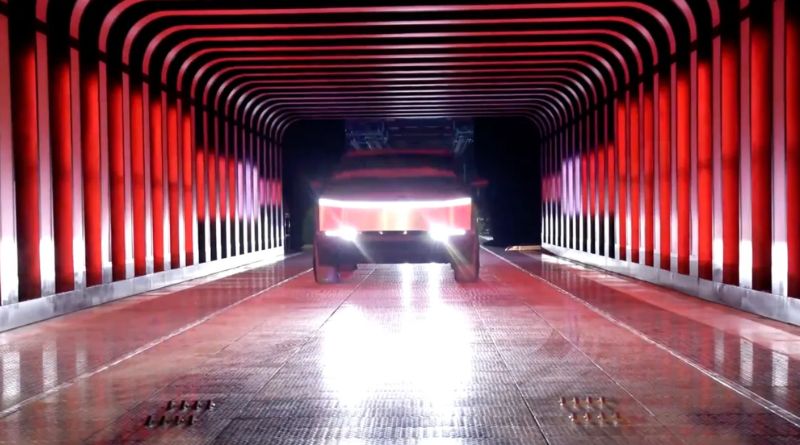
The first batch of customers finally took ownership of their (very) long-awaited Tesla Cybertrucks last week during a hyped-up delivery event at the automaker’s Austin, Texas, factory. Unfortunately, the EV truck’s lower-than-anticipated range and higher-than-anticipated price tag left fans with some mixed feelings.
Available in a base, mid, and premium “Cyberbeast” tier, the futuristic pickup starts at $60,990 – an increase of about $21,000 from what CEO Elon Musk promised four years ago. Additionally, that model won’t be available until 2025. (The $80,000 AWD model and $100,000 premium Cyberbeast will drop first.)

While the price increase isn’t all that shocking, thanks to rising inflation, the significant drop in range did come as a surprise to many. The base model Cybertruck offers 250 miles per charge, with the AWD model jumping up to 340 miles and the premium model maxing out at 320 miles – all a far cry from the 500 miles per charge promised back in 2019. Tesla aims to rectify this with optional battery extenders, but those will cost customers extra coin, along with bed space. Towing and payload numbers are also less than expected, though torque has jumped exponentially.
As one Reddit user put it, these new details make the Cybertruck seem less like a powerful and affordable alternative to traditional pickups and more like “a really fast local vehicle you can put stuff in.”
Consumer Reports Rates EVs, PHEVs Low on Reliability
With new technology comes new headaches. A new Consumer Reports auto reliability survey of 330,000 vehicles found that EVs had 79% more problems than those with internal combustion engines. Plug-in hybrids (PHEVs) fared worse, with 146% more problems. Regular hybrids, for their part, performed great – showing 26% fewer problems than ICE models.

The publication studied trouble areas ranging from “nuisances” like squeaking brakes to “major bummers” like transmission or battery issues, and weighted the issues by severity to determine a scoring methodology. Jake Fisher, senior director of auto testing at Consumer Reports, told Automotive News that the lower scores for EVs and PHEVs make sense, since “the longer a vehicle or a technology is in production, the more the bugs are worked out. The automakers that have produced EVs earlier, they’re improving the reliability.”
Lexus, Toyota, Mini, and Acura topped the list for reliable brands, while Volkswagen, Rivian, Mercedes-Benz, and Chrysler ranked at the very bottom. Overall, Asian automakers led reliability, with European manufacturers in second, and domestic brands trailing in third. As for vehicle type, passenger cars remain the most reliable, followed by SUVs, minivans, and pickup trucks.
The Engine Block is your one-stop source for any and all auto industry news. Keep an eye on our weekly round-up of enthusiast coverage, product reviews, vehicle spotlights, auto show/expo features, and more. Check back Wednesday for a primer on the differences between synthetic and conventional motor oils. Then, come back Friday and prepare for those snowbound off-road trips with everything you need to know about winter trail safety.


