
CES 2024: Who Asked For This?
It’s dry January, so we’re offering a sober view of the automotive presence at CES 2024.
There comes a point when the high-speed pace of technological evolution shifts from fresh and exciting to simply exhausting. For some, it may be a smooth and gradual change. For others, a hard jerk. Slowly or suddenly, you wake up one day and the world appears different—unfamiliar. You look around with tired eyes and wonder How did we get here? And maybe, a little selfishly: What would it cost me to go back?
The exhibitors at the annual Consumer Electronics Show (CES) don’t care too much about the rear view. (Unless, of course, they’re pitching back-up cameras). All eyes are pointed squarely forward, gazing into the boundless future. How else are you supposed to see the “next big thing”?
The danger to this approach, as any driving instructor will tell you, is that you lose sight of all the things hiding in your periphery. As any marketer will say, you also lose sight of your audience.
Value Prop, Shmalue Prop.
While the “main” audience for CES may be fellow visionaries (and the investors willing to fund their dreams), the biggest stakeholders in these technologies remain regular people. Car buyers and bus riders, cyclists and pedestrians. You know, people with lives and jobs, maybe a few rowdy kids at home, and most certainly a stack of bills on the counter reflecting painfully high cost-of-living expenses.

Looking at this year’s automotive innovations on display – the presumable “future of mobility” – one has to wonder if these real-world consumers were ever actually consulted, let alone considered.
Don’t get us wrong – the tech unveiled at CES 2024 was (mostly) cool. And it should be, especially if you subscribe to the belief that technology must “delight” its users. It’s just that we also happen to feel technology should help its users by solving real problems, not manufactured inconveniences.
Maybe we’re old souls, or maybe we’re curmudgeons. Or maybe the January detox is just really starting to hit. Regardless, this year’s CES left us feeling a bit… weary.
It’s not too difficult to remember a time when the price of novelty used to be simple money. Now it is personal data and privacy; mental bandwidth and, occasionally, self-autonomy. Pretty soon, there won’t be much left to give. And for what? The delight of a short-lived dopamine hit?
With this nihilistic griping in mind, we aimed to round up a few innovations from CES 2024 that we feel have real – helpful – potential in the automotive industry. First, though, let’s recap the main trends that dominated the show so you know what’s on the near horizon.

The Big Buzz
Every show ends up having its theme and, for CES 2024, that was artificial intelligence (AI). From business to healthcare, generative AI was positioned as the new balm to solving problems, improving efficiency, and overall revolutionizing the way we do, well, everything.
In automotive, at least, the applications felt more realistic than years’ past. Think: in-vehicle voice assistants or customer service bots as opposed to fully-autonomous concept cars that can learn the nuances of a busy city grid. A large reason for this shift is GM’s self-driving subsidiary Cruise and the very public fall from grace it’s endured since a pedestrian traffic incident in October.
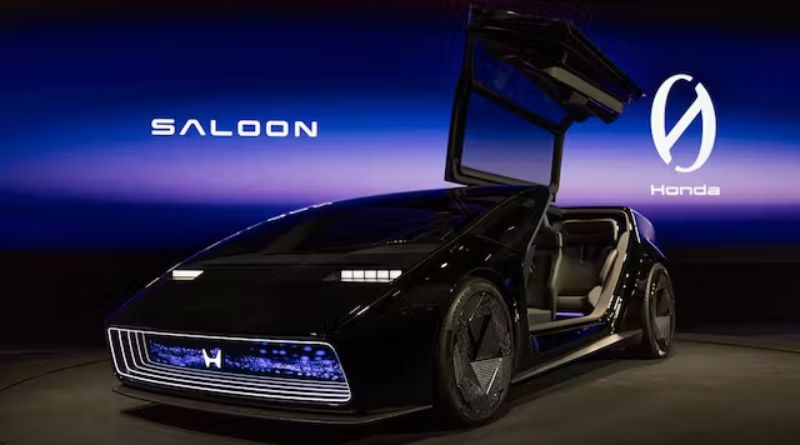
While Honda, VinFast, and Kia all made big EV announcements at the show, the electric segment had an overall smaller footprint this year. The less enthusiastic tone mirrors the slowing demand occurring on the larger consumer market – which may help explain why hydrogen vehicles were suddenly back on the docket.

Hyundai unveiled big plans for the alternative fuel at CES 2024, which it plans to produce from animal waste and plastics. Bosch is also getting in the game. The Tier 1 supplier has a new hydrogen-combustion engine in the works, aimed at decarbonizing heavy vehicles.
As for this year’s take-home buzzphrase, that went to the software-defined vehicle. What does it mean? Well, from smart cockpits to over-the-air vehicle updates, tomorrow’s vehicles (and many of today’s) are now hyper-focused on automation, optimization, personalization, and – of course – connectivity.
CES 2024 Debuts Worth the Hype
While many of the innovations from CES 2024 left us scratching our heads, there were a few that had us nodding optimistically. Check them out below.
HELLA FlatLight
With more onboard systems than ever before, the modern vehicle is developing a pretty bad case of bloat. HELLA’s new light guide concept should help it shave a few pounds.
By using “micro-optics” – optical lenses that are tinier than a grain of salt – HELLA’s FlatLight technology will allow boring old signal lighting to accomplish much more than just indicating direction.

With FlatLight, multiple light functions (i.e., left turn, right turn, brake, etc.) can be implemented in just one optical element eliminating the need for individual chambers. This not only reduces installation space requirements and weight, but also fundamentally changes the design possibilities of light signatures. In addition to complex welcome and farewell scenarios, automakers will be able to add fonts, logos, and other graphics. FlatLight also saves energy, requiring up to 80% less juice than conventional LED tail lights without sacrificing performance. In fact, only one watt is required to reproduce all tail light functionalities.
First announced in 2021, HELLA’s FlatLight heads into series rear lamp production for an international car manufacturer this year.
Kia Platform Beyond Vehicle
Kia showcased a whole new class of electric vehicle at CES 2024 and, while the design didn’t quite capture our attention, the idea behind it sure did. The Platform Beyond Vehicle (PBV) vans showcase “radical modularity” – a concept that’s not just fun to say, but also pretty damn clever.
The gist is this: one vehicle chassis to fulfill multiple purposes, thanks to interchangeable body types.
Essentially, a customer purchases their preferred battery platform size and then, based on their needs, can add or remove sections behind the driver cab to alter the vehicle. A daytime taxi becomes a nighttime delivery van, only to transform into a small pickup on the weekend. You get the idea.
A weldless body structure assembly makes the flexibility possible – along with some impressive hybrid electromagnetic and mechanical coupling technology. If it all works as promised, the simple accessibility could really revolutionize what a modern fleet looks like.
Jackery Solar Generator
As our lives become ever more dependent on electricity, the ability to safely and reliably generate one’s own power is beginning to look like a wise investment. And if you’re not sure where to start in this realm, it’s usually a good idea to follow the overlanders.
Jackery, a notable player in the portable generator market and a popular name within the off-grid crowd, brought two very cool solar generators to CES 2024. While one is significantly more practical than the other – and should be available by the end of this year – both deserve a call-out for their innovative design.
First up is the Jackery Solar Generator for Rooftop Tent, a clever hardshell pop-up tent with slide-out 1,000-watt solar panels and a built-in removable power station. The integration of rigid units (as opposed to flimsy panels) and a compact-but-powerful generator that you can daisy-chain other batteries to makes this a game-changing off-grid camping solution. Additionally, the company plans to launch with a final product that weighs less than 200 pounds, so it can outfit as many vehicles as possible – maybe even sedans.
Jackery’s other notable debut was a solar-powered Mars Bot inspired by Opportunity, the robotic rover that was active on Mars from 2004 until 2018. With a high-efficiency photoelectric conversion rate and the ability to intelligently navigate towards charging stations or areas with strong light, this futuristic outdoor companion really aims to put the “portable” in “portable energy solution.”
Whether or not it ever goes to space, we could see the Solar Generator Mars Bot coming in to pinch hit during disaster and rescue scenarios, as well as more pleasant applications like big camping shows, concerts, and more.


