
Auto Industry News: Detroit Suspends Auto Production, Repair Shops Get the “Essential” OK, Uber & Lyft Get Creative, Factor 55 Joins WARN
The auto industry finds itself in a very strange situation these days. Detroit’s Big Three suspend production amid rising health concerns, while auto repair and maintenance services remain on the job. Ride-sharing companies learn how to operate in the age of social distancing. And, despite event cancellations and work-from-home mandates, industry professionals still manage to bring us some exciting vehicle debuts and aftermarket acquisitions.
Detroit Plants Grind To A (Temporary) Halt
In another blow to the auto industry, Detroit’s Big Three yielded to UAW demands on Wednesday and shut down all North American plants in the wake of the growing global crisis.
Ford and General Motors have committed to suspending production until at least March 30, in order to deep clean facilities and enact social distancing protocols. Fiat Chrysler is also closing plants, but plans to do so “progressively” from Wednesday through the end of March. Each of the automakers will reevaluate the situation at the end of the hiatus.
GM is closing down 11 factories, followed by Ford with 8, and Fiat Chrysler with 6. All together, this action temporarily impacts 25 final assembly factories and an astounding 150,000 union workers—joining the 281,000 other American workers laid off in an attempt to flatten the curve.

Push from the UAW
The decision comes after a meeting last Sunday between the United Auto Workers union and the Big Three. UAW officials called for a two-week shutdown as a precaution, but automakers seemed resistant, asking for a 48-hour window to make a decision and potentially draft new safeguarding plans. However, after UAW President Rory Gamble publicly exclaimed his dissatisfaction on Tuesday—and then both GM and Ford each had an employee test positive for the coronavirus—the partial shutdown went into effect.
“By taking a shutdown and working through next steps, we protect UAW members, their families and the community,” said Gamble. “We have time to review best practices when the plants reopen, and we prevent the possible spread of this pandemic.”
The Big Three are far from the only automakers stuck between a rock and a hard place, however. Several manufacturers around the world are closing factories or stalling production as well, including Honda, Toyota, Hyundai, Subaru, Volkswagen, Porsche, and Daimler, among others.
Potential Re-tooling?
Recent reports indicate that Detroit plants could reopen sooner than expected—but to build much-needed medical equipment like ventilators. “I think the majority of the UAW members wouldn’t mind doing what it takes to get America back running,” D’Andre Jackson, a UAW committee representative at GM’s Flint Assembly Plant, told The Guardian. “Instead of working for profit, you’re working to help save some lives, and I think a lot of people would join in on that.”
“We have had preliminary discussions with the US governments and are looking into the feasibility,” said Ford in a statement. “It’s vital that we all pull together to help the country weather this crisis and come out the other side stronger than ever.”
Auto Repair Deemed Essential
While some of the world’s largest automakers have ground to a halt and sent their workers home, other auto-related industries have been fighting hard to stay at work.
Six trade associations representing the transportation industry, including the Auto Care Association, called on state and local governments to keep in mind the importance of vehicle supply and repair facilities amid health-related closures of non-essential businesses.
According to a March 17 letter sent to the National Governors Association, National Association of Counties, U.S. Conference of Mayors and the National League of Cities:
“Essential tasks rely on safe and efficient transportation. Government vehicle fleets (local, state and federal) and other essential personnel (doctors, nurses, healthcare provider, grocers, etc.) depend on businesses that support the safe operation of the transportation sector. Public and private transportation services are necessary to ensure the public may complete essential trips, including purchasing food and medicine or caring for loved ones. Businesses that provide the support or supplies necessary to operate must therefore also be deemed essential.”
These transportation industry groups make an excellent point: Someone still needs to be on-hand to service the vehicles of essential workers in health care, food supply, law enforcement, and other necessary services.
Thankfully, on Thursday, the Cybersecurity and Infrastructure Security Agency (CISA) of the Department of Homeland Security issued a memorandum designating auto repair and maintenance facilities as essential service providers. However, CISA Director Christopher Krebs cautioned that the document is “advisory in nature” and “is not, nor should be considered a federal directive or standard in and of itself.”
For more information on how the Auto Care Association is working to help the industry during this time, as well as helpful resources on your state’s emergency status, click HERE.
Ride-Sharing in the Age of Social Distancing
It’s fair to say that now isn’t the best time to be a ride-sharing company. In an age of social distancing, self-isolating, and a fast-approaching recession, there just doesn’t seem to be a whole lot of people seeking transport with strangers.
Between the lack of demand and obvious health concerns, industry giants Uber and Lyft have been forced to suspend shared “pool” services, in addition to not allowing new drivers on the app. Overall, ride-hailing services are still available for those who need them, but both companies are working to “discourage non-essential travel,” as Andrew Macdonald, Uber’s senior vice president for global rides and platform, explained to BuzzFeed News in a statement.
Lyft Gains Some Great PR
Lyft, in particular, seems eager to put its money where its mouth is. According to Reuters, the company has plans to launch a brand new delivery service called “LyftUp Driver Task Force,” dedicated exclusively to getting nurses, doctors, and caretakers to their jobs. Services would also include delivery of medical supplies and test kits, meals for kids, and the pick-up and drop-off of seniors in need.
The service is set to be staffed by drivers already working with Lyft—a great move by the company, considering those same workers have seen their income plummet by more than 70%.
While the service is yet to be fully developed, it’s set to launch in the Bay Area and expand from there if successful. Lyft co-founders John Zimmer and Logan Green have also committed to contributing their salaries through the end of June, both to get the program up and running and help cash flow for Lyft workers.
Uber Leaves Us Scratching Our Heads
News also emerged this morning that Uber CEO Dara Khosrowshahi is pushing to get independent contractors included in the developing economic stimulus plan coming from the White House, which currently excludes millions of “gig economy” workers. It’s an interesting move, as Uber has fought long and hard to keep its drivers designated as 1099 contractors to avoid the expenses involved in taking them on as employees.
To Uber’s credit though, it is offering free disinfectant products to drivers and providing financial assistance if they require self-quarantining. CNBC also reports that the company “is waiving delivery fees for Uber Eats for orders from over 100,000 restaurants,” as well as “prioritizing shipments of relief goods like medical supplies” in its freight service.
To Remind Us Things Will Eventually Go Back To Normal
While the auto industry might be sitting in limbo, that doesn’t mean there’s not a few exciting bits of news trickling out.
RAM Adds New Southwest Edition Model
With pickup trucks as popular as they’ve ever been, it often feels like it’s possible to find one that fits any person, anywhere, looking to do anything. Well, apparently RAM is all-in on the niche market model, as it launches a new “Southwest Edition” of its popular 1500 Laramie full-sized pickup.

The new luxury trim will only be available in the U.S. Southwest—specifically Texas, Oklahoma, Arizona, and New Mexico—and will join existing cowboy-infused models like the Laramie Longhorn trim and special Lone Star Edition. In addition to standard high-end features like a 12-inch touch screen with the latest version of FCA’s Uconnect infotainment system, a dual-pane panoramic sunroof, and a hoard of advanced safety tech, the new Southwest Edition gets body-color bumpers, moldings, mirrors and grille surround, as well as polished 20-inch wheels and power running boards.
Available in four-door, quad cab and crew cab designs with either a 5 foot 7-inch or 6 foot 4-inch bed, the brand new RAM will start around $46k.
2021 Hyundai Elantra Promises More Tech, More Room and Way More MPGs
Hyundai is upping its game once again with the global reveal of the seventh-gen Elantra sedan. Packed with new features like a “Digital key” app, wireless charging, Apple CarPlay and Android Auto, an optional 10.25-inch touch screen, and advanced safety and driver assistance bells (including some semi-autonomous abilities), the new Elantra is a technical marvel.
In addition to its great styling, roomier interior, and segment-leading tech, the new Elantra also offers customers a first-ever hybrid version. While the standard 147-hp 2.0-liter gas engine-powered model leads its class in fuel-economy, the all-new 139-hp 1.6-liter hybrid is rated at over 50 mpg combined!
In the age of crossovers and light trucks, Hyundai is proving that the traditional four-door sedan still deserves a seat at the table.
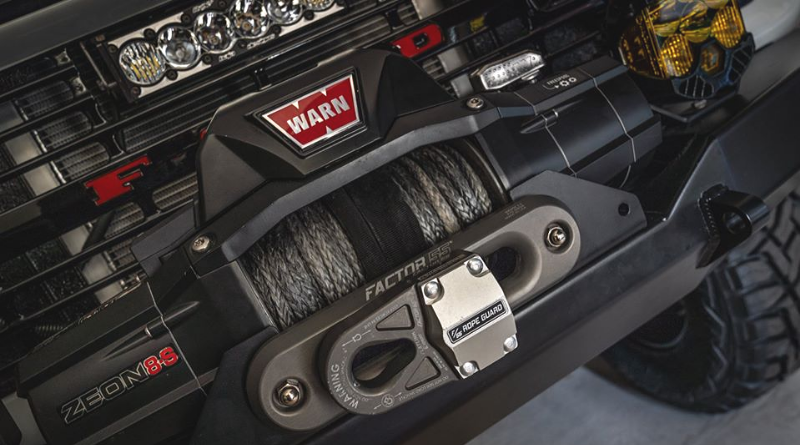
Factor 55 Joins WARN Industries
In aftermarket news, Warn Industries has added Factor 55, a fellow premium brand in the vehicle recovery market, to its growing family of products.
Factor 55 specializes in Closed System Winching, which the company describes as “a winching technique using rigging comprised entirely of closed link hardware. Whether the winch line is in tension or a dangerous momentary slack condition, Closed System Winching keeps all winch tackle secure and is by far the safest method of operating your vehicle recovery winch.”
Founded in 2012 by Michael Costa, Factor 55’s current president, the brand will now operate as a division of Warn Industries. “Our team will maintain their focus on designing and introducing the high-level of product ingenuity Factor 55 customers have grown accustomed to,” said Costa in a press release. “We look forward to continuing that tradition in addition to drawing upon resources available as part of Warn Industries.”
Kyle Shiminski, vice president & general manager of Warn Industries echoed this sentiment, stating that “we feel strongly about the complementary nature of the Factor 55 product offering and realizing the benefits this partnership brings.”

Unfortunately, widespread cancellations have placed our motorsports coverage on hold for the time being. For an updated list of cancelled and postponed events, click here.


