
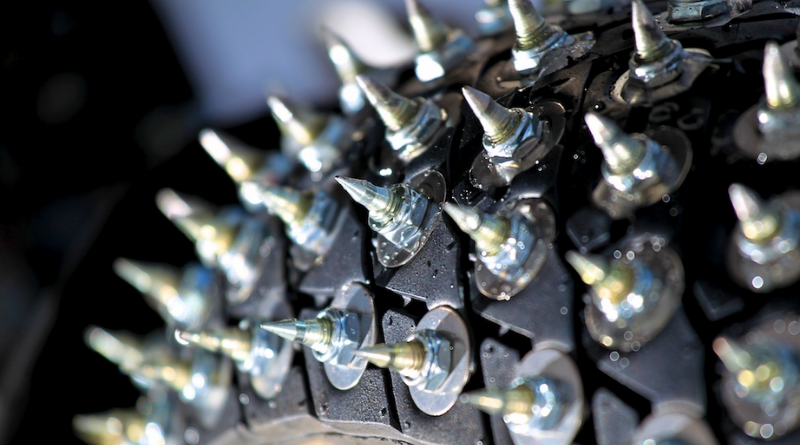
Digging in with Tire Screws
Off-road adventures in the snow and ice are a familiar pastime for northerners. But if you don’t live in a region that welcomes all four seasons, it can seem a little exotic, what with all the specialized gear, trail performance, and even the tricks for traction. One in particular that leaves a lot of people scratching their heads is the use of tire screws on dedicated off-road vehicles to increase performance in winter environments.
Scratching your head, wondering what I’m talking about?
Chances are, you’re familiar with traditional tire studs. And you may have even encountered the specialized tire screws used by ice bed racers. While these are similar to the winter wheeling screws that we’re talking about today, they’re not quite the same thing.
From looks alone, you can get an idea of how these mods differ, but let’s break them down for the sake of clarity. (And for any newbies here who are still saying screws in your tires?!?)
Traditional Tire Studs
Traditional studs are one of the oldest, most recognizable, and even slightly obsolete modifications done to tires for winter performance. “Studded snow tires literally have metal studs embedded within the tread,” explains Bridgestone Tire. “These small, strong pieces of metal are designed to dig into ice, which provides added traction. Studded tires were the must-have snow tires for a long time, but advances in rubber compounds and other winter tire technologies have changed the minds of many drivers.”
That’s because, while studded tires can provide the grip you need on ice, they’re not quite as useful in snowy conditions where there’s no real resistance. Furthermore, if you’re driving on pavement (even during winter months), they can actually damage the road. In fact, many states have banned them for this reason.

Installation is fairly simple, but does require specialty tools. Like a rivet, these studs need to be pressed into place with the use of a specially-designed gun.
Specialized Ice-Racing Tire Screws
In the northern region of the U.S. and Canada, racing on frozen lake beds is a real (and seriously cool) sport. As you can guess, traction is a major issue, but the blunt tip of a traditional stud will only go so far. That’s why racers use literal tire screws to dig deep into the ice.
For a long time, many have used sheet-metal screws with hardened tips and some sort of sealant to aid in traction. Even with successful aftermarket suppliers in this space (like Kold Kutter and MF44) you can still find a lot of grassroots racers using good ol’ industrial-supply self-tapping screws.

Depending on the style of tire screw being used, the installation can vary. Some racers physically take the tire off the wheel and send the pointed end of the screw through the tire so that it protrudes out through the rubber tread. Usually a liner is applied, as well as some sealant, and in particularly sketchy situations—duct tape. Other ice screws are installed right into the tread, using a special install bit attached to a cordless drill.
It’s important to keep in mind that this modification is a permanent racing modification, as it’s only intended to bite into a specific terrain. In fact, contact with gravel, dirt, and pavement can destroy the screws.
Winter Off-Roading Screw-In Studs
Like the ice-racing screws, these off-road screws protrude from the tread. However, like traditional studs, they sport a noticeably more blunt design. Together, these features allow them to bite into a mixed terrain of mostly snow and some ice, like you would find on the top of a trail. (Hence their popularity with some winter 4×4 enthusiasts.)

So, think of these as a “beefed-up” version of traditional tire studs that install like some ice-racing screws. Knowing this—and how expensive off-road tires are—you might ask why the hell someone would ever want to go this route.
Well, as I mentioned, these units are designed to dig into the ice and snow more than a typical tire could. They work like fingers that dig down into the wintry mix and grab on where they would otherwise slip and spin.
In theory, this sounds perfect but what about real-world performance?
Grip Studs is a brand that specializes in screw-in studs of this nature and develops them in diverse auger depths that work with almost any sized tire. And, judging from recent reviews, real-world performance is rather good.
“Installed 400 of the #1200 studs on 37-inch Nitto Mud Grapplers. Drove on four inches of snow and ice for 24 miles with a 2001 F-150 Supercab 4X4,” says one customer. “I installed 75 of the 1300 studs per tire on my Chevy 2500. Night and day difference in traction on packed snow ice. Major confidence builder,” says another.

Plus, a great thing about a product like Grip Studs is that they can be easily removed at the end of the season—something you can’t do with traditional studs. Another brand to check out is MaxiGrip, who also manufactures ice studs for a wide range of applications and has solid reviews from users.
Installation & Use
As mentioned, these off-road tire screws install via drill. They can vary in length and size, but for most cases you simply set them into the drill with a special bit and screw them into the tread.
Deciding how many to use can be a little trickier. Generally, as you go up in tire and vehicle size, more studs will be needed to aid in traction. Some light-duty vehicles may only need 25 or so per tire, while something like 50-100 may be required for your personal setup. Grip Studs suggests using a formula of multiplying tire height (in inches) by the tire width (in inches) by 3.14, and then dividing by 11. For example, if the tire height is 33″, and its width is 12.5″, calculate as follows: [33 x 12.5 x 3.14] ÷ [11] = 117.75. This tire needs between 100-120 studs.
Again, removing these screws is possible. It may compromise the lifespan of the tire slightly, but it won’t render it useless outside winter. It’s also worth noting that these tire studs can be pulled from the tread through normal use. This means that you’ll want to get out and check the tires periodically to see what you have left and decide whether or not to replace them.
This is a modification you take at your own risk. While installation is easy, it’s still possible to damage the rubber of your tires. So, obviously, we recommend using a legitimate aftermarket brand over cheap self-tapping screws. We also recommend that before you marry this mod to an expensive set of brand new tires, you consider testing it out on an old set and feeling it out to see how useful it is for your wheeling. Third, whenever in doubt, enlist the help and knowledge of a professional.
What do you think about tire screws? Have you ever installed them?


