
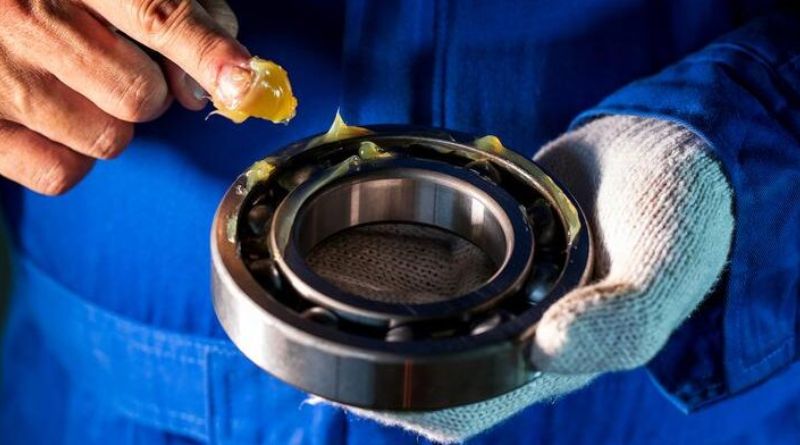
Picking the Perfect Automotive Grease
Understanding the different types of automotive greases and how to choose the best one for your vehicle’s needs.
In the world of vehicle maintenance, automotive greases are the unsung heroes — fighting the good fight to make sure everything runs buttery smooth. They quietly work behind the scenes, providing critical lubrication, guarding against rust, sealing up gaps, and even handling extreme temperatures.
But here’s the catch: using just any grease won’t cut it.
Knowing the right greases to use — from different brands and types to where exactly they apply — is critical to maintaining overall mechanical performance and ensuring your vehicle lives a long and healthy life.
So, let’s take a closer look at what automotive greases do, why it’s such an important job, and how you can be sure to pick the perfect one for your vehicle’s needs.
What Automotive Greases Do

In many ways, your vehicle’s inner workings resemble a delicate dance of intricate parts – and keeping those components from turning into a clunky mess requires a little finesse. That’s where automotive greases come in. These lubricants are specially designed to provide several key functions, from enhanced efficiency to long term protection.
Here’s a quick list of what you can expect from these essential helpmates:
Lubrication. This is the primary job that automotive greases are known for. By creating a protective layer between moving parts, they help reduce the friction and wear naturally caused by two metal components rubbing against each other. (Think of wheel bearings, joints, or gears.)
Temperature Reduction. High heat levels often coincide with increased friction between moving parts. Since automotive greases are designed to withstand high pressure and high temperature, they’re particularly well-suited for lubricating parts that are subjected to heavy loads and extreme conditions like suspension and drivetrain components.

Corrosion Prevention. Just like the other fluids in your vehicle, automotive greases contain special additives that help fend off corrosion and rust. They essentially create a barrier that shields the metal surfaces from moisture and other environmental elements, preventing degradation and extending lifespan.
Sealing. Greases can also serve as chemically-derived seals, stopping the entry of dirt, water, and debris into sensitive components. This is crucial for maintaining the performance of parts like bearings and axles.
Noise Reduction. There’s a reason you oil a squeaky door – grease-lubricated components glide quietly. Automotive greases offer the same benefit, reducing noise and, in some applications, dampening vibrations.
Types of Automotive Greases

Now that you have a better idea of the myriad jobs that automotive greases perform in your vehicle, let’s dig into the types available. As noted earlier, using the right grease for the right job is essential to ensure optimal performance and service life.
Since automotive grease is composed of a base oil, a thickener, and additives, there are several different types sitting on the parts store shelf, each formulated for certain applications and conditions.
Below are some of the more common ones you’re sure to come across.
Lithium Grease
Commonly used as a “general-purpose” grease, lithium-based greases are versatile and effective, providing good water resistance, stability, and temperature resistance. They consist of a lithium-based thickener with mineral or synthetic oil and are suitable for chassis components, wheel bearings, universal joints, and other general lubrication points.
Often, you’ll see white lithium grease as an option when you’re shopping. This just has zinc-oxide added to it to provide a more visually-appealing white color that stands out when you’re working. (An important thing to keep in mind when it comes to automotive greases is that color doesn’t matter; that’s something added by manufacturers.)

Calcium Grease
Another multipurpose grease with good protection and stability, calcium-based greases are known for their cost-effectiveness and relatively good water resistance. However, they are limited when it comes to high-temperature stability and extreme-pressure performance, and so are better suited to less demanding environments, like chassis fittings.
Don’t confuse calcium grease with calcium sulfonate grease, which is a more advanced type of grease that uses calcium sulfonate as its thickening agent. Highly resistant to water, calcium sulfonate grease is often referred to as “marine grease” and therefore is often found in and around water on boat trailers, marine equipment, outboard motors, and the like.
Silicone Grease
Thanks to its ability to withstand temperature extremes, silicone-based grease is ideal for applications where components experience drastic temperature fluctuations, ensuring consistent lubrication across various conditions. This synthetic grease also offers standout resistance to oxidation (even when exposed to air and moisture), and remains non-reactive when it comes into contact with sensitive materials like plastic or rubber.
For these reasons, silicone-based greases are found in a variety of applications, including electrical connections, plastic components, and rubber seals and O-rings.

Molybdenum Disulfide (Moly) Grease
This general-purpose grease is fortified with molybdenum disulfide, an additive that provides enhanced anti-wear and extreme-pressure protection. As such, moly grease is found in applications with high loads, sliding surfaces, and shock loads, like chassis points, ball joints, and heavy-duty suspension components.
Polyurea Grease
Formulated using a complex process involving polyurea thickening agents and synthetic base oils, this automotive grease provides excellent high-temperature stability and water resistance. It also excels in applications with extreme pressures and heavy loads – and it’s well-suited to long-service use, which is why it’s commonly found in “sealed for life” components.
Specialty Automotive Greases
As you can see, even “general purpose” and “multi-purpose” greases have some specificity to them. However, some jobs call for a particularly delicate touch – and that’s where specialty automotive greases come in.
Simply put, these greases apply to specific purposes in specialized environments. Unsurprisingly, there are a lot to choose from. However, some popular specialty greases you might meet on your automotive travels are:
- Anti-seize grease, used to lubricate threaded connections
- Dielectric grease, applied to electrical connections to prevent corrosion and ensure good conductivity
- Assembly grease, used to pre-lubricate moving parts and prevent corrosion during engine building
- Ceramic grease, often used in high-performance braking systems
Choosing the Right Grease for the Job

Choosing the right grease for the job is like picking the perfect tool – it’s all about getting the best fit. To nail it, consider…
…what your application needs. Consider factors like temperature, load capacity, speed, exposure to water or chemicals, and the type of components involved. Do you need something with excellent corrosion inhibitors? Friction resistance? Adhesion? Understanding these features will help you better determine what kind of base oil and additive properties you might require.
…what the manufacturer recommends. Remember, they’re the experts on their own stuff. So, let them guide your research.
…what the compatibility is. It’s important that whatever grease you choose plays nice with your vehicle’s components, materials, seals, and any previous grease applications. Incompatibility can lead to degradation or malfunction.
…what the grease consistency is. Grease consistency is rated on a scale from 000 (super soft) to 6 (super stiff) by The National Lubricating Grease Institute (NLGI). A lower number means softer grease, which is better for high-speed applications. Stiffer grease, like NLGI 2 or 3, is better for heavy loads and extreme pressures.
…what the method of application is. Choose a product that lends itself to easy and effective application, whether that’s a grease gun, squeeze tube, or your fingers.
…what the maintenance intervals look like. Some grease formulations provide long-lasting protection, while others may require more frequent application.
…your budget. Higher-quality greases offer better performance and longer service life, but you will also have to find a reasonable balance between performance and cost.
If you’re still on the fence, get some advice from the pros. And once you do find the right automotive grease, keep a record of what you use – it’ll help you stay on top of things.

Sponsored by Lucas Oil
For more than 30 years, Lucas Oil Products has been solving some of the most difficult mechanical problems in the automotive, marine, and industrial industries. From the company’s “original” core four products — Heavy Duty Oil Stabilizer, Power Steering Stop Leak, Transmission Fix, and Fuel Treatment — it has developed over 400 custom products! And yes, that lineup includes a wide range of high-quality automotive lubricants and additives, from general-purpose solutions to specialized greases for high-performance racing and heavy-duty construction.
Featuring formulas fortified with superior water resistance, anti-wear agents, rust and oxidation inhibitors, Lucas Oil Grease keeps your machinery running smoothly, preventing wear and extending equipment life.
To learn more about Lucas Oil Products’ robust lineup of premium oils, greases and problem-solving additives, visit https://lucasoil.com.


