
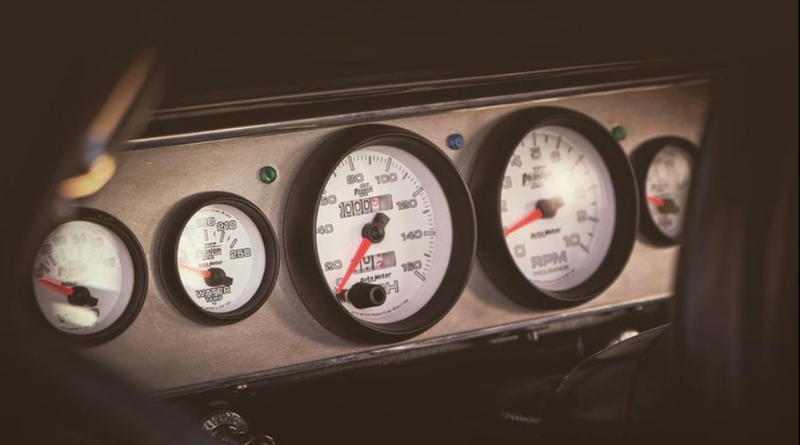
Take 5 With AutoMeter: Not Your Granddaddy’s Gauges (But They Can Look Like It If You Want)
We stare at our dashboard instrument panels every time we jump behind the wheel, but do we ever actually see them? More often than not, the answer is no. And one could argue that means our gauges are excelling at their job. When operating a two-ton vehicle at speed, we don’t exactly have the time to admire the tiny brushstrokes on our vintage gauge display. Our brains need to take in the vital information these monitors provide and quickly translate it into action.
That’s not to say we wouldn’t also like a flashy gauge cluster worthy of a second look. Luckily, these small parts have made some big advancements, ensuring you can have your cake and eat it too. Plus, the selection has truly never been better. From analog to digital, classic muscle to sleek and modern, antique beige to carbon fiber black, you’d be hard-pressed not to find a gauge display that complements your vehicle’s style.
Since gauges have a tendency to get overlooked, we thought it was time to shine a little spotlight on these critical pieces of equipment. And who better to help us understand the segment’s evolution than the industry leader in performance aftermarket gauges, AutoMeter?

Since 1957, AutoMeter has been revolutionizing the way racers and vehicle builders think about instrumentation and vehicle electronics. We sat down with AutoMeter’s Director of Instrumentation Sales, Mike Lovro to find out why this aftermarket category is so important – and how it grows cooler by the day.
Q: How far would you say gauges have come, both in terms of the available styles and also the technology? What kind of innovations do today’s enthusiasts get to enjoy?
A: Gauges have come a long way. Advancements in LCD technology allowed us to take our traditional round instruments and place them in an entirely new form factor with complete dash systems available in universal and direct-fit applications. We took the existing feature set of our round gauges and added additional options like multiple screens to choose from, color changing, visual & audible warnings, turn signals, high beams, date/time, imperial/metric, and so much more. Our InVision line of products essentially took the years of our instrumentation knowledge and racing heritage and placed them in a modern, high-definition LCD design.
Additionally, traditional round instruments have taken strides from the old-school days of basic mechanical and electric instrumentation. Features like OLED displays and upgraded multi-color LED lighting that can change based on the condition the instrument is seeing represent big improvements in visuals from years ago.
Also, instruments now have new features like tying into relays to activate fans, pumps, or other electrical devices in the vehicle. With our CAN Bridge product, we even have the ability to plug and play into OBD-II/CAN and output to gauges, LCD displays, etc. This innovative product has made installing products on late model vehicles or swaps of late model engines into classic vehicles significantly easier and less time-consuming than before.

Q: What are some of the new trends you are observing in gauges? Are there any old trends coming back into style?
A: We’ve definitely seen a big shift to LCD technology when it comes to street performance, custom applications, and even racing, so there’s a lot of demand for this new tech. However, not everyone wants modern-looking products – as we’ve seen heavy demand on our Officially Licensed products such as Ford, Chevy, Mopar, Jeep, and Hoonigan-branded instruments. A lot of customers like instruments that look like they’re meant for a specific vehicle or era.
Q: Where does AutoMeter see the product category going?
A: The instrumentation market is always headed in a blend of different directions. Some people are interested in making a classic car look like a modern vehicle, and those customers are likely to gravitate toward LCD products. The race crowd will always have a segment that relies on traditional tried-and-true round instrumentation at the track. Another group loves the look of “performance” in their vehicle, and those customers will continue to drive demand on popular designs that have withstood the test of time. Still, other groups like the look of classic styling and will pick a design that fits the era of their vehicle or even try to maintain the look of the original car, but with upgraded internals.
Also, with more and more sensors available on today’s vehicles/engines, utilizing the diagnostic port has become more common for integration with smart devices, gauges, LCD dashes, data acquisition systems, etc. There are so many more areas to cover with the instrumentation segment, but broadly speaking these are some of the directions we’ve been seeing the category headed.

Q: How do electric and hybrid performance vehicles change the game? For example, are there additional systems unique to these platforms that need monitoring?
A: Electric and hybrid vehicles are a much different animal than the traditional gas and diesel engines our parents and grandparents grew up on, and the aftermarket will have to look for ways to get more performance out of them. They will certainly have a place on the road and at the track. However, at the moment, we haven’t seen a great deal of demand for products in these segments. As EVs and hybrids grow in popularity with the general public, though, they are likely to gain interest at the track too. So, as the demand shifts, we will develop products specific to these applications.
Q: AutoMeter’s InVision digital dash line continues to grow. Are there any plans to expand to new and exciting platforms?
A: Absolutely! We are actively developing several new applications. We have a laundry list of vehicles we want to create InVision dashes for, and we will continue to pump these out as quickly as we can. Expect to see several more direct-fit applications ranging from the ‘50s to ‘90s throughout the remainder of this year and beyond.

Q: Are there any new products in development that you are willing to share info on?
A: We just released our exciting CAN Bridge, which is a very cool product that allows you to take the existing signals from the OBD-II port and convert their signals to plug-and-play with AutoMeter InVision dashes, as well as tachometers, electronic speedometers, and short sweep electric gauges. We’re very excited about the possibilities this new product brings for making product installation a breeze on many engine platforms.
Additionally, we have more InVision dashes in the works. Since launch, we’ve been trying to blend our approach to cover all the major domestic manufacturers with releases for Ford, Plymouth/Dodge, and Chevy applications. So, the next releases we are working will continue on that trend. Many more applications are in the hopper, but it’s a bit too early to speak on. We’re definitely excited to continue to release more and more direct-fit applications.
Q: What’s in store for the AutoMeter website’s Custom Shop? What new features can shoppers expect to make use of?
A: We’re currently in the works on a brand-new Custom Shop website that we’re very excited about. The site is coming together nicely and we think our customers will really like the new platform and the ability to design unique instruments with literally millions of different options to create. The site will launch this year with new artworks, colors, themes, and so on, so our customers will be able to seamlessly design a custom gauge solution perfect for their application.
To learn more about AutoMeter and their excellent product lineup, visit https://www.autometer.com


