
The Greatest Engines We Love To Hate
What really separates humans from other animals is the ability to passionately dislike something for no other reason than someone else enjoys it.
This time of year, there is a statistically significant portion of our population losing their minds over pumpkin spice artificially-flavored everything. There’s nothing inherently wrong with everything from Twinkies and Pringles to the original Latte getting the PSL treatment. It may not be your cup of tea – yea there’s that too – but some people will make it a point to have a near violent reaction to the mention of fall’s favorite faux food fashion. You will never see a schnauzer turn down a Peanut Butter Milk-Bone because only Basic Bichons eat those.
It doesn’t end with food products. And, in fact, car enthusiasts are worse than just about any other fan base when it comes to complete irrational hatred of consumer products that others buy and enjoy – specifically those which have absolutely no impact on their own well-being. It’s especially true when you drill down past cars and get into engines. Not only is brand hatred strong, but when you can hate on a very specific car component, your hardcoreness is on full display.

Below is a list, presented in no particular order, of engines that are great. But each one has legions of anti-fans who would rather see them melted down and recycled into kazoos than ever powering another car.
(No, this list isn’t meant to make you think or ponder your own prejudices; it’s pure entertainment. There’s no expectation of anyone actually learning anything or being a better person for reading this.)
Toyota’s Legendary 2JZ Turbo Inline-6 Fast & Furious Daemon

The Toyota Supra never really made much of a splash in the performance car market until its fourth generation landed in 1993. Besides styling — which has been referred to as everything from the most timeless and elegant shape to ever come out of Japan, to what looks like a cross between the Tim Burton Batmobile and a garden slug — it also arrived with a new engine, which was kind of an evolution of the previous engine.
The 3.0-liter inline six cylinder used twin turbos, two cams, and 24 valves to deliver an astronomical-at-the-time 321 hp and 315 lb-ft of torque. (The 1993 Corvette LT1 had 300 hp and was trounced in magazine head-to-head smackdown comparos in both qualitative and quantitative testing.)
The Supra and its 2JZ-GTE didn’t really become legendary until the virtual world. Yes, like so many Japanese cars that eventually fueled the Fast & Furious franchise fervor, its big moment came years before in the first installment of Gran Turismo on PlayStation. What made it amazing in both the real and virtual world was its ability to make big power when tuned.

It started with an iron, closed-deck block which Toyota reinforced by using oil passages as stiffening ribs. The crank and rods were forged, while the low-compression pistons were cast in hypereutectic alloy. The bottom of the block was strengthened with a girdle making the factory short block good for up to 750 hp. Change out the pistons and build the heads for greater flow, and you were looking well past a thousand horsepower.
These engines are used in all forms of motorsports, but have become a particular favorite in both drifting and drag racing making fifteen-hundred horsepower or more.

Why We Love To Hate This Engine
To start, there are a lot of car enthusiasts who feel “that movie franchise” is a bad representation of car culture and the 2JZ is forever linked. But more than that, like so many great cars and great engines, it is harder to tolerate the fanboys than the actual thing.
For every 2JZ that is legitimately making 1,000 hp, there are dozens of owners with stock cams and pistons swearing up and down they have a 1,700-hp car that still struggles to trap at 130 mph. We shouldn’t hate an engine because a few of its owners have illusions of grandeur, but that’s up to you.
Volkswagen VR6 Can’t Get Inline With The Vees

In the late 1980s, VW tried replacing displacement with forced induction in the form of superchargers – it wasn’t totally successful. The answer was the VR6, which was designed to shoehorn V6 performance into platforms designed to hold inline 4 cylinders.
It started with using a 15-degree vee arrangement of the cylinders so there’s no valley between them. The spacing is so close, it allows the use of a single cylinder head. When it debuted in 1991 in the Passat, it didn’t get the attention it deserved. Even when it showed up a year later in the Corrado, the price of VW’s flagship coupe put it up against some serious competition. It wasn’t until a few years later that the GTI VR6 redefined the sport compact world.
Although the original VR6 wore DOHC embossed engine covers, and technically it’s true, it still used one cam per bank of cylinders. The first version was only a 12-valve and displaced 2.8 liters. But in 1991, its 172 horsepower was pretty impressive in a front wheel drive car. The engine makes torque down low and power builds linearly and happily pulls to redline. Although it’s part vee, it feels more like an inline 6 — which is to say, very well balanced. VW accomplished this by using a 120-degree firing interval, accomplished by offsetting each banks’ crank journals by 22 degrees.

The engines proved to be robust and reliable, and later versions swelled up to 3.6 liters and the Vee angle contracted to just 10.5 degrees, making them powerful enough to haul around VW’s Touareg and Atlas SUVs, while staying buttery smooth. However, the best part of a VR6 is without a doubt its Wookiee-like roar.
This engine tech would eventually lead to the engine in the Bugatti Veyron, so there’s that.
Why We Love To Hate This Engine
As anyone with any history with Volkswagen can tell you, the totally irrational hatred of the brand extends far beyond just the engine. There are large numbers of people who have never owned a VW, who have never driven a VW, who hate the brand. These are the same types of people who hate bands they’ve never heard, movies they’ve never seen, and food they’ve never tasted. The VR6, being such a departure from anything other brands have made, is a perfect target for derision.

Critics like to say the VR6 has outlived its usefulness since the introduction of the easily tunable 1.8 Turbo in 1997. VW’s turbocharged four cylinders were usually given lower horsepower ratings from the factory than the VR6s, but with a software tune, were quickly out muscling the “premium engines.”
Enthusiasts, however, often still chose the VR6 for the naturally aspirated throttle response and irreplaceable soundtrack. But alas, the VR6 is dead when the 2024 Atlas arrives.
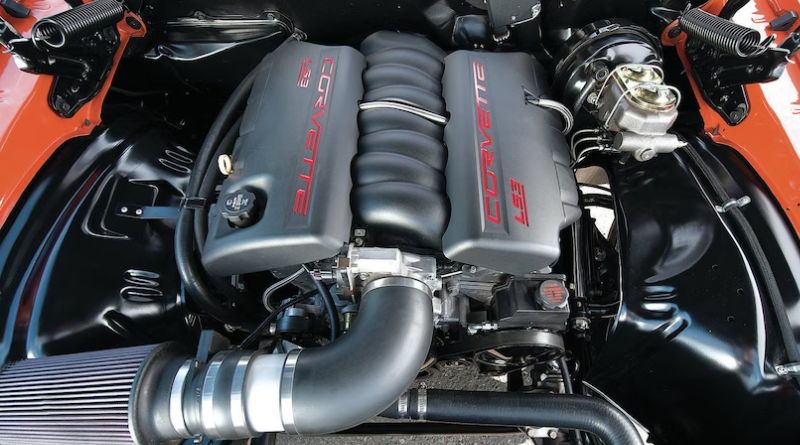
The Chevrolet LS Is The Answer To All Of Life’s Problems

We have to start with some clarification. The term LS is largely misunderstood, especially by people who are new to the congregation. Blame can be spread all around between GM, the interwebs, and aftermarket suppliers.
Some people refer to any small block Chevy (SBC) as an LS V8. That’s not correct. The first SBC debuted as a 1955 model year, but the original LS1, a third generation SBC, was released in 1997. You will hear some people say the LS “has been around forever!” These people are children, ‘97 was not forever ago.
The LS has used both aluminum and iron blocks, with displacements as small as 4.8 to 8 liters. They are famously still pushrod engines, which manufacturers of heavier, less powerful engines with lower displacement but bigger outside dimensions will tell you is outdated and inefficient.

An LS V8, thanks to good engineering from the start — including things like 6-bolt main caps on the bottom and heads that not only flow well, but more importantly flow the same to each cylinder — they make good power from the factory while also taking well to modifications. The aftermarket support is basically endless as is the number of these things available from salvage yards or rebuilders.
All of this adds up to an engine that has become the undisputed king of engine swaps. You will find LS engines in everything from RX7s and Nissan 240SXs in Formula Drift, to every model of Porsche sports car. They are almost always lighter and more powerful than whatever they replace, while also being cheaper.

Why We Love To Hate This Engine
Like the Yankees and Patriots, we love to dislike things that are too successful. It doesn’t matter what car you’re a fan of, you feel betrayed when you see someone dump an LS into the engine bay and suddenly that car is faster than yours. Some of it is snobbery; why would anyone take that step backwards to pushrods? Again, said by someone with horsepower envy.
Obviously, the hatred from Ford and Mopar fans is tribalism that dates back before the LS, so that needs no explanation. Even if it did, there isn’t room in this piece for the scholarly level of psychological inquiry needed. Why can’t everyone love the LS– why can’t everyone love all great engines?
The Honda K20 Reimagined The Spin And Win

Honda enthusiasts have suffered through decades of scorn amongst car enthusiasts. Some of it is completely undeserved, but maybe an equal amount is almost begged for.
From 1.6-liter engines exhausting through 6-inch chrome tips, to aerodynamic devices the envy of Northrop engineers, Honda owners don’t shy away from attention. And when one is inclined to test an assumption, they will likely acquire a suitable consequence. So, you best be packing something under the hood to back up those looks.
In 2001, Honda gave enthusiasts an engine capable of motivating its lightweight cars. The 2.0-liter K20 was capable of 215 hp, which exceeded the mythical 100 hp/liter barrier in an affordable, reliable, and tractable package. It wasn’t the first Honda engine to do it, but the availability of these engines made them candidates for swapping into older platform cars.

Yes, it’s powerful — but with an aluminum block and head, it’s also lightweight. The engine uses steel sleeves in the block, while the twin-cam, 16-valve head uses roller rockers to decrease frictional losses. The real secret sauce is the ability to rev to 8000 RPM, and still breathe efficiently.
We’ve all heard about Honda VTEC, which is the company’s variable valve timing and lift system. It allows the K20 to run like a typical four-cylinder at lower RPM, while behaving more like a race engine once the cams switch over. Although the switch might be more dramatic than it needs to be, the technology is very effective.

Why We Love To Hate This Engine
When you lift the hood of your new Mustang or Camaro to proudly display all 8 cylinders, it crushes the vibe to think that some teenager in his obnoxiously loud 4 banger economy car might be able to show you his taillights in the quarter. You may scoff, but it happens all the time.
There are people that hate the idea of 4-cylinder performance cars, full stop. It’s not hard to see where they’re coming from. While it’s nearly impossible to make one sound good, that never stops K20 enthusiasts from making them as loud as possible.
It’s also not uncommon to find these engines in cars that were, “built to piss people off.” But, hating those peoples’ cars is just giving them what they want. Sometimes, the best way to hate something is not to show it.


