
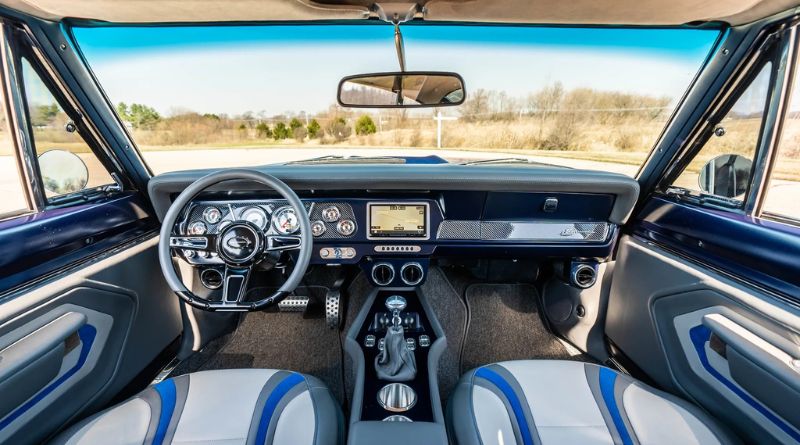
Tips for Selecting Performance Gauges
When selecting aftermarket performance gauges, here’s what to know before you buy.
We live in a world obsessed with data. Where we go, what we buy, how we pay for it; it all gets tracked, recorded, crunched and stored. And for good reason, too. Knowledge is power! The more information you have about something, the better you understand it – and the more control you can have over it.
While this can be more than a little unsettling when discussing things like what TV shows you binge or what ketchup brand you buy, data is crucial when it comes to vehicle performance.
Having the ability to monitor real-time data like engine RPM, throttle position, speed and sensor readings not only helps identify performance trends but also ensures precise diagnostics of potential issues or malfunctions. You can fine-tune your engine to extract more power – or prevent its dangerous and costly catastrophic failure.

That’s why, whether you’re tearing up the race track, conquering off-road trails or hitting wide-open throttle on the wide-open road, selecting the proper gauges for your setup (and your driving needs) is absolutely critical. Not just for your driving enjoyment, but for your safety too.
Move On Up
While your OEM setup gets the job done, upgrading to performance aftermarket gauges provides greater accuracy, precision and visibility.
Plus, they’re customizable. You can select gauges that match your style – from classic to vintage to modern, high-definition LCD designs – as well as find options that improve readability. You can even upgrade to gauges that provide additional features such as warning indicators and data logging capabilities, or that tie into relays to activate fans, pumps or other electrical devices.

Just remember, when it comes to replacement anything, the replacement needs to perform better than the original. So lean on a reputable brand name, and ensure the gauges are reliable and of high quality.
Know Thyself (And Ride)
Before you go shopping for performance gauges, do a little soul-searching – of both yourself and your vehicle.
“Driving style, driving conditions, vehicle usage and modifications can all affect the types of gauges necessary for optimum performance and safety,” says Mike Lovro, Director of Instrumentation Sales at AutoMeter. “It’s vital to understand the specific needs of the vehicle and the demands of the environment to determine the appropriate gauges to install.”

For example, he says, a skilled driver in a high-speed racing environment would find gauges such as oil pressure, oil temperature and water temperature to be essential for monitoring the health of the engine and maintaining consistent speed.
But on a low-speed technical course? “Gauges such as tachometers, tire pressure, and oil temperature may be more important,” he says. “In either case, gauges help the driver stay aware of the condition of the engine, maximize peak performance and help identify potential problems before they become serious issues.”
Get Granular
The type of racing also affects the gauges that are needed. “In drag racing, for instance, gauges for monitoring engine RPM (at launch and down the track), oil/fuel pressure and water temperature may be more critical,” explains Lovro. “However, in road/endurance racing, gauges for monitoring speed, lap times, and fuel level may be more important.”

The same is true for vehicle modifications. Adding forced induction by way of a turbo or supercharger might require a dedicated gauge to monitor the boost pressure, air/fuel ratio or fuel pressure.
So, take the time to study your own vehicle, as well as how you specifically use it, and let that information help inform your decision.
Monitor the Right Systems
The best thing about customized setups is that no two are the same. Still, Lovro has some suggestions of which systems are important to monitor based on racing use, street use, and off-road adventure.
When Racing

Again, the type of racing you plan to get into will directly affect which systems you keep a close eye on. However, a few that make the shortlist are: engine performance (RPM, temperature, oil pressure), fuel consumption (fuel pressure and flow), tuning (air/fuel ratio), exhaust gas temperature and forced induction (boost pressure), if it applies.
It’s also wise to monitor suspension, so the driver and team can make adjustments and fine-tune the setup based on track conditions, driver preferences and the specific demands of the race.
For example, some performance gauges have accelerometers that can measure lateral G-forces during cornering, or digital inclinometers that can measure the camber, caster and toe angles of each wheel. With this data, drivers can make changes to optimize grip and stability.
In the end, there’s no shortage of what you can monitor, and the list above is just scratching the surface.
On the Street

When it comes to street cars, Lovro says the recommended systems to monitor may be similar to racing, but the priorities may differ.
“For example, a street car driver might prioritize utilizing the same gauges as the original when replacing a dash,” he says. “Another person may be adding gauges using an AutoMeter mounting solution that goes on the pillar, on/in/under dash, instrument cluster bezel, overhead console, etc., so instrument recommendations on street cars will need to be tailored to each application depending on their end goals.”
Generally speaking, though, a full gauge set for street vehicles consists of a speedometer, tachometer, fuel level, water temperature, oil pressure and volts. Some drivers may choose to expand on this list depending on what modifications their vehicle has, such as boost/vac, wideband, etc. for forced induction applications.

While each setup is unique, Lovro says it’s not unusual to find certain gauges shared among vehicle groups. “Big diesel trucks commonly have pillar/dash mounted gauges for monitoring boost, fuel pressure, transmission temperature, and exhaust gas temperature,” he says. “Whereas, on a turbocharged tuner car, you’ll commonly see instruments like boost/vac, wideband, oil pressure and water temperature.”
As for American muscle cars and street rods, he says they usually run the traditional 6-gauge set: speed, tach, fuel level, oil pressure, water temp, & volts. “The great thing is, there’s never a wrong answer when selecting a gauge, since the more information you have on your vehicle, the better.”
Heading Off-Road

For off-road vehicles, recommendations are largely determined by the terrain and type of off-roading being done. A Jeep that climbs steep rocky terrain doesn’t have the same demands as a buggy blasting through sand dunes at high speed. And both vehicles would have additional concerns if splashing through mud bogs or tackling water crossings.
Temperature is clearly important, but as Lovro points out, the areas of concern would be different than that of a traditional racecar or street car, extending to differential, transfer case or axle housing temperature.
“Speed is also important for many long-distance off-road race vehicles,” he says. “Since many off-roaders spend time in the air, products like GPS speedometers can be useful to maintain accurate speed readings.
AutoMeter’s GPS speedometers take things a step further. They provide additional helpful information for these drivers, like directional heading, GPS coordinates, peak speed, and more.
“Additionally, off-road vehicles are more likely to be exposed to the elements and experience a lot of vibrations, so products like AutoMeter’s liquid filled gauges or Extreme Environment series can be essential to an instrument’s longevity and readability while racing,” adds Lovro.

Ultimately, the systems that a driver should monitor will depend on the specific type of racing or driving being done, as well as the vehicle being used. Drivers should consult with experts (like those over at AutoMeter) and other experienced drivers to determine the most important systems to monitor for their particular situation.
Top 5 Features To Consider When Selecting Gauges
Hopefully, by now, you have a clearer idea of some of the information you should have on hand before you begin shopping for aftermarket performance gauges. Below, are five features that Lovro says you’ll need to consider once you start searching for a setup.
Size
Gauges come in various sizes, and drivers will need to consider the available space in their vehicle when choosing. For example, bigger gauges are often easier to read at a glance, but some drivers have limited real estate on the dashboard and may be required to run smaller gauges, warning lights, multi-function displays, etc. to fit as much as possible in the space available.

Type
Gauges can be electric or mechanical, and both have their own advantages and disadvantages. “Debates will go on for ages about which is better and there are die-hards in both camps,” says Lovro. “At the end of the day, both are good options.”
Again, application will often determine what’s the ‘right’ choice. Lovro says the main thing to keep in mind is that mechanical gauges require larger physical connections to the engine (nylon/copper/capillary tubing), whereas electric gauges utilize a sending unit to provide information back to the gauge through a wire.
As such, electric gauges have the ability to offer additional features that mechanical do not, like warning, peak recall, triggering fans/switches, etc. However, they require a power source to operate and can be a little more complex than mechanical options.
Cost
Aftermarket gauges can vary in price, depending on the instrument type, size, lighting and features. Lovro advises setting a budget and selecting the gauge that makes the most sense for your needs.

Functionality
“Drivers should consider the specific functions they need from their gauges, such as peak recall, warning, pro-control, color changing, etc.,” says Lovro. “If you just need a gauge with no frills, then you probably don’t need to buy the one with all the extra bells and whistles. However, if having all the available features is important to your application, then be sure to select the gauge that has everything you need so you don’t have to change down the road.”
Brand and Quality
As we said earlier, a replacement must outperform the original – otherwise, what’s the point?
“Obviously, I might be a little biased on the brand selection process,” jokes Lovro, “but what I will say is it’s important to select a company that has a good reputation for a quality product with a great value proposition.”
He advises looking for good sales support (both before and after the purchase), so you can easily find someone to answer your questions regarding application compatibility and installation. He also suggests considering companies with products built from a racing heritage or ones that are trusted suppliers for major automotive manufacturers.
AutoMeter has been manufacturing race instruments and working in the industry for over 60 years. To learn more about the company’s performance gauges, visit https://www.autometer.com/


