
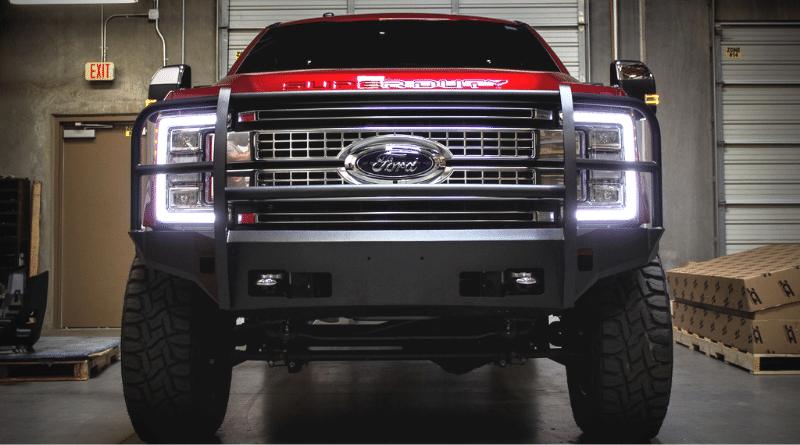
What Exactly Is Powder Coating?
If you’re in the market for metal exterior accessories, chances are you recognize the term powder coating. While traditional paint application may be familiar to most people, powder coating still holds a bit of mystery. Popular opinion says it’s superior to paint in many ways and on many applications, but what exactly is it?
Powder coating is a type of finish applied as free-flowing dry powder. The ‘powder’ itself is usually made up of finely-ground resin and pigment, and applied through electrostatic spraying. It is then cured with heat or light. The end result is an attractive, uniform, and supremely durable finish that continues to gain popularity inside and outside North America. In fact, according to Kentucky’s Powder Coating Institute, powder coating now represents at least 15% of the total industrial finishing market.
Powder Coating 101
Like most aftermarket metal-heads, here at The Engine Block, we love a good automotive-grade powder coat; however, we don’t pretend to have a spray booth next to the break room, coating parts in our spare time. To gain a better perspective, we sat down with Noah Schmitz, Marketing Coordinator at ICI. Masters of the craft, ICI shined a light on the process, durability, and upkeep of powder coating.

Q: Powder coating seems like it takes a bit more time, effort, and material to complete. This isn’t something I could take on myself, is it?
A: Powder coating requires some specialty equipment to perform, especially when coating large items like bumpers. For example, you would need an oven large enough to fit the entire bumper in.
Q: Some of us here live in the Northeast where heavily salting roads is a common practice, and rust always seems to develop quickly. How can I keep my powder coat looking its best for as long as possible?
A: Keeping the surface as clean as possible will prolong the powder coat finish. A rinse or quick wipe to get the salt and debris off the surface will help prolong the life of the finish. Also, touching up any chips in the coating will help keep it sealed and prevent moisture from getting under the coating, which could cause it to flake.
Q: And to add to the last question—if I clean and maintain a powder coated bumper, how long can I expect it to last?
A: In a properly maintained environment, powder coating can last up to 20 years. The key to that is proper maintenance, and quickly repairing any damage that chips the coating.
Q: If my powder coat starts to chip/rust/crack, can it be easily repaired? Would I need to get the whole bumper stripped of its original coat to get the best results?
A: Unfortunately, powder coat cannot be touched up like paint. If you are experiencing large areas that have flaked off and began to rust, you’re looking at a complete recoating. To properly recoat, the original will need to be stripped first. Due to powder coat durability, this is not an easy task and will require some industrial sandblasting, chemicals, or burn off. If you are able to catch the initial chip early, you can find a color-match spray paint or touch up paint to use on the area. This will help keep the flaking from spreading.

Q: Most of the powder coating I’ve seen has a more textured finish. Can powder coating be used to achieve a smooth or glossy paint-like finish?
A: Yes, powder coats can be done in textured or smooth finishes and provide a very comparable paint-like appearance.
Q: We have all heard the harm that solvent-based paint and aerosols can put into the atmosphere. Is powder coating more environmentally friendly?
A: Powder coating is considered a “green” technology because it does not generate airborne pollutants or harmful solvents compared to traditional paint.
Q: It seems like powder coating trumps traditional painting—especially in the automotive aftermarket—in just about every aspect. Is there any area or instance where powder coating would not be the premier choice?
A: Powder coating is great for coating metal, but it does not work for things like plastics, rubber, wood, or anything that will melt at baking temperatures.
Who is ICI?
ICI has built itself quite a reputation in the aftermarket over the past three decades. The company used its experience in designing bed caps, fender trim, rocker panels, and high-polished accessories as a springboard for its most recent endeavor: Bumpers.
ICI’s Alumilite series of bumpers focus on lightweight construction that won’t sag the front-end of your vehicle. As you may have guessed from the topic of this article, the star of the show is ICI’s unparalleled powder coating process. We’ve covered the Alumilite bumpers previously, on the blog. While we had Noah on the horn, however, we couldn’t help but ask a few specific questions about these bumpers, as well as their powder coating process.

Q: In your Myths about Powder Coating article, you reference the need to prep the metal before coating. What does this entail for ICI?
A: Our current process for coating bumpers includes sand blasting, pre-treatment wash, e-coating dip, primer powder coat and final powder coat. As you can see, there are quite a few steps before applying the powder that allow the coat to have the strongest bond possible with the bumper. These processes also help if the powder coat is ever chipped. The metal will not corrode as quickly, giving the customer more time to repair it.
Q: One of the downsides of traditional steel bumpers is their weight. On average, how much weight would you say your Alumilite Bumpers can save a consumer over typical steel competitors? Why does this matter?
A: On average, our Alumilite aluminum bumpers are 65% lighter than the steel equivalent. This matters because it reduces the overall vehicle weight. Less weight means less stress on other components, like suspension and brakes and it offsets other accessories like lights and winches. It also translates to better fuel economy and reduced wear on tires. A lighter bumper helps maintain factory vehicle drivability as well.
Q: Over the past decade, aftermarket bumpers became lighter and tighter, while incorporating more curves and angles to match the ever-evolving lines of truck front-end fascias. Where do you see the truck bumper marketplace heading in the next 10 years? More of the same, or something different?
A: Looking at renderings of trucks and new manufacturers coming from the electric market, I think there will need to be a lot more attention given to ADAS development. That way, these bumpers can work for, rather than hinder the vehicle. Beyond that, the creativity of the designers and market influencers will guide the style of these futuristic vehicles.

Q: With truck front-ends becoming more aggressive, what is ICI’s process to design a new application for a redesigned model? Do modern trucks take much more time to get that final silhouette and fit nailed down?
ICI: All our designs start in CAD, where we create a model of what has all the elements we want for the application and fits our design style. Once the model is completed, we build a sample and test fit it on the vehicle to see how it looks. This first fitment is critical for making sure the bumper fits correctly and does not interfere with any ADAS or other systems. It is also important to simply make sure it looks cool and follows the flow of the truck.
There may be one or two more samples made before a final bumper is put through production and approved. Luckily, with modern technology, we can model the bumpers on the truck in our CAD program. Designing takes a lot less time than it would without that technology.
Q: ICI makes a premium product. Why should a consumer choose an ICI Alumilite bumper over a cheaper unit from a competitor?
A: We feel the additional benefits our bumpers offer — like ADAS adaptation, aluminum material, superior coatings and unique styling for each application — sets us apart from a competitor that might have a lower price point. We believe the consumer is more educated when making their purchase decisions. As a result, he or she will recognize the benefits of the Alumilite bumpers and understand the value in a superior product.
“Ici” means “here” in French. We at The Engine Block think the coincidence is quite fitting. ICI continues to evolve and innovate right along with the automotive industry. They’ll be “here” in the aftermarket for years to come. Thanks to ICI Marketing Coordinator Noah Schmitz for fielding our questions, and if you’re interested in the Alumilite bumpers or any other ICI product, head over to www.icionline.com


