
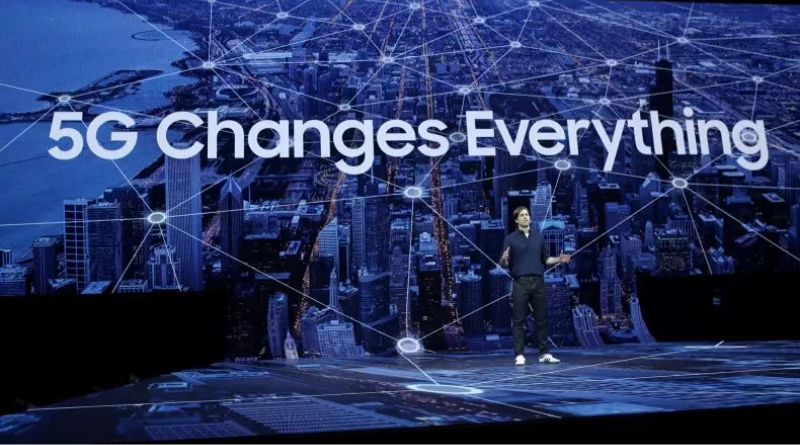
What is 5G Technology and Why Should You Care?
Virtual channels are becoming indispensable in a world of social distancing. As such, issues of cyber security and data protection weigh heavily on consumers’ minds. In August 2020, President Trump signed two executive orders aimed at banning the popular social media app Tik Tok, citing the Chinese-owned company as a threat to national security. Not long after, Apple released its iOS 14 update, which provides users with privacy alerts when an app accesses their camera or microphone. Such concerns will grow as 5G hits the mainstream—are you ready?
From onboard artificial intelligence that adjusts your seat and air conditioning to embedded connected car modules that pay your tolls, navigate city traffic, and speak to pedestrians, transportation is about to look (and feel) very different.
What is 5G?
What is 5G technology, how is it different from what we already have, and why is the distinction important?
5G refers to the next wave of networking standards that will be used for wireless communication. The 5 means “fifth” and the G means “generation,” i.e. the 5th generation of mobile technology. Much like the successive generations of a vehicle, each new phase of wireless tech gains more features.

3G, which came to the U.S. in 2003, really got the ball rolling on what we see as ‘modern’ mobile tech. With 3G, cellphones became smartphones that could do a whole lot more than just make voice calls and send text messages. Suddenly, one gadget could stream video and audio, send big multimedia files, and download huge chunks of information. Then, when 4G arrived in 2010 with faster download speeds and better reliability, that user experience became so fine-tuned that it was often easier to use the internet on your phone than on your laptop or desktop.
And 5G? Well, that promises even faster speeds—in fact, 100 times faster than 4G (in theory). In short, it will make the world even more interconnected than it is now. (And that can be unnerving for a variety of reasons. A major one being user privacy). This is all well and good, but feels like ‘more of the same’, right? That’s because it is—until you factor in that 5G also offers something called “ultra-reliable low-latency communication” or URLLC.
URLLC feature is a huge part of why 5G will be such a game-changer, as it will essentially make it possible for your vehicle to “talk” to the burly F-350 two lanes over, or allow your tires to sense and report ice on the road.
Let’s Talk Latency
Latency refers to network communication delays, or the time it takes to get a response after information is transmitted. (Think of it like turbo lag.) Therefore, “ultra-reliable” and “low” latency communication translates to extremely fast and reliable response times, i.e. little to no lag and a great 0-60 time.
Why is this important?
Low latency is what will allow us to connect multiple specialist-type devices to one network, as well as to each other, without everything crashing. A good example is to imagine the ultimate “smart home,” where everything from your television to your light bulbs are wirelessly connected and can be controlled via smartphone or virtual assistant.
In fact, many people have some semblance of this setup already — even RV owners. For example, the brand RV Intelligence offers something called “smartRVcontrols”, a multi-functional remote control module capable of wireless control of awnings, slides, lights, and more, all from a smartphone.
5G technology, however, would provide for a more seamless user experience. (Think: less video buffering when streaming movies or faster response times from Alexa.) It would also allow you to connect some wild new items like Bluetooth-enabled electric toothbrushes and cat health-monitoring litter boxes.
Essentially, every appliance becomes a smart appliance.
In healthcare, it could greatly expand telemedicine, remote patient monitoring, and even remote surgeries. Among farmers, 5G could offer real-time access to specific data points like soil saturation and ground temperature. And, perhaps of most interest to you, it could revolutionize the auto industry—from design and manufacturing to EV charging and self-driving cars.

More impactful though, is what 5G could do for major industries.
Consider what it takes for a vehicle to safely navigate a city street on its own. That car would need to read weather conditions, street signs, and traffic signals. It would have to anticipate the moves of other drivers, as well as pedestrians. And in order to accomplish all of this, it would need to communicate with GPS satellites, traffic lights, on-board sensors and cameras, and other cars—among many other things.
That is A LOT of data at one time! You need a seriously beefy network to manage it all. And that’s what 5G is offering.
Can 5G Deliver On Its Promises?
 This is where things get a little tricky. Like any new technology, implementing 5G is very expensive. In this case, the high-dollar challenge comes in the form of coverage.
5G technology uses high-frequency bands, called millimeter waves, in order to send data so quickly. However, the higher the frequency of a wave, the less range it has.
So, where a few traditional large-cell radios can cover several miles and blanket an entire town in connectivity (like 3G and 4G cell towers), 5G will need a small-cell architecture that uses more radios, with each one covering a small area.
Another challenge is that these short-range waves are subject to a lot of interference and degradation. For example, a building, a tree, even rain could be enough to interrupt service. That means telecommunications companies will need to install a lot of transmitters—and place them closer to the ground—in order for users to have reliable access to 5G speeds. And that could lead to some additional issues…
Rural Folks Might Get the Shaft
“The truth is that rural areas are at the bottom of the list of priorities for every major communications carrier,” writes Vice President and Research Director Glenn O’Donnell of Forrester Research. “The money just isn’t there. They will simply invest where the people are.”
And where exactly are the people? O’Donnell explains that 90% of America’s population lives on about 36% of U.S. real estate. Blanketing that remaining 64% in 5G is “extremely difficult, time-consuming, and expensive,” and will likely never happen without major government subsidies. “[It] will take well over a decade—if it happens at all.”
We’d say that’s a conservative estimate considering the FCC’s own data indicates that while the “digital divide” closes more every year, 18 million Americans still lack access to high-speed, reliable internet today. What’s more, that data has been widely criticized by consumers—and Congress—as flawed, inaccurate, and using outdated standards.
“If a [broadband provider] offers service to at least one household in a census block, then the FCC counts the entire census block as covered by that provider,” writes BroadbandNow Research, a website that collects and analyzes internet providers coverage and availability for consumers. To counter this issue, the organization manually checked internet availability “using FCC data as the source of truth for randomly selected addresses.”
BroadbandNow’s estimate? A whopping 42 million Americans lack broadband access in 2020.
Many 5G Providers Have Conflicts of Interest
The only companies capable of rolling out the kind of infrastructure necessary for 5G are major telecommunications players, like Qualcomm, Samsung, Verizon, AT&T, and ZTE. One particularly well-equipped player is Huawei.
You might remember this Chinese telecom giant for being a target of the Trump Administration’s trade restrictions. You might also remember that Huawei is very close with the Chinese Communist Party. (The company’s founder, Ren Zhengfei, was a military technologist in the People’s Liberation Army for many years.)
Huawei’s involvement illustrates a big concern surrounding 5G technology: security.
“If you have the keys to 5G networks, you will be trusted with the nervous system running down the backbone of every country which uses your gear and contracts you to service it. That includes critical infrastructure and safety-critical systems on which the lives and livelihoods of our citizens depend—traffic, power, water, food supply and hospitals,” writes Simeon Gilding, a former top intelligence official at the Australian Signals Directorate.
Regarding Huawei, Gilding believes that “it is simply not reasonable” to think that the company would disobey a direct order from the Chinese government—even if that order involved compromising another country’s digital network.
“The fundamental issue is one of trust between nations in cyberspace,” he says. “So, if your telcos have a 5G operation and maintenance contract with a company beholden to the intelligence agencies of a foreign state, and that state does not share your interests, you need to consider the risk that you are paying a fox to babysit your chickens.”

On a much smaller—but equally alarming—scale, unreliable security could lead to digitally-hacked vehicles or the release of personal data such as your home address or frequently traveled routes.
If security and privacy features don’t evolve as fast as all of these new Internet of Things (IoTs)‐based applications, we could be looking at some serious data sensitivity issues. Without proper security solutions, IoT devices could open the door to unwanted surveillance, location tracking, remote operation, the transmission of sensitive data, and more.
There Are Some Understandable Health Concerns
As we explained, 5G technology relies on high frequency waves that have a short range, thus requiring more transmitters for reliable connectivity. This means more people will be exposed to millimeter wave radiation.
Critics of 5G claim that short-term exposure can cause headaches, insomnia, and an inability to concentrate, as well as some more worrying effects on the heart and nervous system. According to Scientific American, some research suggests that long-term exposure could lead to sterility or even cancer. But the main point is that we don’t entirely know the long-term side effects because, in the grand scheme of things, wireless technology is still fairly new. In light of that, many doctors and scientists are asking that 5G deployment be delayed until we simply know more.
It’s worth noting that there’s plenty of evidence to suggest the opposite as well—that high-frequency electromagnetic energy poses no real threat to your health.
As WIRED Magazine points out, “You can take comfort in knowing that, according to statistics published by the National Cancer Institute, the rate of brain cancer in the US actually went down between 1992 and 2016 even as mobile phone use skyrocketed.” Furthermore, while the World Health Organization (WHO) stated in 2011 that radio frequency radiation is “possibly carcinogenic to humans,” it also acknowledged that the evidence is limited. And it places items like coffee and pickled vegetables in the same category.
“Millimeter waves aren’t the only, or even the main, way that carriers will deliver 5G service,” adds WIRED. “T-Mobile offers the most widespread 5G service available today, but it uses a band of low frequencies originally used for broadcast television.” Competitors like Sprint, Verizon, and AT&T are also more interested in using the same old mid- and low-band frequencies, since millimeter-wave is so expensive.
So, rest assured that, at least for now, 5G will be delivered through familiar channels.
Unfortunately, any concerns we might have, whether they be practicality, health, or security-driven, aren’t likely to stop the world’s largest telecommunications companies from racing to a 5G launch. But being armed with the facts is important and will help you better prepare for the brave new world ahead.
Eager to see some future technology? Then mark your calendar for the 2021 Consumer Electronics Show, January 6-9. The internationally-renowned tech show has become particularly auto-minded in recent years. And while next year’s show may be all-digital thanks to COVID, it’s sure to dazzle and delight with cutting-edge technology that stretches the bounds of your imagination.


