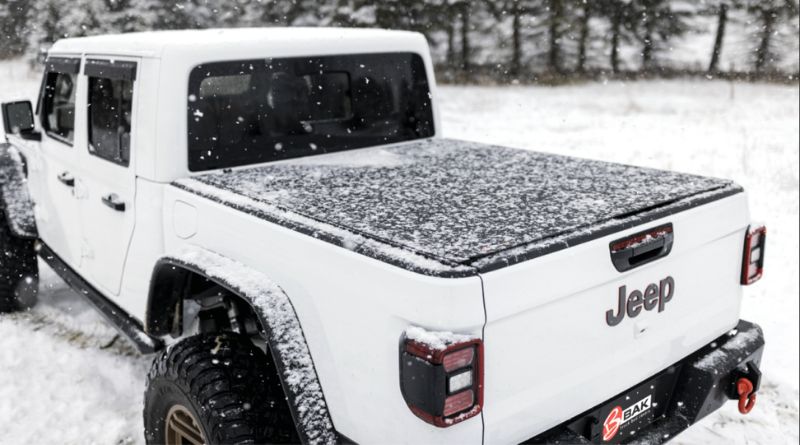
Wintertime Tonneau Care – Keep That Cover in Tip-Top Shape
While pretty low-maintenance overall, tonneau covers do require a little bit of TLC from time to time. And winter is most definitely one of those times.
From freezing temperatures to heavy wet snow, the winter season barrels into town with about as much grace as a cannonball. Worse, it often blows in with little warning – meaning your beloved truck and tonneau cover might get caught in the crosshairs.
Thankfully, today’s covers are built to take a beating. But if you really want to protect your investment so it can in turn protect yours, then it’s best to practice a little wintertime tonneau care.
Learn how to take care of your tonneau this winter, in order to keep things rollin’ (or folding, or lifting, or retracting…)
Should I Keep My Tonneau Cover On This Winter?
Faced with the twin terrors of snow and ice, many truck owners wonder if it is even worth keeping a tonneau cover installed during the winter.
The vinyl might crack. Can it handle all that heavy snow? Cleaning it off seems like a hassle.
These are all valid concerns, but we’re here to tell you that:
YES, you should keep your tonneau on this winter.
Why? Well, first, you paid good money for that truck bed cover to, you know… cover the truck bed. Removing it would be counterintuitive, and risks exposing the metal bed to some seriously corrosive moisture and road salt.
Second, these products are explicitly designed to ward off the elements.

For example, the BAK Revolver X4s features a construction made of heavy-duty aluminum slats wrapped in industrial-grade vinyl that not only keeps water out, but also withstands up to 400 lbs. of evenly distributed weight. So, even when faced with something like heavy wet snow, this hard-rolling cover will keep the truck bed protected and dry.
Lastly, while it’s true that exceptionally cold temperatures can cause a vinyl tonneau cover to crack or rip, it’s not very common. (Actually, frozen rubber seals are a much more likely – and manageable – occurrence. Find some tips on this below.)
Besides, there are steps you can take to ensure your tonneau cover stays in fighting form. And while that does include some cleaning, we promise it’s not a hassle.
5 Tonneau Cover Maintenance Tips for Winter
Depending on where you live, winter might be characterized by a little chilly weather and a handful of pretty snowfalls – or it might be a months-long exercise in frigid self-endurance, punctuated by bouts of seasonal depression. Either way, you’re looking at a maintenance regime that includes both proactive and reactive strategies, i.e., what you will do when winter first arrives and how you will best respond once the snow starts falling.
Give It a Good Cleaning
The key to maintaining the lifespan of a tonneau cover is treating it like the rest of the truck. That means setting aside some time to clean, condition, and care for it.
Is everything going to get disgusting once the road turns to mud and slush? Yes, of course, but the existing layer of mud and slush isn’t helping much. If anything, it’s making matters worse by applying more environmental pressures to your setup.
The recommended method for cleaning tonneau covers is to use gentle automotive soap and water, scrubbing with a soft sponge or cloth. Shammy it dry to prevent water spots and keep the finish looking sharp.

When treating the surface, wax is generally not recommended since it can interfere with rolling, folding or retracting parts. Unless the cover is made of fiberglass or painted to match your truck, opt for a protectant that is safe for vinyl or ABS plastic.
Be sure to buff it well by hand with a clean cloth, though. The ol’ spray-and-wipe method can leave streaks, and might run down over the side of the truck when it rains.
It’s good practice to repeat this cleaning and care periodically throughout winter. Starting the season with a clean truck and tonneau cover is wise, but so is washing away all that road salt and grime that accumulates over time.
Keep An Eye On Things
Give the tonneau cover a thorough once-over before winter starts, and then make a conscious effort to check in with it now and then. Covers that endure heavy use or driving are subject to a lot of road vibration. It’s possible the entire tonneau setup may need realignment, especially if you travel rough roads.
Inspect clamps and mounting bolts to ensure they are tight, secure and properly in place. How’s the operation? Anything sticking? Look for signs of wear and tear while you’re out there. If you find any signs of damage, prioritize the repair as winter’s wrath will only exacerbate the issue.
Some specific issues to watch out for are dings, dents, scratches, tears, corrosion, looseness or wobbliness, and lodged dirt or debris.

Lubricate Moving Parts (and Seals)
Cold weather can cause a lot more friction to moving parts, causing them to stick or operate sluggishly. The same problem applies to rubber seals, which can freeze up and essentially turn your tonneau cover into the world’s strongest Tupperware lid.
In this case though, an ounce of prevention really is worth a pound of cure. A few dabs of lubricant to the rails, locks, seals and any other moving parts can keep things from seizing or sticking, while also minimizing wear.
Make sure you use the appropriate lubricant based on manufacturer’s guidelines. For example, BAK Industries recommends a silicone-based lubricant spray, like the Roadmaster LubeMaster Dry Silicone. If you can’t find a recommendation in the owner’s manual, reach out to your tonneau cover’s maker for advice.
Clear Off Snow
No amount of winter prep will save you from the dreaded white stuff. Parking in a garage or under a carport will certainly make life easier, but eventually you (and your tonneau cover) will wind up in an open parking situation during a snowfall.
The good news is that snow tends to fall in a nice even layer, which means it will spread out across the cover’s surface and evenly distribute the weight. The bad news is that if you don’t get outside and remove that first layer, it will quickly turn to two or three and steadily grow in weight.

If you’re in for a real doozie of a storm, consider setting a timer to remind yourself to pop outside every couple of hours and brush away any snow that’s landed on the truck. We recommend using a push broom rather than a standard windshield brush, as you won’t need to extend or lean forward as far. This will make the job much easier – and faster.
Just look for something soft-bristled, if possible. When cleaning off snow or ice, it’s good practice to treat the tonneau just like the rest of the truck. So, avoid sharp or pointed tools and be gentle when brushing.
Keep the Cover Extended
Cold temperatures can cause certain materials – like vinyl – to shrink up. If you keep a tonneau cover rolled or folded up in freezing conditions, stretching it back out might be an issue. Keep it extended to its full length, if possible. This will not only help with operation, but also will keep that truck bed free of a mountain of snow.
Sponsored by BAK Industries
As the manufacturer of America’s #1 selling hard folding cover and America’s #1 selling hard rolling cover, it’s safe to say BAK Industries knows a thing or two about manufacturing a quality tonneau. The company is a heavyweight contender in the truck accessories market, having been in the biz since the late ‘80s.
In addition to serving up multiple cover styles to suit a variety of truck owners, the company’s products also play nice with many other aftermarket accessories that are essential to creating a truly customized setup.
One such stellar offering is the new-and-improved Revolver X4s. Introduced in 2021, the X4s has been reengineered to improve installation, use, and longevity. The result is a truly fantastic hard rolling cover (the #1 seller, in fact) at an exceptionally fair price point.

To learn more about the BAK Revolver X4s, visit https://bakindustries.com/ or check out our in-depth coverage on the model HERE.