
Auto Industry News: Dakar Results, Track Closures, Jeep Rumors, and Cold EVs
New year, new automotive landscape. This week’s round-up is dominated by some notable but perhaps not-so-surprising shifts for those who watch the industry closely.
Traditional big power and go-fast excitement took a hit this month with the news that three more drag strips are closing their gates in 2024. Meanwhile, Stellantis seems to feel there is, in fact, replacement for displacement. Whispers suggest Jeep will bid farewell to the Wrangler Rubicon 392, marking a departure of all V8 engines from the lineup.
As for the future technology waiting in the wings, EVs took some heat this week as media outlets featured plenty of shivering drivers struggling to charge their vehicles during Chicago’s deep freeze. The Engine Block has the details on these stories and more.
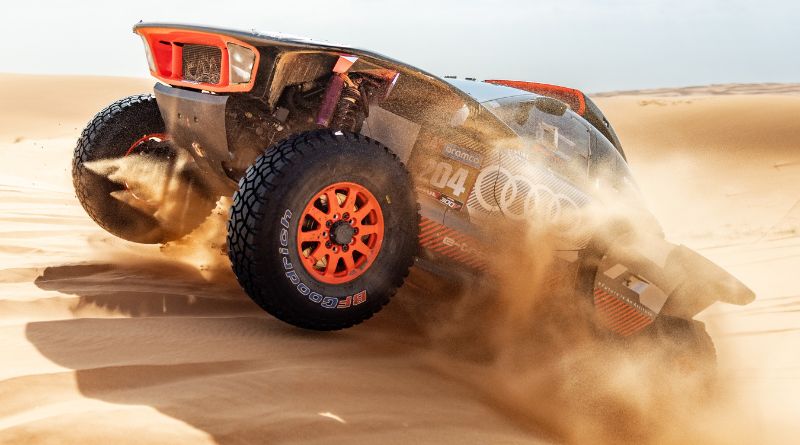
But first, the 2024 Dakar Rally ended on Friday, capping off one of the toughest rallies in the event’s long history. With 60% of the course taking place on all-new stages designed to push competitors to the limit, the perennial action-packed race lived up to its dangerous reputation this year.

Wins & Losses in Dakar
The grueling two-week race across the Saudi Arabian desert started on January 5 on the west coast in Al Ula, and sent racers on a roughly 4,900-mile route across the Empty Quarter – a massive sand dune area roughly the size of France – into Riyadh, and then through varied and technical terrain to the finish in Yanbu on the shores of the Red Sea.
Slow & Steady Wins the Race
Spanish pilot Carlos Sainz and co-driver Lucas Cruz mastered a “consistency is key” strategy, impressively taking first place in the Dakar Rally for the fourth time – all without winning a single individual stage.
Sainz also took honors of being the oldest Dakar winner (61) and the first to capture the Car category in an electric hybrid vehicle – a purpose-built Audi RS Q e-tron. He and Cruz also secured their victory with an incredible 80-mile lead over second place finishers Giniel de Villiers and co-pilot Dennis Murphy in their GR DKR Hilux Evo prototype. Sébastien Loeb and co-pilot Fabian Lurquin finished third in a Prodrive Hunter.

Other notable victories went to Monster Energy Honda rider Ricky Brabec (America) in the bike race and Cristina Gutiérrez (Spain), who became the second woman in history to take home a Dakar victory when she secured first place in the Challenger class.
“World’s Toughest Motor Race”
The Dakar rally is well-known for its dramatic challenges and deadly hazards, and this year was no exception. Brazilians Rodrigo Varela and Enio Bozzano had to source a new racing spec Can-Am UTV in Portugal after theirs was held up by pirates. The cargo ship carrying their initial vehicle – as well as all its spare parts – was attacked by Houthi rebels as it attempted to pass through the Red Sea.
While the ship escaped, its new route meant it would not arrive in time for Dakar. Amazingly, the race duo not only made do with their last-minute replacement rig, but even secured a stage win.
Sadly, not all of this year’s challenges ended on a happy note. On January 7, near the end of Stage 2, Spanish rider Carles Falcon suffered a severe crash and sustained irreversible neurological injuries. The 45-year-old racer was initially found unconscious with no pulse. While medical teams were able to revive him, he succumbed to his injuries this weekend after being repatriated to Spain. This was Falcon’s second time competing in the Dakar.

Three More Drag Strips Set to Close
Grassroots racing saw its own ups and downs these past few weeks as well. Only one month into 2024, and already three drag strips are closing their gates.
Kentucky’s I-64 Motorplex, Mississippi’s Battlefield Dragstrip, and South Dakota’s Sturgis Dragway are all slated to shut down this year, continuing what has become a troubling trend for motorsport enthusiasts.
In addition to rising insurance and operating costs, many race tracks are struggling with neighborhood noise complaints, evolving environmental regulations, and aggressive redevelopment efforts. With so much pressure, a growing number of drag strips are choosing to close or not renew their leases rather than navigate the complexities of adapting to the new landscape.
For I-64 Motorplex, the operators were hoping to continue but the land on which the track sits went up for sale last summer. While the first buyer planned to keep things as-is, the sale fell through and the new buyer has other plans for the property. No specific reason was provided for why the other two tracks are closing. However, the announcement for Sturgis makes note of “crunching numbers trying to make this work,” implying rising costs were taking a toll, while on Battlefield Dragstrip’s business listing, it simply says “Many of our other businesses are taking more and more of our time.”

On the bright side, Skyview Dragway in NY is set to reopen this year. Originally constructed in 2004, the 1/8-mile track closed in 2018 and sat vacant until it was purchased last year. In addition to repairing and upgrading the original setup, the new owners plan to add a go-kart track and other activities to create a motorsports complex.
Did you know…?
The Detroit Auto Show is returning to its January slot on the calendar in 2025. Held in September the past two years after a pandemic-induced pause, the show also adopted a new festival-type format that utilized both indoor and outdoor spaces. Michigan’s frigid winter temps will likely prevent that style moving forward, pushing organizers to reinvent the show yet again – especially as it will now have to compete with CES earlier in the month.
Jeep Rumored to Axe Another V8
A document leaked to JL Wrangler Forums suggests the Rubicon 392 will soon be saying its goodbyes. The memo, which was sent by Jeep to the top 50 stores in three sales regions, encourages dealers to participate in a January sales challenge.
The goal? Sell more assigned “target” vehicles in January 2024 than were sold in January 2023. The prize? “One (1) unit of dealer stock allocation for the 2024MY Jeep Wrangler Rubicon 392 ‘Final Edition.’”

If the document is true (which it appears to be), then the 392’s departure would also mark the end of an available V8 engine in the Jeep lineup.
The automaker already replaced the 5.7L and 6.4L HEMI V8s previously available in the Jeep Wagoneer and Grand Wagoneer SUVS with the all-new twin-turbocharged 3.0L inline-six Hurricane engine. Delivering greater power and torque while burning less gasoline, the Hurricane helps Stellantis with its EV transition by reducing carbon dioxide output as much as 15% compared with the company’s similar or larger engines.
In fact, Jeep just teased its new Wagoneer S, an electric SUV scheduled to hit the market later this year. Positioned to compete with the Rivian R1S and BMW iX, the premium five-seater doesn’t veer too far away from its ICE sibling’s styling. Power-wise, however, it will provide significantly more zip, promising 600 horsepower and a 3.5-second 0-60mph time. No word on range, but Jeep initially said it was targeting 400 miles per charge.
In Case You Missed It…
Dodge posted the first pre-production photos of the new 2025 Dodge Charger Daytona, its all-electric coupe meant to carry on the legacy of muscle car performance. The vehicle’s design looks close to the Charger Daytona SRT Concept spotted at auto shows the past couple years, but the automaker stayed mum on specs and pricing. The electric Charger will be available later this year.
https://twitter.com/Dodge/status/1745823749146882493
What Else You Need To Know This Week
Here are a few headlines we’re keeping an eye on and think you should too.
EVs Get Cold Shoulder After Chicago Freeze
Electric vehicles continue to battle negative PR as 2024 picks up steam. In addition to slow sales, the segment saw reduced investments from legacy automakers at the end of last year and, more recently, a pull-back from Hertz. The rental car giant announced its plans to sell off roughly 20,000 electric vehicles from its fleet, instead opting for gas-powered vehicles.
Then, last week, several local EV owners cropped up on TV reporting major challenges obtaining and keeping a charge during Chicago’s extreme cold weather. The deep freeze saw temperatures dip into the single digits, significantly slowing charging times and even damaging some charging station equipment. This caused long wait times and frustration for those drivers forced to charge outside their homes. As the news went national, it has reignited conversations about the practicality of electric vehicles – at least until basic infrastructure challenges are solved.

UAW Expected to Endorse Biden
The United Auto Workers union invited President Biden to its lobbying congress in Washington, which began Sunday and will run through Wednesday. The move could signal that a 2024 presidential endorsement is forthcoming.
Despite prior friction over EV subsidy rules and clean energy investments, the White House has been determined to build a relationship with the union’s president, Shawn Fain. Earning the UAW’s support is important, particularly in a swing state like Michigan – which Biden narrowly won in 2020.

The UAW has been notably slow to announce which candidate it would be standing behind, with Fain telling reporters back in September that endorsements must be earned with actions, not words. Since then, the administration came out in more vocal support of the union’s fight for better contracts and President Biden himself even joined one of the Michigan picket lines.
Elon Musk Wants More Control
Tesla CEO Elon Musk finds himself making headlines again, this time for saying he would be uncomfortable growing the electric vehicle company into an artificial intelligence and robotics leader without having a larger stake. Specifically, Musk is asking for a compensation plan that would give him about 25% voting control, roughly double his current 13% stake.
Taking to X/Twitter on Monday, Musk explained in a series of posts that without the greater control – which he calls “enough to be influential, but not so much that I can’t be overturned” – he would prefer to build products outside of Tesla. Musk has long said the future of the company lies in AI technology and robotics applications like self-driving systems and humanoid robots.
I should note that the Tesla board is great. The reason for no new “compensation plan” is that we are still waiting for a decision in my Delaware compensation case. The trial for that was held in 2022, but a verdict has yet to be made.
I put “compensation plan” in quotes,…
— Elon Musk (@elonmusk) January 15, 2024
It is worth noting Musk did own over 20% of Tesla stock before selling a large number of shares to finance his $44 billion purchase of the social platform Twitter in 2022. Additionally, the CEO does not receive a cash salary or bonus; he is paid entirely in stock options and his net worth comes from the appreciation of those shares. Musk’s last compensation plan was announced in 2018 and, at $56 billion, marked the biggest pay package for any CEO in history.
The Engine Block is your one-stop source for any and all auto industry news. Keep an eye on our weekly round-up of enthusiast coverage, product reviews, vehicle spotlights, auto show/expo features, and more. Check back Wednesday and get to know the new Retrax EQ tonneau cover. Then, circle back on Friday for the next installment of Competition Corner, our round-up of can’t-miss auto events.


