
Auto Industry News: Emissions Rollbacks, Ethanol Go-Aheads, and a Milestone Victory in Daytona
Thanks to several days of rain, a postponed Daytona 500 kicked off the week – and capped off an exciting anniversary celebration for winning team, Hendrick Motorsports. Meanwhile, over on the industry side of things, government regulators made what felt like politically-motivated chess moves. The White House expanded ethanol mandates in the Midwest and – rumor has it – started the process to roll back their proposed CO2 emissions standards.
The Engine Block has details on these fuel-related rulings, as well as two others sitting on the docket. Plus, Mercedes delights investors with a scaled-back EV strategy, California curbs Waymo’s expansion efforts, and a recent auto event indicates young people do, in fact, still enjoy driving.
All that and more in this week’s Auto Industry News roundup.
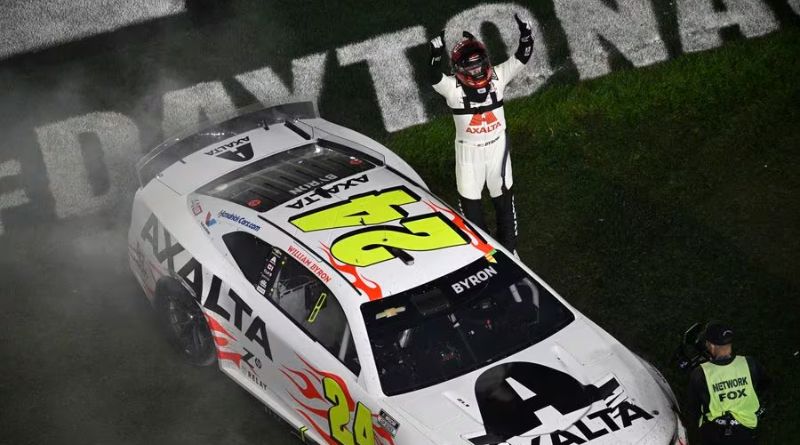
Byron’s Daytona 500 Victory Marks Milestone Win for Hendricks
In a dramatic Daytona 500, William Byron secured victory under caution following a crash between Ross Chastain and Austin Cindric. The win marked the ninth at Daytona for Hendrick Motorsports’ – nicely coinciding with the team’s 40th anniversary – and also tied Hendrick with Petty Enterprises for the most Daytona 500 victories.

A Close Finish… That Not Many People Saw
The decisive wreck happened on lap 197 of 200 when Corey LaJoie bumped Cindric up the track just as Chastain was coming down to make a pass for the lead. As Byron had technically already started his 200th lap when the caution was called, NASCAR rules dictated the race was over – marking him the winner.
Fans watching at home, however, were left scratching their heads at the results. Rather than show a clear replay, FOX’s broadcast switched back to regularly scheduled programming. It was almost an hour before NASCAR posted a picture to social media showing just how close the final moments were.
It was an unfortunate TV hiccup for an event whose viewership was already suffering from the weather-induced postponement. According to Sports Media Watch, Monday’s NASCAR Cup Series Daytona 500 averaged a 3.3 rating and 5.96 million viewers — topping only the 2021 edition and ringing in as the lowest rated and least-watched edition of the race.

Rough-and-Tumble Racing
In addition to the last-minute collision, the 2024 Daytona 500 saw two other notable wrecks.
First, was an eight-car accident during Lap 5. This started the attrition, putting Harrison Burton, Carson Hocevar, and Kaz Grala out of the race. However, it took 187 more laps before fans witnessed the kind of high-impact damage the Daytona 500 has become known for.
A 22-car crash, caused when Byron’s teammate Alex Bowman pushed him into Brad Keselowski, significantly thinned out the field for the final laps. The chain reaction of collisions knocked Keselowski out of the running, along with Joey Logano, Tyler Reddick, and previous Daytona champ Ricky Stenhouse Jr.
There's trouble at the front of the field! #DAYTONA500 pic.twitter.com/6wVECKKWY1
— NASCAR (@NASCAR) February 20, 2024
Ultimately, Bowman went on to finish second behind Byron, while Christopher Bell was unofficially scored in third ahead of LaJoie and Bubba Wallace. Byron’s victory marks his first Daytona 500 win and the 11th overall of his career. It also solidifies his status as a contender for the 2024 NASCAR Cup Series title.
Biden EPA To Roll Back Proposed CO2 Rules
According to recent reports from Reuters and the New York Times, the Biden administration will be rolling back the very strict CO2 emissions standards initially planned for automakers. The aggressive climate regulation aimed to create a market where EVs would represent two out of every three vehicle purchases by 2032.
Both unions and automakers pushed back against the ruling, arguing the CO2 reduction schedule was “neither reasonable nor achievable” in the current timeframe. In light of the cooling EV market and slow charging infrastructure ramp-up, it appears the White House may be inclined to agree.

The new rules should be released next month, and are expected to yield a slower pace of yearly emissions requirements through 2030. No word on exactly what that new number will look like, but sources told Reuters and the NYT that it would result in EVs accounting for less than the initially-proposed 60% of total new vehicles by the decade’s end.
An EPA spokesperson said the agency plans to finalize a rule that is “readily achievable, secures reductions in dangerous air and climate pollution, and ensures economic benefits.”
Automakers and the UAW will be watching for the final decision – as well as for two other rulings set to come down from the Department of Transportation and Energy Department, respectively.
The first aims to boost CAFE requirements to a fleet-wide average of 58 miles per gallon by 2032. The second proposes a new calculation for determining electric vehicle mileage ratings, which threatens to reduce the efficiency ratings of EVs by about 10%. Since automakers must pay fines (or buy credits) when they miss CAFE standards, these two rulings could have a major impact on their budgets.

Did You Know…?
Slow EV sales aren’t just impacting government legislation. Upstart EV-maker Rivian saw its shares tumble 25% last week to a record low. The dip comes after a bleak 2024 outlook that includes low production expectations and a third round of job cuts. Rivian currently offers two models: the R1T pickup truck and R1S SUV. It recently teased a new, mid-size model dubbed the “R2,” which it hopes will attract a fresh crop of buyers both to the brand and the technology. Until then, however, the company will be focused on cost-cutting more than volume growth.
Election Year Ethanol Boost
On Thursday, the Biden administration approved a request from Midwest governors to allow year-round sales of E15 gasoline in their states. However, the shift won’t start until 2025 – a move seen as politically strategic, as it aims to stave off any potential gas price spikes before upcoming elections.

Due to smog concerns, environmental regulations traditionally prohibit E15 blended gasoline during the summer months. The biofuels industry has long argued these negative impacts are untrue, saying E15 is actually less volatile than today’s standard E10 gasoline and would therefore improve air quality.
Ultimately, eco-friendliness seems to have had little impact on the White House’s decision.
As Reuters’ Auto File points out, “Higher blend rates will increase demand for ethanol and therefore maize, as the administration tries to help farmers ahead of presidential and congressional elections in November.”
Indeed, a broader ethanol mandate not only aids farmers amid declining incomes, but also increases fuel volumes – which the Midwest politicians argue will serve their constituents lower gas prices. The late start date is meant to assuage oil refiners grumbling about localized pricing and supply issues. As for those states itching to get a jump start on summer sales, it’s possible the EPA could issue temporary waivers.

In Case You Missed It…
The Illinois General Assembly is considering a bill that would align the state with California’s stringent Advanced Clean Trucks Regulation and eventually ban the sale of diesel-powered trucks in favor of electric vehicles. The new bill faces significant opposition, with over 3,700 opponents filing witness slips compared to just 540 supporters. If passed, the legislation would enable Illinois to adopt California’s emissions standards within just six months. Critics argue the transition to electric trucks would burden small businesses and lead to higher costs for consumers. They also question the fairness in having Illinois drivers follow rules drafted by California regulators for California drivers.
What Else You Need To Know This Week
Here are a few headlines we’re keeping an eye on and think you should too.
Mercedes Latest Automaker to “Adjust” EV Strategy

On Thursday, Mercedes joined the growing list of automakers delaying their ambitious EV goals. CEO Ola Kaellenius told investors that the company is no longer aiming to go “all-electric” by 2030 and will instead target up to 50% electrified sales by the decade’s end. That total includes hybrids.
Back in 2021, Kaellenius projected that spending on traditional combustion-engine technology would be “close to zero” by 2025. Last week, he assured investors that the luxury badge would continue developing ICE vehicles, with updated models that will take Mercedes “well into the 2030s.”
Shares jumped nearly 6% following the news. Though, the announcement of a $3.3 billion share buyback program – funded by combustion vehicle profits – probably helped.
California Slows Waymo’s Roll

On Wednesday, the self-driving industry received another blow. California regulators placed a hold on Waymo’s application to expand its robotaxi services into L.A. and the San Francisco Peninsula, delaying the decision until June 19.
Applications not approved by the California Public Utilities Commission (CPUC) within the first 30 days of an initial review period automatically enter a 120-day suspension. After that, the CPUC can decide to suspend the application for another 180 days or reject it. Waymo also has the option to withdraw – though it is unlikely to go that route.
The company, which already has a license to charge for driverless rides in San Francisco and Phoenix, is eager to keep expanding. While operation in L.A. would certainly build Waymo’s street cred, a presence in the SF Peninsula – namely, San Mateo County – would significantly boost the company’s bottom line, as it includes the San Francisco International Airport.
Despite the challenges in California, Waymo is moving full-steam ahead in Arizona. Robotaxis transitioned to freeway testing late last month. Currently, the only riders are Waymo employees but they are no longer in the driver’s seat.
Petersen Celebrates Record Setting Cruise-In

It appears the news of car culture’s death among young people has been greatly exaggerated. Last Sunday, February 18, the Petersen Automotive Museum hosted its largest-ever cruise-in, bringing a noticeably younger audience to the museum and maxing out the 600-space parking lot.
The event, held in conjunction with Donut Media, drew over 2,000 attendees – and left a bright spot on the calendar for the museum’s 30th anniversary.
The Engine Block is your one-stop source for any and all auto industry news. Keep an eye on our weekly round-up of enthusiast coverage, product reviews, vehicle spotlights, auto show/expo features, and more. Be sure to check back Wednesday for an update on the current Outdoor Recreation Market. Then, on Friday, don’t miss the next installment in our Resourceful Traveler series when we break down everything you need to know about overlanding wheels and tires.


