
Auto Industry News: UAW & OEMs Clap Back at EPA, Canadians Sour on EVs, & California to Unleash 24/7 Robotaxis
This week, we dive into the unlikely alliance formed by the UAW and the industry’s biggest automakers as they both voice concerns over the EPA’s strict new emissions rules. Both parties argue that the regulations are impractical, and might cause more harm than good.
In another noteworthy development, a recent study by JD Power sheds light on the sluggish adoption of electric vehicles in Canada, raising questions about the factors contributing to this trend. And on the horizon, San Francisco awaits a decision from the California Public Utilities Commission this week regarding the potential operation of robotaxis 24/7 — a move that could revolutionize transportation in the state.
Got all that? Don’t worry, we’ll keep you on track with details on these stories and more.
UAW & OEMs Find Common Ground on New EPA Rules
Back in April, the EPA set its strictest-ever tailpipe emissions standards for vehicles. If finalized, the aggressive climate regulation could create a market where EVs represent two out of every three vehicle purchases by 2032.
The proposal doesn’t seem to have found much support in the U.S. auto industry, though, with both unions and automakers pushing back.

What are the new EPA emissions standards?
For a quick recap, the EPA’s new federal emissions standards aim to drastically reduce CO2 pollution. The proposal, which applies to vehicles manufactured for model years 2027 through 2032, would require automakers to make a series of significant fleetwide CO2 reductions each year:
- 18% in the 2027 model year
- 13% in 2028
- 15% in 2029
- 8% in 2030
- 9% in 2031
- 11% in 2032
On average, this schedule equates to roughly a 13% combined fleet year-over-year CO2 reduction. If that seems aggressive, it is. The EPA says the new standards could lead to a 56% reduction in fleetwide emissions target levels compared to the current 2026 model year standards.
How do OEMs feel about the new emissions standards?
The EPA insists its proposal does not mandate or ban specific vehicle technologies, but rather encourages automakers to be flexible in how they meet the performance-based standards.
The Alliance for Automotive Innovation disagrees, saying the standards are “neither reasonable nor achievable in the timeframe provided.”

In a recent memo, the lobby group – which represents the U.S. auto industry and nearly every major automaker – called the EPA’s new rules “so stringent” as to set a “de facto battery electric vehicle mandate” for the U.S. One that cannot be met “without substantially increasing the cost of all vehicles, reducing consumer choice, and disadvantaging major portions of the U.S. population and territory.”
The alliance goes further, calling out the EPA’s “unrealistic” assumptions about battery production and mining; its miscalculations around battery costs; and its lack of foresight in drafting requirements for critical mineral availability, grid capacity, and charging and refueling infrastructure.
Where does the UAW fall on the new EPA rules?
While its motivations are different, the United Auto Workers also takes issue with the EPA’s new standards. On Friday, the union called for a softening of the proposed emissions cuts and expressed fear that the aggressive rules may do more harm than good.
Echoing the alliance, the UAW is asking the EPA to make adjustments that “better reflect the feasibility of compliance” – i.e., creating a more gradual stringency of CO2 reductions and spreading them over a greater period of time.

The union also made a point to highlight the role that profitable light-duty trucks and SUVs play in funding the EV transition. (Nearly 60% of all vehicles produced by unionized, domestic automakers in 2022 were pickups or SUVs.) The EPA’s proposed standards risk disrupting this market, the UAW argues, and could “disproportionately impact domestic union auto production.”
Why do UAW and OEM opinions matter?
The new EPA rules are not yet set in stone, meaning there is still time for changes to be made.
And while it may often seem like the U.S. government does what the U.S. government wants, there is an election coming up. Automakers will be hard-pressed to throw their political muscle behind an administration that won’t hear their concerns — a stance the UAW has already made explicitly clear. Back in May, new UAW president Shawn Fain announced the union was not yet endorsing Biden for reelection, citing his electric vehicle policies.
Before anyone heads to a ballot box though, the UAW and the Detroit Three will head to the bargaining table. Current contracts expire this September. With strike threats already made, upcoming negotiations should be interesting.
In Case You Missed It…

Ford recently filed a trademark application, requesting rights to the name “F-150 Flash” – proof enough for many Blue Oval fans that a high-performance Lightning model is on the way. Ford hinted at a more-powerful version of the EV truck back in February, when it announced its return to Formula 1 with Red Bull. Seeing as the current model blasts 0-60 in 4.0 seconds with 580 hp and 775 pound-feet of torque on tap, we expect the new “Flash” to offer much more than a bigger bumper.
Survey Says: Canadian Consumers Souring on EVs
With all this talk of EV-friendly regulation, it’s interesting to note that our neighbors to the north are facing some challenges in their own adoption efforts.
According to J.D. Power’s second annual Canada Electric Vehicle Consideration Study, nearly two-thirds (66%) of automobile shoppers in Canada say they are either “very unlikely” or “somewhat unlikely” to consider an EV for their next vehicle purchase.
“Despite current legislation that is pushing hard for EV adoption, consumers in Canada are still not sold on the idea of automotive electrification,” said J.D. Ney, director of the automotive practice at J.D. Power Canada. “Growing concerns about affordability and infrastructure (both from charging and electrical grid perspectives), have caused a significant decline in the number of consumers who see themselves in the market for an EV anytime soon.”

There is still a committed group – roughly 34% say they are likely to consider an EV in the next 24 months. But, overall, EV consideration is down significantly year-over-year (13 percentage points, to be exact). Ney said for the country to reach its EV targets, manufacturers and lawmakers will need to address consumer concerns over affordability, capability, and infrastructure.
Did You Know…?
“Tribrid” trains are now running on rail lines across Italy. Nicknamed “Blues,” the trains are capable of switching between battery power, electricity, and diesel. They can only go about 10 miles when relying just on batteries (which recharge on their own as the train operates), but even so, manufacturer Hitachi expects the “Blues” to reduce fuel consumption by 50%. The trains are also constructed of 93% recyclable materials. Each one can accommodate roughly 300 passengers across 3-4 cars.

Self-Driving Cars to Be 24/7 in Bay Area
Sticking with this week’s theme of polarizing automotive innovations… It looks like folks in California are about to see a lot more self-driving taxis zipping up and down the hills of San Francisco.
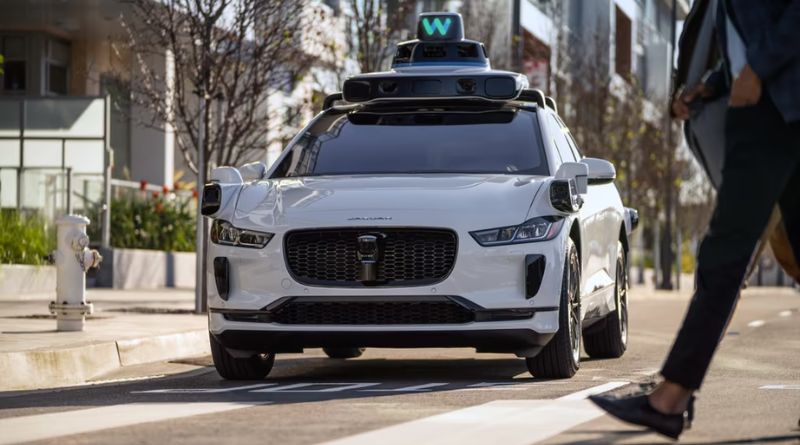
The California Public Utilities Commission (CPUC) votes this week on whether or not to allow Waymo and Cruise to charge for 24/7 robotaxi rides. Despite mounting resistance from city officials, the regulators are expected to grant the two companies their approval. The move will mark a significant milestone on the path to profitability for ride-hailing services.
How is this different from current robotaxi operation?
Currently, Cruise is only permitted to offer driverless rides to the public from 10 p.m. to 6 a.m. and only in certain areas of the city. Waymo’s permit, by comparison, allows it to operate any time of day throughout the city – but a human driver must be present.

The new ruling would put the two companies on “equal footing,” so to speak, allowing them to operate anywhere in the city, at any time, and to charge whatever they deem an acceptable rate.
What’s at stake?
City officials argue the technology isn’t yet ready for such freedom, and the risks to the public are too great. They point to dozens of incidents that have happened just this year, where robotaxis clogged up traffic, performed unsafe or illegal maneuvers, impeded emergency vehicles, and even caused collisions.
Advocating for an “incremental approach” to expansion, the city asked the commission to limit robotaxi fleet size and disallow them from operating downtown and during peak hours.
The CPUC countered by saying the arguments don’t qualify as a “proper protest” because it would “require relitigating a prior order of the Commission.” In other words, the CPUC feels the matter in question has already been decided through a prior order… and so cannot be challenged again.

For what it’s worth, the CPUC’s job is to regulate fare-taking transportation systems (like taxis). It is the California DMV that determines when and where these systems can operate. And the DMV already gave the green light.
So, what happens next?
Well, the CPUC announces its decision on July 13. If it gives approval, like it’s expected to, the streets could get a little weird. While things are unlikely to happen overnight, it’s worth noting that neither tech company has shared how many robotaxis are currently operating in the city, how many will join the fleet, or how exactly operations will scale up.
The Engine Block is your one-stop source for any and all auto industry news. Keep an eye on our weekly round-up of enthusiast coverage, product reviews, vehicle spotlights, auto show/expo features, and more. Be sure to check back Wednesday for tips on exhaust system maintenance, and then come back around on Friday for a list of the top 10 best Nicolas Cage chase scenes. (Trust us when we say you don’t want to miss that one.)


