
Auto Industry News: Next-Gen Tacoma, Aggressive New Emissions Standards, and More Self-Driving Cars
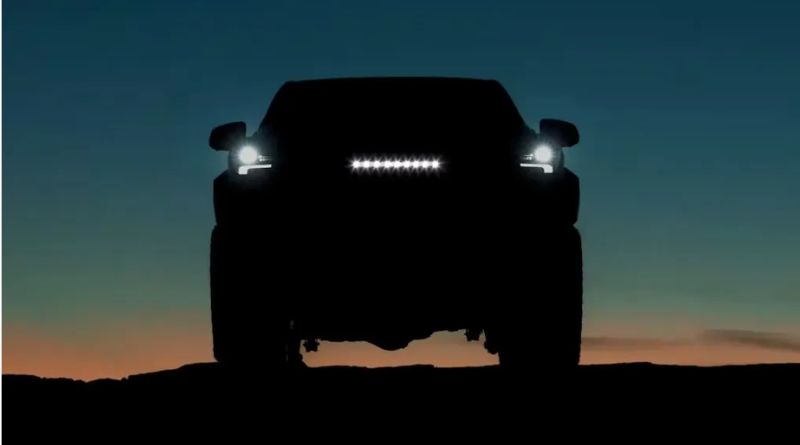
The 2024 Toyota Tacoma continues to take shape, with yet more teaser images dropped last week. The Engine Block looks closely at the details and compiles everything we know so far about the fourth-gen hauler. Meanwhile, the EPA just proposed the strictest ever tailpipe emissions, giving electric vehicles less of a helpful push and more like a hearty shove onto the consumer market. And in the truly futuristic realm, GM-backed Cruise is readying for growth as it looks to expand its driverless taxi fleet into new cities with new vehicles – ones that lack any human controls.
Ready for this brave new world? Let’s dig in.
2024 Toyota Tacoma Beginning to Take Shape
The best-selling midsize pick-up in America gets a total overhaul for 2024 as it enters its fourth generation. Despite continual promises for ‘more details’ though, Toyota remains tight-lipped on the new model, choosing instead to drop vague teaser photos on social media.
Well, two fresh images landed last week, revealing some updates for the upcoming TRD Pro model.

The first image gets up close on the Tacoma’s rear wheel. In addition to a sleek black paint job, TRD badge and rugged all-terrain tire, the most noticeable thing about this sneak peek is the disc-brake setup sitting beyond the wheel. Amazingly, this will be a first for the Tacoma TRD Pro – the capable off-roader made do with cheaper drums for years.
The second image also offers a close-up, this time of the TRD Pro’s new front suspension wearing Fox Racing QS3 coilovers. According to Fox’s website, the QS3 setup is currently only available for dedicated off-road rigs, like side-by-sides.
Expected Upgrades
The new information isn’t a whole lot to go on, but when added to the smattering of details already accumulated, a more complete picture is beginning to take shape.
We already know the 2024 Tacoma will feature the new TNGA-F body-on-frame platform underpinning the fresh-faced Tundra. And, if that vehicle serves as any kind of inspiration, then we can assume the new Tacoma will wear a similarly bulked-up hexagonal grille, sharper body panels with bulging fenders, and modern black-cladded wheel wells.

Additionally, like its big brother, we expect the new Tacoma to receive some much-needed updates to both its slouchy powertrain and dated interior appointments.
While the optional V-6 provides decent oomph by the last generation’s standards, it is now significantly underpowered compared to competitors – with even the Honda Ridgeline out-performing it. The standard four-cylinder fares even worse, as does the sloppy six-speed automatic transmission.
Toyota already confirmed a hybrid power option is on the docket, revealed via teaser image in early April.
The iForce Max tailgate badge glimpsed in the picture suggests the automaker may be carrying over the Tundra’s electrified setup. In that truck, the hybrid system sandwiches a 48-hp electric motor between a 3.4-liter twin-turbo V6 and a traditional 10-speed automatic transmission to make 437 horsepower and 583 lb-ft of torque.

Likewise, we expect to see many of the Tundra’s interior upgrades carry over to the Tacoma as well. Described as a “Technical Muscle” motif on the full-sizer, it includes a sleeker layout, more premium materials, and a bevy of horizontally-oriented touchscreens across the dash.
New Trim
Lastly, Toyota confirmed the introduction of a new Trailhunter trim. Designed to appeal to the overlanding crowd, it will feature “purpose-built engineering and robust components” per the automaker, which – surprise, surprise – has only released a trickle of details via carefully-cropped photos.
From what we can suss out though, the new trim will definitely feature dark branded headlight bezels and bulging cladded fenders, as well as a metal ARB rear bumper with sturdy red tow hooks. Using the SEMA 2022 Tundra Trailhunter concept as a guide, we expect to see a special suspension setup, plenty of off-road upgrades, and a long list of available third-party accessories.

Did you know…?
As new vehicles grow more complex, so do thieving methods. Enterprising criminals are now using “headlight hacking” as a way to tap into a vehicle’s CAN bus system. Once in, they use a digital tool purchased on the dark web to impersonate the key fob, unlock the doors and drive away. One more reason to keep it analog?
EPA Proposes Strongest Ever Pollution Standards
Recently, the Biden administration unveiled new federal pollution limits that represent the strictest-ever tailpipe emission standards to be set for automobiles. The aggressive climate regulation affects both passenger vehicles and heavy-duty rigs (like semi-trucks, buses and delivery vans) and aims to maximize electric car sales, ensuring they represent two out of every three vehicle purchases by 2032.
As expected, the emissions crackdown is receiving a wide array of responses from enthusiastic support to scathing criticism.

Reactions
Proponents point to the 10 billion metric tons of carbon dioxide emissions that would be averted by the middle of the century. They also highlight lower fuel and maintenance costs for vehicle owners, as well as stronger domestic energy security by reducing the reliance on foreign oil. (According to Bloomberg, the new rules are expected to shrink U.S. oil demand by an estimated 17 billion barrels through 2055.)
On the flip side, detractors are accusing the government of fixating on one form of technology (electrification) at the expense of others (like carbon capture systems, renewable production, and cleaner ICE engines). They also argue that the rules actually jeopardize national security by introducing a dangerous new energy dependence on China.
“It’s unconscionable that the Administration would propose this knowing full well that China controls 80% of global battery production capacity,” American Fuel & Petrochemical Manufacturers’ President and CEO Chet Thompson said.

The EPA insists it isn’t playing favorites. A spokesman for the government agency said the proposals do not mandate or ban specific technologies, but rather encourage automakers to be flexible in their application of solutions.
However, the emissions standards are so strict that electrification is essentially the only viable path to compliance. And even automakers – who stand to benefit greatly from new EV sales – seem apprehensive about successfully sourcing the necessary materials and ramping up production to scale.
John Bozzella, CEO of the Alliance for Automotive Innovation, explained in a statement that reaching the administration’s previous target – 50% EVs by 2023 – was always a “stretch goal” contingent on market conditions. “Even with positive EV sales momentum and product excitement … this requires a massive, 100-year change to the U.S. industrial base and the way Americans drive.”
Predictions
So, should everyone expect their next ride to be electric? Eh, not quite.
First, the rules do not explicitly ban fossil fuels. They also only apply to new vehicle sales. That means, gas-burning vehicles will still be on the road and in used car lots for years to come.

Secondly, there’s no guarantee the proposed rules will be implemented in their current form. As Vox points out, “some carmakers may push back and argue the targets are unfeasible, while courts could become a roadblock. And the next election could drive everything off course.” (Indeed, some states like Texas are already suing the agency over existing regulations.)
Other impediments to adoption include poor charging infrastructure, wonky supply chains, rising purchase costs, confusing tax credits and high interest rates. Most auto industry analysts agree these current market conditions simply do not support such an ambitious vision for electric vehicle saturation.
Regardless, the EV wave is coming. And if battery power ain’t your bag, then it might be time to catch up on your ICE engine’s deferred maintenance.
In Case You Missed It…
A Lower Manhattan parking garage collapsed last week, killing one person and injuring five others. According to city officials, the four-story structure had a history of unresolved safety violations, including cracked and crumbling concrete, and was due for inspection this year under a new local law. The tragedy has spurred new conversations and concerns, including whether decades-old multistory garages are properly equipped to handle the size and weight of modern vehicles, especially those wearing heavy battery packs.

More Highs & Lows for Self-Driving Cars
From beta testing self-driving taxis in San Francisco to charging travelers for those driverless rides, GM-backed Cruise has been making moves lately. Inching closer to its goal of being a sustainably profitable business, the company is now ramping up for rapid growth – and perhaps coming to a city near you.
Moving On Up (and Out)
According to CEO Kyle Vogt, Cruise is right on track to reach $1 billion in revenue by 2025 and may even surpass that target. In addition to expanding commercial operations, the tech company is preparing for volume production of its purpose-built Origin autonomous vehicle.
The bus-like ride, which seats six and has no steering wheel or brake pedals, is still under regulatory review. Cruise is seeking an exemption from current federal safety standards to operate without human controls.

While the company has some other options to getting the Origin on public roads, the straightest path to profitability is contingent on NHTSA approval. And that could be a little tricky, given some of the operational hiccups Cruise vehicles have had lately.
Still Glitchy
From jamming up intersections and blocking emergency responders to unexpectedly stopping and rolling through closed-off areas, Cruise’s autonomous taxis still have some bugs to work out.
Most recently, the company had to recall software in 300 vehicles after one of its driverless taxis crashed into the back of a San Francisco bus. While the (empty) Cruise vehicle sustained moderate damages, no one was injured in the collision.
However, this isn’t the first time Cruise vehicles have been involved in a crash. One back in June led to a similar software recall – and that left two people injured. Additionally, dash cam videos from public transit vehicles show driverless vehicles (from Cruise as well as other tech companies) regularly interfere with the flow of traffic, causing significant delays and a fair amount of danger to fellow drivers, riders and pedestrians.
Some will argue these events are inevitable – and in fact, critical to the development of new technology. Identify problems, fix them, try again. The question here is whether NHTSA feels that way, and if they think the risk is worth the reward.
The Engine Block is your one-stop source for any and all auto industry news. Keep an eye on our weekly round-up of enthusiast coverage, product reviews, vehicle spotlights, auto show/expo features, and more. Be sure to check back Wednesday for our Small Truck Safety Rundown, indicating which compact and mid-size haulers are the safest bet, and then come back on Friday for a list of must-see auto events in May.


