
Auto Industry News: Jeep Layoffs, Emissions Arguments, Cybertruck Safety Concerns, and Scroogie Drivers
This past week, Jeep started cutting production shifts right before the holidays — saying California’s strict emissions policies are to blame. Meanwhile, the House of Representatives took its own aim at limiting climate legislation by voting to pass the CARS Act, which hopes to block the EPA’s aggressive new federal emissions standards. The Engine Block has details on how these moves may (or may not) pan out, plus details on Cybertruck safety concerns, lower gas prices, and a list of which states’ drivers made the naughty list this year.
Jeep Blames California for Holiday Layoffs
On Thursday, Jeep-parent Stellantis announced plans to temporarily cut down production at the Detroit assembly plant responsible for building Jeep Grand Cherokee and Wrangler SUVs. The company cited California emissions regulations when it warned nearly 3,600 workers that they could be furloughed.
According to the automaker, California’s strict rules are forcing the company to limit what types of vehicles it can send to its dealers in the state — as well as to the 14 other states that follow California’s lead on climate emissions standards.

Basically, since these states require manufacturers to sell a specific percentage of zero-emissions vehicles and plug-in hybrids, Stellantis must prioritize its allotments to meet those standards. That means, customers in these states may find only plug-in hybrid SUVs on the lot, while traditional ICE models (like those made in Detroit) or even all-electric versions would need to be specially ordered.
Further complicating matters is a 2020 deal that California inked with five of Stellantis’ rival automakers. It allows those manufacturers to measure compliance based on nationwide sales, rather than on a more difficult, state-by-state basis. When Stellantis tried to join the group and play by these more favorable rules, it was denied. The automaker feels the rebuff was payback for when Fiat-Chrysler publicly questioned California’s authority to set its own regulations back in 2019 under the Trump administration.
Stellantis’ recent move comes at a pivotal time. The Biden administration is soon to rule on California’s proposal to ban all combustion vehicle sales by 2035 – a decision which the automaker seems to be saying would no doubt lead to more layoffs. For a staunch pro-union administration, this would be a tough needle to thread.

In Case You Missed It…
After 8 years, Jeep is dropping the Renegade from its North American lineup due to sluggish sales. The subcompact crossover – which is the smallest and least expensive vehicle in Jeep’s arsenal – will end after this model year, 2023. Built in Italy on the Fiat 500X platform, the Renegade will stay on in foreign markets like Europe, Mexico, South America, and Asia Pacific. As for the U.S., the Compass will now become Jeep’s entry-level nameplate at $29,995.

CARS Act Gets House Approval
The House of Representatives voted on Wednesday, 221-197, to pass the Choice in Automobile Retail Sales Act – or CARS Act – which would prohibit the EPA from finalizing its strictest-ever tailpipe emission standards. The legislation would also bar the agency from proposing or implementing any standards that “limit the availability of new motor vehicles based on that vehicle’s engine type.”
The aggressive EPA proposal at the center of the argument stands to affect both light and medium-duty vehicles from model year 2027 through 2032. The rule also aims to maximize electric car sales, ensuring they represent two out of every three vehicle purchases by 2032.
Proponents of the CARS Act argue that the EPA’s new rules are a de facto EV mandate. Rep. Tim Walberg, R-MI, who co-sponsored the bill in July, said the regulations would not only limit consumer choice, hamper mobility, and make vehicles more expensive but also “cede America’s auto leadership and jobs to China.”

The EPA’s proposal hasn’t found much support in the U.S. auto industry, aside from EV makers (for obvious reasons). While some automakers have tried to compromise by suggesting less strict standards, others have pushed back saying the standards are “neither reasonable nor achievable in the timeframe provided.” Even the UAW stressed caution, urging a more gradual stringency of CO2 reductions and spreading them over a greater period of time.
It appears the majority of the House of Representatives agrees. However, even if the bill passes the Senate, the White House already issued a statement saying the President would veto it. (Aaand, round and round we go.)
Did you know…?
More than 1,000 factory workers at Volkswagen’s Chattanooga, Tennessee, assembly plant signed union representation cards last week, meeting the first threshold in the UAW’s new organizing plans. Under the strategy, the union said if 30% of workers at any given plant sign up, then the effort will be made public. At the next level (50%) the UAW will host a rally with Fain. Once support reaches 70%, the union will seek formal recognition.
Cybertruck Safety Concerns
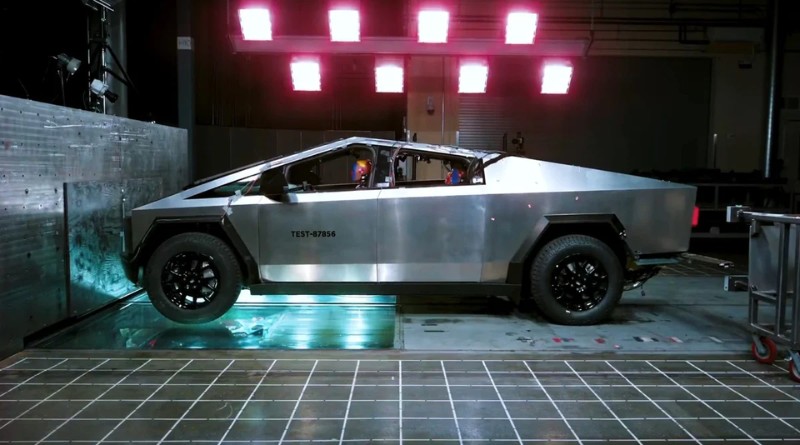
Tesla’s Cybertruck is sparking concerns among safety experts regarding the potential harm it could cause to pedestrians, cyclists, and other vehicles. Interestingly, it’s not so much the aggressively-angular design that is at issue, but rather the stiff stainless-steel exoskeleton.

According to the automaker, the electric pickup’s cold-rolled stainless body panels are designed to absorb impact during a crash, as do special energy-absorbing ribs within the front and rear structures. Safety pros, however, point to the lack of “crumple zones” or areas of the vehicle that specifically deform to absorb crash energy safely. Without these zones, occupants inside the rigid vehicle could be less shielded against the full force of an impact.
Similarly, occupants in other vehicles would be at greater risk, too. If the crush-resistant Cybertruck is in a collision with a vehicle that does crumple, the result would be similar to smashing a hammer into an aluminum can. As CEO Elon Musk touted during the truck’s launch event, “If you have an argument with another car, you will win.”
Also drawing concern is the electric pickup’s heavy weight and high acceleration, which could have devastating consequences for pedestrians who don’t see – or hear – it coming.
Brussels-based nonprofit European Transport Safety Council said it “hopes” Tesla does not try to bring the Cybertruck to Europe. “A vehicle of this size, power and huge weight will be lethal to pedestrians and cyclists in a collision,” it said in a statement. The group may have its way; EU safety rules will likely pose challenges for Tesla’s pointy new ride, due to limitations on external protrusions.
N-FAB has the ultimate upgrade for your wintertime off-road adventures.
What Else You Need To Know This Week
Here are a few headlines we’re keeping an eye on and think you should too.
AV Industry Wants Federal Support
On Thursday, a coalition of groups representing the U.S. self-driving vehicle industry sent a letter to Transportation Secretary Pete Buttigieg, calling for the department’s explicit support of autonomous vehicle development.
“The AV industry is at a critical juncture and in need of strong leadership from USDOT,” the letter read, warning that federal support is “crucial” to maintaining a competitive edge against countries like China – who are “aggressively investing and advancing the technology.”

The letter comes shortly after California legislators stopped Cruise robotaxis from testing on public roads, finding them unsafe in the wake of a very publicized pedestrian incident. While NHTSA investigates Cruise, labor groups are clamoring for a larger, industry-wide investigation. Just last month, they sent their own urgent letter to Buttigieg’s office, calling for “serious oversight.”
At least both sides can agree on one thing: Congress needs to get its affairs in order on AVs.
For years now, proposed legislation that would put federal guardrails on the technology has stalled. With no national framework of rules in place, self-driving development – and deployment – is essentially the Wild West.
Oil Prices Take a Tumble
 The national average for a gallon of gas resumed its steady decline last week, dropping four cents to $3.20 — the lowest level of the year. While prices do tend to go down this time of year (thanks to the nationwide shift to cheaper, winter-blend gasoline), a recent decline in oil prices is what’s largely pushing the trend.
Last week, crude oil fell below $70 a barrel, closing at the lowest level since June. The dip comes despite promises of production cuts from OPEC+ delegates — cuts that investors are now skeptical will effectively offset new supply from non-cartel countries.
Indeed, U.S. domestic oil production is definitely helping to bolster supply. Inventories currently sit 7% higher than a year ago, and slightly ahead of the five-year average for this time of year.
GasBuddy Reveals Holiday Driver Naughty or Nice List
After examining millions of drives during 2023’s Thanksgiving holiday weekend, GasBuddy thinks it has a lock on which U.S. cities harbor the naughtiest drivers – and which hold the nicest.
The company used data from its optional, opt-in “Drives Feature” in the GasBuddy app and tracked drivers in the top 50 metropolitan areas by population as defined by the United States Census Bureau. It defined aggressive driving habits as “quick acceleration, hard braking, and speeding.”

According to the survey, Tucson, Arizona took top honors once again for having the Scroogiest drivers on the road, while Minneapolis, Minnesota took the “nicest” designation – jumping six spots from 7th last year.
Check out the top 10 lists in the chart below.
|
Naughty |
Nice |
| 1. Tucson, AZ | 1. Minneapolis, MN |
| 2. Nashville, TN | 2. Providence, RI |
| 3. Orlando, FL | 3. Portland, OR |
| 4. Jacksonville, FL | 4. Seattle, WA |
| 5. New Orleans, LA | 5. Cleveland, OH |
| 6. Richmond, VA | 6. Norfolk, VA |
| 7. Salt Lake City, UT | 7. Hartford, CT |
| 8. Buffalo, NY | 8. Las Vegas, NV |
| 9. Memphis, TN | 9. Rochester, NY |
| 10. Oklahoma City, OK | 10. Columbus, OH |
The Engine Block is your one-stop source for any and all auto industry news. Keep an eye on our weekly round-up of enthusiast coverage, product reviews, vehicle spotlights, auto show/expo features, and more. Check back Wednesday and meet 3 problem-solving fluids that work wonders in cold temperatures. Then, come back Friday and learn which essential winter accessories you should have in (or on) your truck this season.


