
Auto Industry News: Penske & Porsche Triumph, Tesla Takes $80B Hit, Cruise Faces Fresh Scrutiny
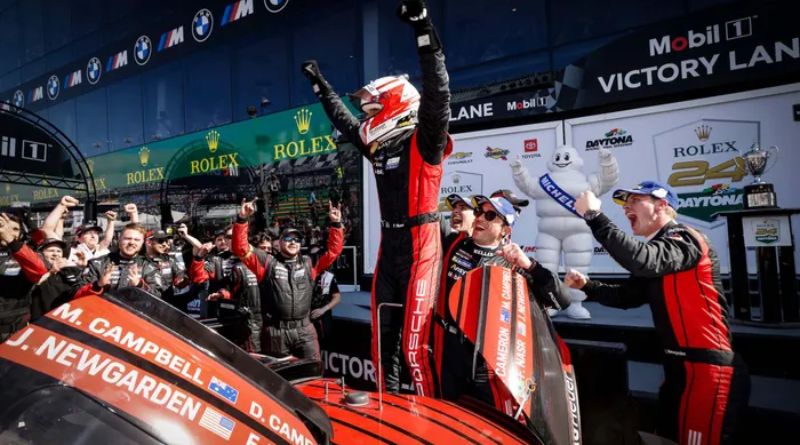
“Big” would be a short but appropriate word to describe the last week in the auto industry. Roger Penske enjoyed a momentous victory on Sunday when Felipe Nasr ended the renowned team owner’s five-decade losing streak at the Rolex 24 at Daytona. Meanwhile, Tesla felt a sizeable loss as a dour earnings call sent investors on an anxious and costly doom spiral.
The company’s one-day, $80 billion hit no doubt left a painful impression, but its financial health remains strong – which is more than can be said for Cruise. The self-driving subsidiary of GM felt its recent headache amplify significantly, as government agencies began investigating allegations of lying and misrepresentation during an October pedestrian incident.
Plus, the feds tell state DOTs to curb their enthusiasm for funny highway signs, Lincoln axes 200 dealerships, and Hagerty reports collector car prices are back to pre-pandemic levels. The Engine Block has details on these and more stories in this week’s Auto Industry News.
24 Hours of Daytona
This Sunday saw the 62nd running of America’s most prestigious endurance race, the Rolex 24 Hours of Daytona. The twice-around-the-clock event never fails to serve up heart-pounding action, and this year was no different, with Team Penske taking the checkered flag after a 54-year-long drought.

The annual race, which is part of the IMSA Weather Tech SportsCar Championship season, featured 59 cars on the grid this weekend. While divided over four classes – ranging from hardcore racing “prototypes” to more familiar-looking “GT” class vehicles – all cars run the 3.56-mile circuit at the same time.
The variety of makes, models, and racing technology on display only serves to heighten the excitement, as vehicles travel at different speeds and inevitably shake up the race within and across classes with blocks, crashes, and cautions.
A very happy Roger Penske snapped up this year’s overall win when Felipe Nasr crossed the finish line just a scant 2.112s ahead of Cadillac’s Tom Blomqvist. It marked the first title for Penske since 1969, and the 19th overall win for Porsche.
The final hour delivered in dramatic fashion, with Nasr working hard to hold off two-time defending champ Blomqvist. With just over 30 minutes remaining, Lexus’ GTD-class entry burst into flames exiting the pits, leading to a restart. Nasr made the most of it, jumping ahead during the final round of pitstops and holding on tight, ultimately denying Blomqvist what could have been a third consecutive Rolex 24 victory. Rounding out the podium with a third-place finish for Wayne Taylor Racing was the #40 Acura ARX-06.

Did You Know…?
Brad Pitt was at Daytona this weekend, too – not to take in the Rolex 24 but rather to film scenes for an upcoming Formula One movie. In it, Pitt plays an aging driver who has returned to sports car racing. While the presence of an A-list celebrity may be exciting for fans, it’s been more of a nuisance for drivers who see the late-night filming and increased security as inconveniences. As they say, however, the show must go on. Pitt’s movie is due to hit big screens in 2025.
Tesla Tumbles $80B
Investor anxiety reared its ugly head for Tesla last week. Poor Q4 earnings paired with Elon Musk’s warning of continued slow sales growth sent the company’s shares tumbling 12%, causing it to lose more than $80 billion of market value in a single day.
CEO Musk gave a bleak long-term view, cautioning Tesla shareholders that sales volume growth would be “notably lower” this year, thanks to softening EV demand and strengthening foreign competition. Indeed, despite surpassing estimates with a record number of EV deliveries in Q4, Tesla still trailed behind Chinese firm BYD, which is now the world’s top EV maker by sales.
Margins are likely to grow slimmer as well, with U.S. market conditions in flux and certain Tesla models losing their federal tax credit eligibility. Expect to see further price cutting and incentives on behalf of the EV maker.

“Next-Gen” Vehicle
Tesla says it is sitting between two waves of growth. One was kicked off by the releases of Models 3 and Y, and the other is set to start with a “next-gen” vehicle which will enter production in the second half of 2025. Codenamed “Redwood,” the new EV is rumored to be the $25,000 entry-level model that Elon Musk has been promising since 2020. People close to the matter say it will be a compact crossover.
During the earnings call, Musk also reiterated his stance that without a bigger stake in Tesla (at least 25%), he might choose to pursue AI and robotics innovation outside of the company. On Friday, news broke that his artificial intelligence start-up xAI is looking to raise $6 billion, though Musk denied those reports and insists the company is not trying to raise capital.
In Case You Missed It…
Citing “challenging market conditions,” electric car maker Polestar says it will cut about 450 positions or roughly 15% of its global workforce. The company struggled last year amid softening EV demand, reducing its delivery target twice and still missing the goal by about 5,000 vehicles – largely due to the delay of the new Polestar 3 electric performance SUV.

Cruise Issues Amplify
GM’s self-driving subsidiary, Cruise, faces fresh pressure. Both the DOJ and SEC are investigating the tech company over its actions during a traffic incident late last year. Cruise is accused of intentionally withholding key details about its robotaxi’s actions – specifically its initiation of a safety pullover routine that unnecessarily dragged a pedestrian an extra 20 feet after she was hit by another car.
In an effort to better understand where things went wrong (and to shore up its defenses), Cruise retained the law firm Quinn Emanuel to conduct a third-party review into the event. Cruise also hired the engineering consulting firm Exponent Inc. to conduct a root cause analysis of the incident.
A Failure to Communicate
According to Quinn Emanuel’s report, there is no evidence to suggest that Cruise leadership or personnel intentionally tried to deceive or mislead regulators during its oral briefings directly after the incident. However, the company wasn’t entirely left off the hook.
The review notes Cruise’s intention to “affirmatively disclose [the] material facts” by playing the full video of the incident for government officials and regulators, effectively letting the “video speak for itself.” The company then planned to provide further context when questions were asked.

In other words, while the company didn’t hide information about the robotaxi dragging the victim, it also made no effort to verbally point it out.
The problem (aside from Cruise’s approach testing the limits of corporate ethics) is that internet connectivity issues during the company’s meetings with officials rendered the video unclear. Technical difficulties caused the recording to “freeze and/or black-out in key places,” the report notes, and at no point did Cruise execs make mention of the vehicle’s injury-inducing pullover maneuver. As such, officials did not find out about the secondary movement until later, with the DMV actually learning of it from another government agency.
Black Eye for AVs
Unsurprisingly, this sequence of events has led to confusion, frustration, and a seriously frayed relationship between the self-driving company and its regulators. It also could spell trouble for the wider AV industry, as the loss of public trust may cause a ripple effect.

Whether or not Cruise will come out of this whole mess free and clear is anybody’s guess. Ultimately, the Quinn Emanuel lawyers concluded the blame falls on those at the top, calling the event a “direct result of a proverbial self-inflicted wound by certain Cruise leadership and employees who appear not to have fully appreciated how a regulated business should interact with its regulators.”
What Else You Need To Know This Week
Here are a few headlines we’re keeping an eye on and think you should too.
Feds Say No More Funny Business
The U.S. Federal Highway Administration is cracking down on funny highway signs. In an updated 1,100-page manual dictating how traffic signs are regulated, the agency specifically calls out transportation-related messages that intend to be humorous, saying they should not be displayed because obscure meanings, references to popular culture, and nonstandard syntax can be “misunderstood or understood only by a limited segment of road users,” thereby degrading the sign’s effectiveness.
“Where’s the fun in that?” say the many state DOTs who have relied on quips to catch motorists’ attention and communicate safety reminders. Examples include Massachusetts’ “Use Yah Blinkah” and Wisconsin’s “That’s the temperature, not the speed limit.”

According to federal regulators, the quirky messages are not being “banned” as some media outlets reported. Rather, the administration just “strongly recommends” they not be used. However states decide to interpret that message, they have two years to implement the new directions.
Lincoln Looks to Trim the Fat
As part of its goal to create a smaller, more profitable retail network, Ford’s luxury division plans to shed an additional 100 U.S. dealerships this year, adding to the record 100 it dropped in 2023. The brand is mostly targeting Lincoln retailers that are coupled with a Ford dealership, sweetening the buyouts with more Ford inventory and special incentives.
“If we’re to create an experience for a client that has very high expectations then you can’t co-mingle that with a mass brand,” Chris Poulos, chairman of the Lincoln National Dealer Council told Automotive News.
Lincoln aims to maximize a smaller footprint by delivering a curated experience at brand-exclusive stores. It also hopes that a freshened portfolio will help improve U.S. sales, which have dropped in each of the past four years.

Collector Car Prices Return to Earth
Hagerty reports that the collector car market’s downward trend reached a significant marker this month. “Accounting for inflation, the median price of the vehicles in the Hagerty Price Guide has returned to December 2019 levels,” indicating that the pandemic-fueled chaos boom is over.
High-value cars that sit at the tippy-top of the market continue to fetch elevated prices, but the majority of vehicles are seeing softer bids. Hagerty points to lower sell-through rates at this year’s auctions, but reaffirms this is a good thing, as “buyers are no longer in a frenzy to pay whatever it takes. Basically, this is a return to a stable market in which enthusiasts can enjoy their vehicles without speculators adding turbulence.”
The Engine Block is your one-stop source for any and all auto industry news. Keep an eye on our weekly round-up of enthusiast coverage, product reviews, vehicle spotlights, auto show/expo features, and more. Check back Wednesday for the whys and hows of oil cooling systems and then circle back on Friday for a rundown of the best off-road trails in the Central Midwest.


