
Auto Industry News: Rimac Scoops Up Bugatti, Biden Backs Right to Repair, and EVs Threaten a Weak Power Grid
Plenty happening on the legislative front this week, as the auto industry continues its key change from ICE to EV. With the western United States suffering tremendous heatwaves — and California bracing for more rolling blackouts — tongues are wagging about the nation’s poor electrical grid. If we can’t keep the lights and A/C on, how will we charge a national fleet of EVs? The topic is particularly timely since lawmakers are still arguing over pork fat in the White House’s infrastructure plan.
Automakers seem unphased, as they keep pumping out new electric models — of all flavors. High-end Croatian EV automaker Rimac just scooped up Bugatti, signaling some interesting changes for the brand. And Right to Repair makes some moves on the federal front. Unfortunately, there doesn’t seem to be too much bite behind the bark.
But first, some exciting racing news!
SCORE International Releases 2022 Schedule

Late last week, SCORE International released its schedule for the 2022 World Desert Championship. The event marks SCORE’s 49th anniversary of the desert-racing series on Mexico’s Baja, California peninsula.
First up, March 29-April 3, is the 35th SCORE San Felipe 250. After being postponed in 2020, the event will serve as season-opener for the 10th time in SCORE history. SCORE organizers said they scheduled two days at the event for the extremely popular tech, contingency, and manufacturer’s midway.
Next will be the renowned SCORE Baja 500, back for its 54th running, June 1-5. The race will start in Ensenada for the 48th time and finish in Ensenada for the 44th time.
After that, is the newest addition to the SCORE calendar: the SCORE Baja 400. Also postponed in 2020, this year mark’s its third running and will be held September 13-18.
Wrapping up the season is the Granddaddy of all Desert Races, the Baja 1000. Celebrating its 55th iteration, the Baja 1000 will run November 15-20 in Ensenada. Like the San Felipe 500, organizers set aside two full days for colorful pre-race festivities.
For more SCORE racing details, click here.

Highway Bill Update and Electrical Grid Doubts
The shape of the bipartisan infrastructure deal continues to shapeshift in D.C., as both sides of the aisle push for their own priorities. Late last month, President Biden touted bipartisan progress with a scaled-back version of the original infrastructure plan, signaling what he viewed as an excellent start to working across party lines. That plan costs roughly $973 billion over five years or $1.2 trillion over eight years. Of the investments, $73 billion is earmarked for power infrastructure upgrades. Since that initial agreement, Democrats have bumped that number up with their own plan, a $3.5 trillion plan they’re touting as a ‘reconciliation’ to rival the original deal.
It’s undoubtedly a work in progress, and will probably still take months to reach its final form. Still, one of the many bullet points buried in the deal is a “Clean Corridors” strategy, which places EV and hydrogen fueling stations on major highways in the U.S. and along freight networks.
That $1 billion strategy aims to tackle one of the most significant issues with hybrid and electric vehicle rollouts nationwide—the lack of charging stations.

While basically every major automaker (and some niche brands) have been eager to share plans for their newest EV models, widespread adoption of the technology hasn’t ramped up. Partially because consumers have been lukewarm on the idea, but also because of availability of resources. A June study by Pew Research found the U.S. trailing behind other countries when it came to charging stations. Coastal hubs like New York, Boston, and Los Angeles boast an ample supply of stations. At the same time, the middle of the country is spotty at best, especially in less-populated states like North Dakota.
Meanwhile, some states have taken their own measures to start moving EV adoption ahead. Earlier this month, the Illinois Commerce Commission (ICC) approved an EV charging tariff for energy company Ameren Illinois. The six-point plan focuses on building a network of charging stations in central and southern Illinois, starting this fall.
President Biden is looking to add 500,000 EV stations nationwide, but that doesn’t address the country’s disparate power grid.
The electrical grid is outdated and overworked in multiple states, and in some instances, threatened by cyberattacks. Whether it’s rolling blackouts in California or Texas’ recent headaches with its power grid, a scan of the headlines shows the bill will need to address maintenance in tandem with rolling out charging stations.
The overall cost of upgrading comes with a pretty steep price tag as well. A recent study by Boston Consulting Group found that a model utility company with 2-3 million customers would have to invest $1,700-5,800 in grid improvements per EV through 2030. That investment could top $200 billion with 40 million EV cars on the road!
So what’s the solution? And who’s going to pay for it?

There’s some discussion of using excess wind and solar power to make up for demand — particularly in parts of the country where windy and sunnier conditions are more abundant. Boston Consulting also says investments could be recouped from ratepayers, adding roughly $3-10 billion in cumulative cash flow to the average utility through 2030. That forecast also includes revenues from products outside of a utility company’s regulated businesses, like customer fleet routing or charging station maintenance.
As traditional fossil fuels decline, many utilities have turned to burning natural gas to generate electricity. Environmentalists argue against the fuel’s carbon footprint, but utilities maintain it is safer, cheaper, more reliable, and easier to store than other fossil fuels. And – for what it’s worth – natural gas does provide the same amount of power as coal while producing half the emissions.
Regardless, replacing dirty fuel with a slightly less dirty fuel is only a short-term solution. Activists insist the only way forward is to increase the use of renewables, energy storage, and transmission lines — while slashing fossil fuels. You can imagine how the utility companies feel about this suggestion.
So, in short, it’s still a long road to fully upgrade the national grid, but at least there are some wheels in motion.
Croatia’s EV Maker Rimac Takes Over Bugatti
Even still, manufacturers are plowing ahead with electric vehicles, including those of the supercar variety…
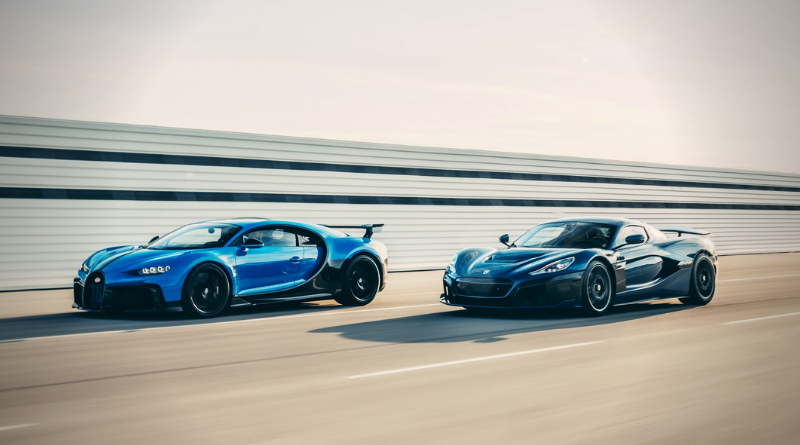
High-end Croatian EV automaker Rimac announced it’s taking over Bugatti from the Volkswagen Group, forming a new venture: Bugatti Rimac. The partnership is not completely out of left field, as VW subsidy, Porsche, first invested in Rimac and its clever EV tech back in 2018.
Rimac Group is the major shareholder, with a 55% stake, while Porsche holds the remaining 45% (as well as another 24% in Rimac). Regardless, both brands indicate they will continue to operate independently.
Bugatti Rimac has two hypercar models planned for the near-term: a continuation of the gas V16-powered Bugatti Chiron; and a production version of the new Rimac Nevera EV. Rimac also said that jointly-developed Bugatti models – both ICE and EV powered – are scheduled for the long term.

Part of the venture also integrates Rimac’s technology with Bugatti’s cars. CEO Mate Rimac told Ars Technica that Bugatti will focus more on “heritage, craftsmanship, details, and quality,” while Rimac will handle technology – “you know, geeks, data, stuff like that.”
“Considering the heritage of Bugatti, and the fan base, and having these two very distinct brands Rimac and Bugatti in the same company, we can do, very cool things,” he said.
Bugatti Rimac plans to set up its global headquarters at the new Rimac campus outside Zagreb, Croatia. The massive €200M campus, which measures approximately 1 million square feet, opens in 2023. Rimac says the campus will be the R&D hub for future Rimac and Bugatti hypercars. And with “200,000 m2 of room to grow,” the company implies it has some big long-term plans for its new venture.
Right to Repair Gets Federal Lip Service
President Biden recently issued an executive order which endorsed the “Right-to-Repair” concept. The Right-to-Repair clause calls for FTC rules to ban tech manufacturers from suing repair shops or making it difficult for customers to repair their own devices. This has been a hot-button issue for the automotive world, mainly because repair shops need modern technology to fix newer cars. Plus, when OEs hoard this software, it stifles aftermarket innovation.
The Motor and Equipment Manufacturers Association (MEMA) and the Automotive Aftermarket Suppliers Association (AASA) applauded Biden’s order, which features 72 initiatives explicitly directed at the FTC on maintenance and repair rules. MEMA CEO Bill Long commented that the auto industry needed to “align behind repairability, as it supports brand and resale values, economic equity, and customer satisfaction over the lifetime of a U.S vehicle fleet that averages over 12 years old.”
Right-to-repair rules require companies to make their parts, tools, and information available to consumers and third-party repair shops, in an effort to keep devices, vehicles, and products out of the landfill.
The issue? It’s just lip service at this point.
If the executive order is to be effective, it’ll need some bite to its bark. Currently, not one single state has adopted a comprehensive Right-to-Repair law. There have been attempts to move bills ahead, like New York, which passed a bill this June. While it’s a start, New York’s bill still needs to pass through the state assembly before becoming a law. (And, by all accounts, it seems to have stalled.)

Since January, other states filed Right-to-Repair bills, as well. They include: New Jersey, Delaware, Florida, Massachusetts, Maryland, Montana, Nebraska, Oklahoma, New Hampshire, Oregon, South Carolina, Vermont, and Washington. Again, however, nearly all have stalled.
It’s a sharp divide, with shops and end-users clamoring for more access to fixing vehicles, equipment, and electronics. Meanwhile, tech companies continue to speak out against the measure, arguing that those with access to repair and diagnostics tools could perform unauthorized repairs and steal personal data. Since plenty of modern cars come standard with electronics and accessories that sync up with cellphones, tablets, and Wi-Fi, it’ll be interesting to see where automakers position themselves on the spectrum. The battle’s already heating up in places like Massachusetts, where late last month, the Alliance for Automotive Innovation launched a lawsuit against the ballot measure, leaning on the same cybersecurity argument.
The Engine Block is your one-stop source for any and all auto industry news. Keep an eye on our weekly round-up of enthusiast coverage, product reviews, vehicle spotlights, auto show/expo features, and more. Be sure to check back Friday for a meet-and-greet with JPC Performance. The Maryland-based shop is THE place to find Mustang performance parts – whether you find your go-fast kicks on the street or at the track.


