
Auto Industry News: Trump Delays Auto Tariffs, Mercedes C-Class Production May Leave the States, SEMA Embraces Off-Road Market with New Group, TORA
Another chapter unfolds in the ongoing trade wars as China begins making moves and President Trump delays auto tariffs on Japan and the E.U. As sedans lose their foothold in the American auto industry, the popular Mercedes C-class may cease production in Alabama. And SEMA takes steps to embrace the ever-growing off-road market with the announcement of new council, TORA. Throw in a hoard of enthusiast events this weekend—and it’s been a pretty big week for the industry.
Let’s get right into it.
Trump Delays Auto Tariffs on Japan & EU, While China Claps Back
The U.S.-China trade war has taken another turn this week, as the Trump administration continues its hard line with the Asian superpower while easing up on American allies.
China’s promised retaliation so far to the White House’s May 10th increase in tariffs, has been initiating a tariff hike on roughly $60 billion in U.S. imports, ranging as high as 25 percent (up from the current 5-10 percent), taking effect on June 1.
U.S. Treasury Secretary Steven Mnuchin is making plans for further negotiations, but according to Chinese newspaper, South China Morning Post, “Beijing is prepared to suspend trade talks if Washington keeps up its tough action.”

Mending Fences with North American Neighbors
Amid this tension, the Trump administration has made concerted efforts to improve relations with America’s allies by delaying auto tariffs on Japan and the E.U, while also lifting existing import taxes on Canadian and Mexican steel and aluminum.
“I’m pleased to announce that we’ve just reached an agreement with Canada and Mexico, and we’ll be selling our product into those countries without the imposition of tariffs, or major tariffs,” Trump told the National Association of Realtors this week. In addition, as noted in a joint statement, the U.S. and Canada agreed to limit cheap steel and aluminum from entering the North American market that has been “unfairly subsidized and/or sold at dumped prices,” seemingly targeting China.
The U.S., Canada, and Mexico all seem largely pleased by the news and hope this will put the three nations closer to ratifying the USMCA trade deal that would replace NAFTA.
Trump Delays Auto Tariffs on Foreign Allies
In addition to lifting metal tariffs, Trump is delaying auto tariffs for six months on Japan and the E.U., allowing more time for ongoing trade talks. If no new negotiations are made in that time period, the administration would determine further action—possibly a 25 percent tariff on foreign cars. The President has claimed that imported cars and car parts hurt the American auto industry and pose a threat to national security. It is that latter argument that has allowed the administration to impose said tariffs and quotas under Section 232 of the Trade Expansion Act of 1962.
The auto industry has been loud and clear in its displeasure surrounding the tariffs, arguing that such trade wars merely raise prices, hurt new sales, and facilitate job loss.
“Vehicle manufacturers, dealers, suppliers, the aftermarket — we have all joined together in opposition to this,” says Ann Wilson, senior VP of government affairs for the Motor and Equipment Manufacturers Association.
While current tariffs—and the threat of auto-specific ones—continue to breed worry and resentment in the industry, most experts agree these are merely a negotiating tactic used to garner the U.S. a better trade deal. Time will tell if talks with Japan, the E.U., and ultimately China are as productive as those with Canada and Mexico have been.
Mercedes C-Class Production to Leave Alabama in 2020?
All good things must come to an end… or so the saying goes. This looks to be the end of the road for production of the Mercedes C-Class sedan in the automaker’s Alabama-based plant after six years on U.S. soil. While that won’t mean American consumers can’t buy new C-Class models, they’ll have to settle with vehicles made in Germany, South Africa, China, and/or Brazil.
Mercedes spent roughly five years prepping the plant to handle demand ahead of the 2014 C-Class launch, creating roughly 1,000 U.S. jobs in the process. This pivot away from sedan production in favor of the German automaker’s growing EQ electric-car line is telling. After all, Mercedes estimates electric vehicles will account for between 15 and 25 percent of its global sales by 2025.

Industry experts cite the declining sales numbers of the C-Class (and the sedan as a whole) on shifting consumer tastes towards crossovers and SUVs. In 2014, the light-duty truck segment made up only about 53 percent of the market, spiking to 70 percent today.
Moving the Mercedes C-Class production out of America has yet to be officially confirmed, but as demand shifts, this one looks like a done deal.
Off-Road Market Gets More Love from SEMA as LTAA Becomes TORA
Holy Acronyms, Batman! While consumer interest in the light truck market may spell bad news for sedans, it’s undoubtedly bolstering the off-road industry’s share of the pie. And as adventure season comes into full swing, enthusiasts will be glad to hear that SEMA is focusing its efforts on the growing, but often underserved, off-road market.
In an official release from SEMA’s council, the Light Truck Accessories Alliance (LTAA) will now become the Truck & Off-Road Alliance (TORA), as a way to better embrace the ever-expanding outdoor industry. The organization will continue to advocate for businesses that make accessories like bedliners, running boards, and caps, while now including off-road products such as specialty wheels, tires, suspensions and nerf bars.

“We’re excited to embrace the off-road market and provide businesses with a group that will help to advance the entire truck industry,” Kathryn Reinhardt, TORA chairperson, said in a statement. “We want the off-road industry to know that we are here to help their business and the market succeed.”
New Goals, New Name
This is not the first name-change for the group, as what started as the Truck Cap Industry Association in 1989 evolved into the Truck Cap & Accessory Association in 1992, merged with SEMA in 2000 as the Truck Cap & Accessory Alliance, and eventually became the LTAA a few years after that. The newest change comes as the alliance realized that representation for the off-road market was lacking.
“The industry is constantly changing, and it’s vital that we adapt to those changes,” said Reinhardt. “We need and encourage all businesses in the truck and off-road industry to join TORA. It’s only through the industry’s feedback and collective participation that we can effectively address issues and improve.”
As nearly every American car brand is dipping its toes into the growing off-road truck and SUV market, birthing new enthusiasts every day, this is a smart move for SEMA—especially as the expanding segment represents profits for many aftermarket professionals as well.
Around the Circuit
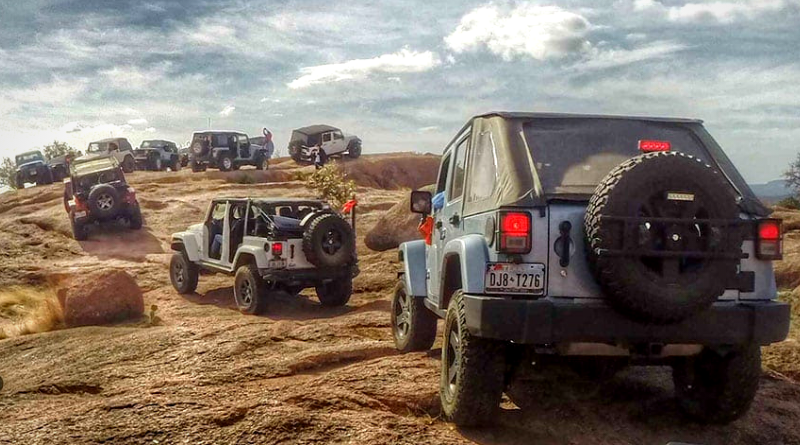
This was a B-I-G weekend for enthusiasts. The Overland Expo West made a splash in Arizona, with decked-out rigs from overlanders and manufacturers alike and plenty of skills-building outdoor activities. (With the way this segment is growing, SEMA’s TORA might be looking at yet another name change in the near future.)
The NHRA saw plenty of excitement at the Virginia Nationals as defending Top Fuel world champ, Steve Torrence, snagged his 30th Top Fuel victory—his second consecutive at Virginia and third of the season.
Ron Capps secured his second consecutive Funny Car Wally, as Bo Butner bagged his fourth Pro Stock win this season, and Andrew Hines earned his third straight Pro Stock Motorcycle win.
Ultra4 didn’t disappoint either, as the second race in the Lasernut Western Series went down in Baja, Mexico, with Josh Atteberry taking the Spidertrax 4600 Stock Class win, Chayse Caprara in the Can-Am UTV Class, Dan Fresh in the 4500, Jeremy Jones in the 4800, and Paul Horschel taking the win in the 4400, with the Campbell father-daughter duo bagging second and third place respectively.
NASCAR All-Star Drama
But it was NASCAR that really brought the drama this weekend, living up to its All-Star namesake. Tricked-out special cars, a frantic, rapid-paced race, a surprising finish, and fisticuffs afterwards? WHAT MORE COULD YOU WANT?!
Kyle Larson steered his #42 Chevy to the checkered flag, followed by Kevin Harvick in second, and Kyle Busch in third. Before this race, Larson had gone winless since 2017, taking many second and third place finishes in the meantime.
Unfortunately, however, his big win was overshadowed by the brawl between Clint Bowyer and Ryan Newman. Displeased with some of the bumping and aggressive racing during the race, Bowyer ran up on Newman’s car and threw several punches before crewman separated the two.
While the two drivers were called to the NASCAR hauler following the fight, their fellow drivers weren’t shy about their feelings.
“I’m not sure what else y’all would want!” exclaimed Bubba Wallace, after taking a moment to look over his badly damaged Chevy that he had somehow steered to fifth. “We were out there running four-wide, at Charlotte! And we’ve got two dudes beating the hell out of each other. I’m glad I was out there racing, but I would have also enjoyed watching.”
Fourth-place finisher Joey Logano agreed. “You can call what just happened a lot of things,” he said, “but boring is not one of them.”


