
Chevy-Hearted: A Non-Scientific, Subjective Analysis as to Why America’s Darling is Struggling
For over a century, Chevrolet has produced vehicles synonymous with hardworking people and the American Dream. So, why in recent decades, has the badge shown clear signs of decline? One man offers his opinion on why Chevy is struggling.
I am a fan of Chevrolet. Really, I am. My first two cars were mid/late 90s bow-ties. And, despite not being the most stylish or reliable, they were an indispensable part of my high-school years. My dad owned a 1979 C30 Custom Deluxe with a dump bed that happily trudged through 25 years of heavy plow and haul usage. It was this behemoth that painfully, but honorably, taught me how to drive stick. Chevy has affixed its name to some of the most storied and important vehicles of the 20th century. Remember when the Impala took vehicle design to new heights? Has there ever been a more beautiful machine than the split window ’63 Sting Ray? Does any car define the racing scene of the 80s and 90s like Dale Sr.’s Goodwrench #3 Monte Carlo?

Just allow your mind to wander back decade by decade. It’s not too hard to rattle off an impressive list of classics. Now look at the past 20 years. It’s a bit harder, painful even. Okay, so maybe it hasn’t had the knack for making icons like it once did. But sales are strong, right? Well, in 2004, Chevy sold 2.75 million vehicles in the U.S. Fifteen years later, that number has dropped 30%!
So, what happened? Why has such a revered American name seemingly fallen from the graces of so many consumers? Every average Joe and Ricky Bobby has their opinion on why Chevy is struggling, so let’s take a look at a few of the top reasons.
Scandal Recovery
Several large automakers have had their fair share of scandals since the turn of the century. Toyota’s accelerator recalls, Volkswagen’s infamous Dieselgate, and Takata’s airbags all come to mind. But as far as fatalities, none were larger than the GM ignition scandal.
In several separate announcements spanning throughout 2014, GM recalled nearly 30 million vehicles for faulty ignition systems that had the potential of shutting off if jostled. This could in turn, deactivate systems like power steering, braking, and airbags. In all, 124 deaths were linked to this failure, with an additional 275 drivers sustaining injuries.
It was more than fatalities that cast a dark shadow, though. A culture of secrecy and perceived cover-up plagued pre-bail-out GM. And the handling of this crisis brought it to the public’s attention.
It was proven that some within General Motors, including lawyers, had known about this defect as far back as 2004. Engineers were even working on fixes as far back as 2005, but cut the development short because of cost and time constraints. Much more can be said on the matter, but the bottom line is that this occurred just a few short years ago, and settlements are still being reached.
Missteps are an unfortunate reality when it comes to the complexity of the modern automobile, but the subsequent compounding errors from GM haven’t been forgotten. Some may put this scandal in the rearview, chalking it up to the “old GM,” but consumer confidence is still mending.
LACK-olades
There are those of us who place little-to-no value in third-party reviews and rankings—no matter how respected the writers are. Hell, I’ve owned a few “press-reviewed duds” in my time that I’ve thoroughly enjoyed and couldn’t recommend enough. But the truth is that we Americans, especially those who aren’t gearheads, turn to a few trusted sources to scout out our next vehicle. And let’s just say that GM, and Chevy in particular, still have room in their trophy cases.
Perhaps the most trusted name in car reviews (and refrigerators, and televisions, and frozen pizza) is Consumer Reports. Where does it have Chevy, as far as most reliable brands in the industry? 24th out of 33. Other GM brands finish behind that, with Cadillac at 26 and GMC at 27.

The IIHS is an authority in vehicle safety and gives out two tiers of top safety picks for just about all car types each year. This year, it gave out 80 combined Top Safety Pick and Top Safety Pick+ awards. Not one of those 80 vehicles was a Chevrolet.
The ACSI or American Customer Satisfaction Index also ranks manufacturers. This orders them in accordance with their namesake, by customer satisfaction. For 2018 (no data available for 2019), Chevy finished 22 of 28. But silver lining alert—it did beat out domestic competitors Ford and Dodge.
I’m not here to pile on Chevy. In fact, the badge did get some love in certain categories from KBB and JD Power. But one can’t deny that, in most rankings from top consumer-focused agencies, the brand falls short. This is despite touting in a long-running “Real People” ad campaign that it’s got the Initial Quality category on lock. But more on that later…
NASCAR
For most of us, it’s not a huge factor. But… no one likes a loser. And, there’s no tiptoeing around it: Chevy has had a rough go of it on the NASCAR circuit. We’re not talking just a couple races, or a couple months. We’re talking years.
Gone are the Jimmie Johnson days of the late 2000s. While Ford and Toyota have jockeyed for supremacy, the bow-tie badge continues to toil in the cellar. And although it’s had a recent warm spell as of late, victories have been hard to come by in 2019.
As far as points go, in the Monster Energy NASCAR Series, the top 6 spots are split between Ford and Toyota drivers before reaching Kurt Busch, the first Chevrolet man. And, in 2018, of the 41 races, Chevy was at the top of the podium just 6 times. That’s certainly nothing short of pitiful for a brand who historically has won close to 100 more races than its next closest rival.
Maybe it’s not a top-of-the-list reason for GM’s struggles , but it certainly doesn’t help. NASCAR success is great for overall marketing. And when you’re consistently losing to your biggest rival, as well as a Japanese manufacturer that the overwhelmingly patriotic fanbase will probably never truly embrace, well, it’s just not a good look.
Poor Design Choices
910 pound-feet of ugly
Gaze upon it and weep
Punishing capability, painful looks
I’m sorry, but they’re just hideous!
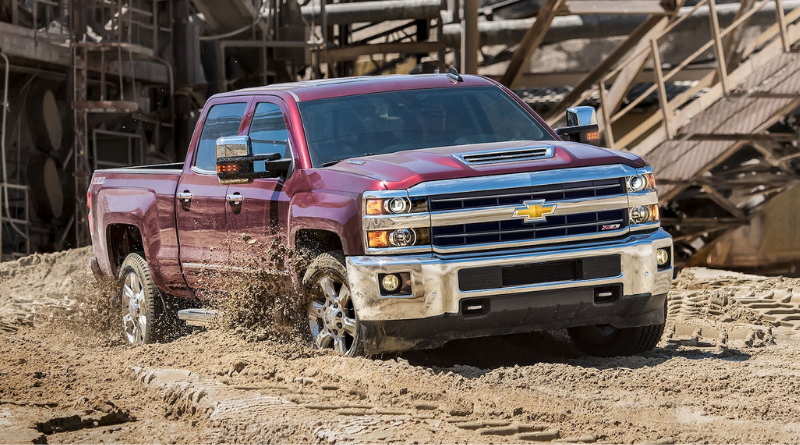
So, what do the above phrases have in common? Yep, they’re title excerpts from articles reviewing the latest Silverado. To be honest, I thought they were a little harsh. I don’t give a final opinion of a vehicle’s looks without seeing it in person. Although, after driving by my local dealer recently, my reservations have been confirmed.

Boy, it’s hideous.
From the side, it looks like any full-sized GM truck from the last two decades, and that’s not a terrible thing. The rear-end is pretty standard issue. But that front is just an amalgamation of geometric shapes. It’s almost as if the designers saw the explosion of growth in truck front-ends, and then decided to make a caricature of the trend as a whole. What The Onion or Clickhole is to journalism, the Silverado is to full-sized trucks. The transition from the front quarter panel into the headlights looks like my DIY crown-moulding jobs that I didn’t bother to cut angled corners for.
Okay, okay, I’ve said my piece. And others have voiced their opinion as well—by not purchasing. Silverado sales are down around 12% year-over-year.
As for the non-truck offerings…
The Corvette continues to look good, no matter what Chevy does. This includes the latest fresh and rather radical redesign for 2020. And, for the most part, the Camaros still harken back to the days of sexy design language. Although it looks like the new ZL1 may be sneaking out of the house at night to romp around with Silverados down at the pool hall.
Also, are the Equinox and the Traverse actually two different cars? Could’ve fooled me.
I do have a soft spot for the Chevy Blazer. Especially red ones, as that was my first car. So, the new commercial where they reintroduce the latest iteration caught my eye. But that’s not the Blazer I remember. The Blazer I remember was a box-of-an-SUV whose Vortec V6 would leave me stranded at the mall after curfew. Not a sleek, rounded-off crossover who stole the spindle grille off a Lexus.
I’m not saying it’s a terrible-looking vehicle. Quite the opposite, really. But I just thought Chevy would do something different, when it inevitably reanimated the nameplate. And from initial feedback, it seems others feel the same way.
Chevrolet has killed off all its interesting cars—the SS, the HHR, the SSR, the Avalanche, the Volt. Even the legendary Impala has received the ax. Not all these models belong on a greatest hits album, but they were unique. We’re now left with a meager lineup of mostly-uninspiring crossovers and vanilla compacts.
Beauty is in the eye of the beholder, but c’mon, do you know anyone who’s actually as impressed as the people in those “Real People” commercials? Seems unlikely, as they have spawned a boon of spoof videos online. Progressive Insurance even jabbed at it in one of its spots. And who doesn’t love Mahk from Boston’s brutally honest take on the Chevy ads?
The Night Is Dark, But Not Exactly Filled With Terror
But this is just a snapshot of where Chevrolet is currently at in 2019. With the thinning of the model herd and committed focus to next-gen electric vehicles, we may be having a completely different discussion 12 months from now. In fact, there are some promising signs to be had.
Despite its ho-hum design, Bolt sales are up 14% this quarter, and reports tease us of an upcoming electric Corvette variant, which could be a game changer. But significant changes are likely to take quite some time, and important questions and concerns are looming.

Can the Silverado bounce back to supplant RAM and tackle the F-150? Will the Camaro be discontinued in the next few years? Is Chevy done with sedans? Can the Colorado continue to stay relevant against the upstart Ranger and pack-leader Tacoma? When and what will be the next consumer-available EVs? Mergers? Acquisitions? The discontinuing of more GM Brands? Hummer returning as electric?
Tons of questions and speculation surround Chevy and GM as consumers may know just as much about the company direction as those within the walls of the Detroit headquarters. We’ve been told that options are being explored and nothing is off the table when it comes to what’s next.
But, for the sake of millions of past and present drivers, owners, and fans, let’s hope they find their way sooner rather than later. Because America is better off with a strong, stable Chevrolet. Not one struggling to stay relevant in a new age.


