
Driving on Sand: Tips & Tricks to Keep Those Beach Adventures Rolling
Driving on sand is likely one of the most intimidating things for newcomers to the 4×4 world. I mean, nothing in the world beats riding your Jeep or truck out onto the beach, right? Trudging through sand like a poor desert wanderer, awkwardly lugging coolers, chairs, umbrellas, and fishing gear as the sun beats down on you. And once it’s time to leave, you get to instantly enjoy your AC.
However, living the dream can quickly turn into a living nightmare when you ride out onto the beach and sink right down to the oil pan. Truthfully, driving on sand can be complicated at first. But with a few basic tips, we can keep you feeling safe and confident, where the biggest drawback is the uncomfortable feeling of sand in your skivvies.

Tire Selection and Airing Down
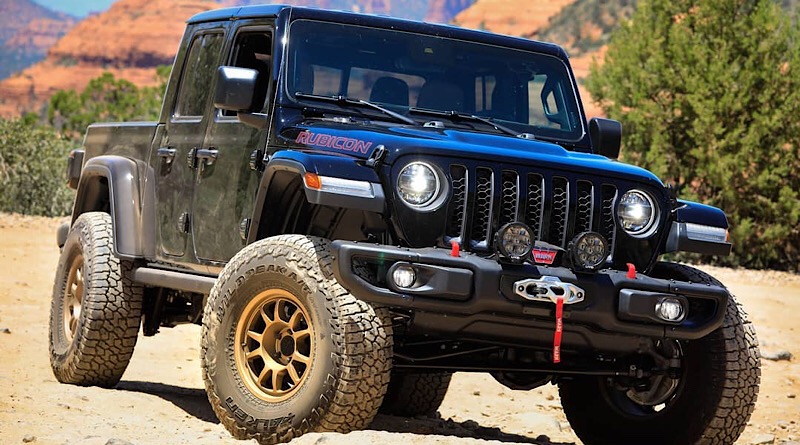
A huge part of driving on sand is proper tire selection. Obviously, dedicated sand tires are going to be the best bet. However, most people won’t need this kind of specificity, especially if they only hit the beach for the occasional vacation or Jeep Jam. It’s likely you fall in this camp, too. In which case, the set of all-terrain or mud tires on your rig will work just fine for quick spurts of sand time. (In fact, even in situations where blasting around for several hours is on the agenda, mud tires are the go-to for many drivers.)
Although, you dedicated dune-basters should look to something like the new BF Goodrich Baja. Built for improved traction and sharper steering response, these tires are intended for off-road desert racing—which means they’ll stand up to your heavy-use demands. (Just keep in mind that these are not DOT-compliant, so no highway-use allowed.)

One step that is vital to successfully driving on sand is knowing when to air down your tires. Generally speaking, airing down is always a good idea. But, in some situations, it’s more critical than others. This really depends on the current condition of the sand.
Tightly-packed sand, due to high tide or well-traveled areas, is less likely to give your vehicle trouble. In some cases, you might even be able to drive it without needing to air down. However, if you see that the sand is loose and grainy, airing down is crucial, as this condition loves to swallow tires. And if you’re ever unsure, airing down to be safe is never a bad idea. You also can simply walk on the surface to inspect and decide for yourself.
High, Wide, Slow and Steady
So, you may be wondering what’s an ideal setup for driving on sand. While many factory applications can handle weekend beach riding, there are some major benefits to sporting the right equipment. As stated, thoughtful tire selection is important, as a big, wide set will protect against sinking. Just remember: bigger tires generally require a lift, which, although being an added expense, will bring benefits of tackling potential obstacles.
Proper tread selection will vary, as FourWheeler Network points out that the best pattern depends on your ride. High-horsepower vehicles “can benefit from aggressive lug spacing and a high void ratio,” while “for underpowered rigs, the opposite is true,” since the goal is to stay atop the terrain, not dig into it.
Recovery gear is another major part of the ideal set-up for driving on sand. A proper winch like those offered by TrailFX and WARN are obvious attachments to consider, but may not be something you regularly rely on, as winching points could be limited. Because of this, recovery straps and D-rings offered by the same guys will be important to keep with you.
And a product like MAXTRAX recovery pads are a holy grail, as they’re designed to slide under the tire when traction is limited or lost. You should also keep a set of jack bases with you, in case you need to repair the truck in a pinch.
Ultimately, to keep the possibility of getting stuck as low as possible—keep that bad boy in four-wheel-drive at all times.
Speaking of four-wheel drive…
Four low and low gears are going to be your friend when driving on sand. “A proper part-time 4WD system with a low range and a locked center differential will get through almost any beach,” says Popular Mechanics. “If you’ve got a full-time AWD road car, you can do a limited amount of deep sand cruising, but there’s probably not a lot of ground clearance. More importantly, low gear isn’t really low enough, and you stand the chance of overheating the transmission by grunting along at low speeds.” Many beaches will clearly note 4WD only.
Driving on sand isn’t a race. (Well, unless you’re an actual desert racer. In which case, this article ain’t for you.) In this case, momentum is everything and you’re not trying to do anything too quickly. Drivers should keep their RPMs at a moderate-to-high level, but not pegged. Nor should they just jump on the throttle. Easing on and off the throttle is the key to a successful venture. The same is true for braking and turning—no sharp turns or slamming of brakes.
“In nearly all off-road situations, torque trumps horsepower. Not so on sand,” advises Club 4×4, a specialist insurance provider for the 4×4 market. “Wheel speed gives you the highest chance of maintaining forward momentum and for that, you want plenty of ponies under the right boot. To be honest, this is only really a problem for older diesels, as modern units are quite high revving and have enough acceleration to keep you moving forward; but it’s worth noting.”
For the average beach trip, this won’t be too much of a major concern. But remembering the importance of controlled motion can keep you out of trouble if conditions get a little hairy.
Getting Unstuck
Getting stuck is almost inevitable, especially for the first few trips. And while frustrating, it’s not the end of the world. When driving on sand turns sticky, here are some helpful tips to keep in mind:
- First, when you feel the tires start to spin, let off the throttle. Spinning tires will sink your rig. By stopping the spin, you minimize the chance of getting stuck. Simply back up slowly until you’re in a better position, and then try again.
- If you’re already stuck, it’s time to pull out a traction device like those MAXTRAX pads we mentioned before. “Simply use them to dig out the sand from in front of your tires, and wedge them down under your wheels,” instructs Club 4×4. “Some gentle acceleration later—and presto! You’re free.”
- No traction devices? Try this simple but extremely effective maneuver. Air down your tires even more than you already have and make sure you’re in four-low. Then, bring the engine RPM to about 1500, and slowly start turning the steering wheel all the way side-to-side. It may sound counter-intuitive, but this will bring the tires back to the surface of the sand, in turn, allowing you to pull the rear tires forward to the top.
Remember, take it slow and steady and keep that momentum. An object in motion stays in motion—and when it gets stuck, having a plan and the right tools will get you moving again!


