
Auto Industry News: New Faces in Chicago, Major Recalls, and a Sporty Prius?
The Chicago Auto Show wraps up on a positive note, celebrating one of its largest crowds yet as well as a number of important new vehicle debuts – mostly SUVs. The Engine Block runs down the list of new rides and predicts which ones stand to make an impact on the crowded market, and which ones might struggle a bit to catch consumer affection.
Plus, a handful of major automakers issue big recalls, reigniting heated discussions about post-pandemic vehicle quality, while Toyota engineers tease the idea of a hot hatch Prius.
Let’s dig in.
Chicago Auto Show Recap
The Chicago Auto Show returned to the Windy City this year looking a bit more like its old self.
While several big-name automakers once again chose to stay home, organizers still managed to fill up the two main hallways at the giant McCormick Place with full-scale displays, test drive tracks, and a solid handful of new vehicles.
Interestingly, the auto show most known for its truck reveals didn’t have a single one. SUVs and crossovers were the name of the game for 2023, with the only real “truck news” being RAM’s confirmation of the “REV” name for its EV pickup and VW’s confirmation that a pickup is in the running for its next product focus.
That said, if you were in the market for a mid-size or full-size family hauler, there were several options on table.
Toyota Grand Highlander

All new for 2024, the Toyota Grand Highlander is a family-friendly three-row SUV set to compete against the Honda Pilot, Mazda CX-90, and Nissan Pathfinder. While not as wide or tall as its competitors, the Grand Highlander is the longest of the bunch at 201.4 inches. That extra stretch provides ample room for cargo and passengers, creating a particularly cushy third row.
Unique exterior styling is matched by a comfortable and well-appointed interior, while an optional new 362-hp Hybrid Max powertrain lives under the hood. (Standard equipment is a 265-hp turbocharged 2.4-liter four-cylinder, like in the regular Highlander.) In the top-spec Hybrid Max setup, Toyota says the Grand Highlander can sling 0-60 in 6.3 seconds and tow up to 5,000 pounds.
Verdict: With Toyota’s reputation and enough styling and features to distinguish it from its stablemate, we predict the Grand Highlander will be hit with consumers looking for an affordably-priced big SUV.
VW Atlas & Atlas Cross Sport

Volkswagen’s three-row Atlas and its sporty, two-row cousin the Atlas Cross Sport, both showed off significant refreshes at the Chicago Auto Show.
Already attractive-looking models, both SUVs received tasteful facelifts that include revised front ends with updated headlights, as well as a little nip/tuck treatment ‘round back. The final result is admittedly stylish, blending the muscular mug of a pickup with a sleek silhouette and high belt line.
Under the hood in both models is a new 269-hp twin-turbocharged 2.0-liter four-cylinder mated to an 8-speed automatic transmission. It replaces the previously-available 276-hp V-6, and promises more power, pep and fuel economy than the former turbo four, according to the automaker.
Inside is a bit of a different story. While the layout is practical and the appointments nicely updated, VW’s decision to eliminate hard knobs in favor of touch-sensitive interfaces is a bad call in our book. In addition to being a proven distraction for drivers, these control systems received significant consumer backlash when they appeared on other VW models like the GTI, Golf R, Tiguan R, and Touareg.
Verdict: Tossing a reliable engine option, and swapping buggy touchscreens for tactile controls has us scratching our heads. For those reasons, we’re not sure how successful these refreshed Atlases will be in such a competitive segment.
2023 BMW XM

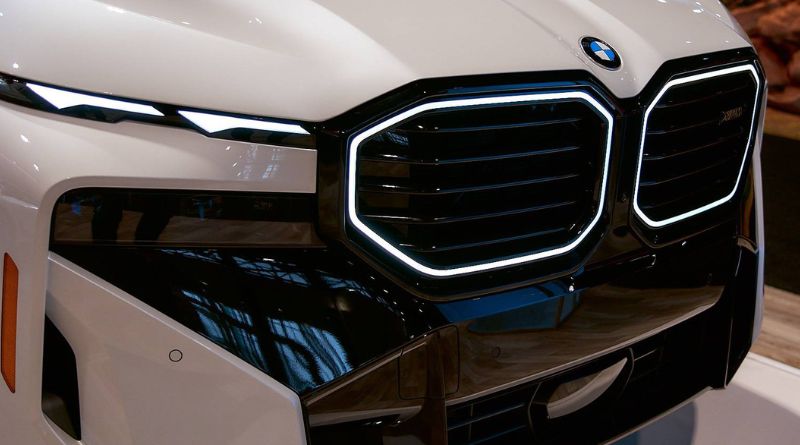
With an aggressive design continually being likened to a Pokémon character in its reviews, the new XM luxury performance SUV definitely made an impression at its first auto show debut. And we suppose it should, since it’s the first electrified model from BMW’s M performance division.
The XM features a 644-hp plug-in hybrid powertrain that draws most of its juice from the automaker’s well-known twin-turbocharged 4.4-liter V-8 engine. Drivers can expect responsive handling, a comfortable ride, and punchy acceleration – as well as all the high-end interior bells and whistles that generally come with a $160,000 ride. They’ll just need to get past that face…
Verdict: There’s a lid for every pot, which means there’s a buyer for this vehicle. Somewhere.
2024 Subaru Crosstrek

While Subaru calls the 2024 Crosstrek a redesigned model, not a whole lot has changed for the third-generation. Considering the automaker sold a record number of the vehicle in 2022, it’s safe to assume there’s some “if it ain’t broke, don’t fix it” going on here.
The exterior sees a few tweaks in the service of style and aerodynamics, while the inside benefits from a more supportive front seat design. A new 11.6-inch high-res touchscreen is available, and the automaker’s EyeSight Driver Assistance Technology is now standard equipment across the lineup.
Subaru carries over the same powertrains (a 152-hp 2.0L four and 182-hp 2.5L four), and sadly drops the manual transmission. However, the automaker did make some structural improvements, namely enhancing the Crosstrek with 10% higher torsional rigidity. The stiffer chassis makes for better dynamic performance, a smoother ride, and quieter cabin.
Verdict: “Meet the new Crosstrek, just like the old Crosstrek” seems to the general vibe over at Subaru. And you know what? We’re okay with it.
Jeep Wrangler Rubicon 20th Anniversary

To celebrate 20 years of Rubicon, Jeep showed off two special-edition Wranglers at the Chicago Auto Show. The Rubicon 4xe and Rubicon 392 models were decked out in a slew of cool off-road features, including steel bumpers with a redesigned grille, half-inch suspension lift, beadlock-capable wheels, leather-trimmed interior, and an 83-piece Rubicon-branded mechanic’s toolkit (among other goodies).
Those who really love a limited edition can level up to an AEV-outfitted package. Available on just 150 units, it brings 37-inch tires to the Wrangler for the first time, and tacks on a 2.5-inch suspension lift with Bilstein 5100 shocks and 17-inch Savegre II wheels, along with some specially-branded off-road goodies.
All those upgrades come at a cost though, especially in this economy. The 2023 Rubicon 20th Anniversary 4xe and 392 Editions start at $69,585 and $90,895 respectively. The AEV upfit carries an additional price tag of $21,983, bringing the total price tag over $100,000. (And that’s before any dealer markups or destination fees.)
Verdict: Wrangler fans sure do love themselves a special edition – and it appears in these financially trying times, Jeep is willing to test the limits of just how much.
Did you know…?
Nothing is sacred. Last week, thieves stole the catalytic converter from a Wienermobile making press stops in Las Vegas. They swiped the metal-rich device right in the hotel parking lot while the giant 27-foot-long, hot-dog-shaped vehicle was parked overnight. Mechanics were able to provide a temporary fix the next day, but said the proper part could take months to come in.

Several Automakers Issue Major Recalls
2022 was a banner year for recalls, and it appears 2023 will follow in its steps. Three automakers had very large callbacks last week, while a fourth issued an embarrassing follow-up.
Ford
Over a week ago, news broke that Ford was suspending F-150 Lightning production and shipments, shutting down its Dearborn, MI plant in the process. The automaker confirmed a battery issue was to blame, and is extending the hiatus for at least another week.
According to Ford, on Feb. 4, an electric pickup caught on fire while awaiting pre-delivery quality inspection. Specifically, a battery pack ignited and eventually the flames spread to another vehicle. The fire occurred on an outdoor lot, not in the plant itself.
Ford claims to have identified the root cause of the issue, though did not share what it is. However, the automaker does not believe the risk extends to F-150 Lightning pickups already in owners’ hands or out in the field. As such, it has not issued a stop sale of vehicles on dealer lots.
The shutdown comes at a bad time for Ford, which is still grappling with poor Q4 results and ongoing difficulty fulfilling new vehicle backorders. The F-150 Lightning is the best-selling electric truck in the U.S., and stands to be a reliable cash-cow for the automaker. Delays in production not only hurt profits; they also damage consumer confidence.

Tesla
Also facing a major recall this week is Tesla, which plans to pull back more than 360,000 vehicles equipped with its controversial “Full Self Driving” (FSD) technology.
The autonomous driving assistance software – which is still in beta mode and costs a whopping $15,000 on top of vehicle costs – has been the subject of much scrutiny. Numerous accidents, many fatal, have led to public outcry and eventual investigations by an alphabet soup of government organizations including the NHTSA, SEC, and DOJ.
It appears the federal pressure is finally producing some results. Despite Tesla’s insistence that FSD does not violate traffic laws, the automaker agreed with NHTSA to issue a voluntary recall.
However, “recall” is a loose term here. The solution is essentially a software patch that Tesla claims will solve the specific issues raised by the safety watchdog group – such as the FSD’s difficulty detecting parked emergency vehicles. Owners will be notified of the “fix” by April 15.
Tesla’s situation highlights a major issue facing automotive legislation these days: lack of precedent.
In America, auto manufacturers are beholden to Federal Motor Vehicle Safety Standards (FMVSS). Standards which have no compliance rules around autonomous driving technology – because, why would they? Until now, human drivers have always been in control of their vehicles.
It’s no secret that government moves slow. But technology moves fast, and the ramifications of falling behind are becoming startlingly clear.
RAM
Proving that old tech can be just as dangerous as new tech, RAM issued a recall last week on over 340,000 heavy-duty Cummins-powered pickup trucks for risk of fire. According to an AP News bulletin, the affected vehicles feature engines with older heater-grid connectors which can overheat and cause a fire. So far, six such fires have been reported, with one igniting after the vehicle was shut off.
The automaker issued a similar recall back in 2021 when it first uncovered the issue. Until it can address all vehicles affected in this expansion, RAM asks owners of 2021-2023 HD trucks with Cummins 6.7-liter turbo-diesel engines to park outside.

Subaru
You may remember that last June, Toyota issued a particularly embarrassing recall of its all-new bz4x electric SUV because, uh, well, the wheels could fall off. The face-palming issue, caused by improperly torqued hub bolts, also extended to the bz4x’s platform twin – the Subaru Solterra.
Subaru had yet to sell any of its new EVs when the problem arose, but it did have a little over 1,000 vehicles sitting in U.S. ports awaiting dealer transit. To address the matter, the automaker hired some third-party contractors to perform the repairs right in port and called it a day. Or so it thought.
Turns out, one of the contracted groups “did not properly complete the repair procedure” – a procedure that required simply tightening a few bolts. Now, for safety’s sake, the automaker must call back all vehicles repaired by all contractors so dealers can double-check the work. As they say, good help is hard to find…
Would You Buy a Sporty Prius?
The fifth-gen Toyota Prius debuted back in November wearing a noticeably sleeker, sportier, and dare we say, sexier exterior. And now it appears and even hotter version could be in the works.

Lower and wider, the redesigned Prius features a dramatically raked front end that Toyota body design engineers say is roughly the same angle as a Lamborghini. It also punches up performance with a new hybrid powertrain. In fact, the Prius Prime plug-in variant produces an impressive 220 hp and a 0-60 time of 6.6 seconds.
But why stop there, says Toyota engineers, who told Automotive News last week that they see potential in a GR Prius.
While actual development would depend on consumer response, the engineering team pointed out that the new Prius Prime is already within spitting distance of GR performance numbers. (For example, the GR86 makes 228 hp and goes 0-60 in about 5.8 seconds.)
With a few tweaks to suspension, handling and output, the engineers say there’s no reason to believe the Prius couldn’t earn the badge. The real question is whether or not it could earn consumer buy-in. What say you? Would you be caught in a souped-up Prius? Let us know in the comments.
The Engine Block is your one-stop source for any and all auto industry news. Keep an eye on our weekly round-up of enthusiast coverage, product reviews, vehicle spotlights, auto show/expo features, and more. Be sure to check back this week for Competition Corner’s round-up of must-see March auto events.


