
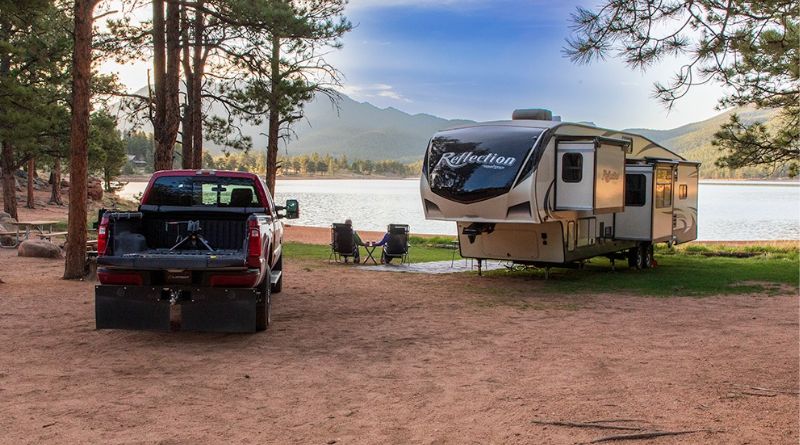
What To Look For When Choosing A New Tow Vehicle
Thinking of choosing a new tow vehicle? Explore the important factors to making an informed decision, and ensure hassle-free adventures on the road ahead.
Selecting a camper is more than just selecting the RV of your dreams. It also means considering what type of tow vehicle you’ll need to get your new purchase from point A to point B.
We’ve covered how to calculate towing capacity on the existing vehicle in your driveway in order to make sure you can actually tow the camper you just purchased. Now we want to look at new vehicle purchases – what are the important factors you should know beyond make and model?
First Things First
Selecting the right tow vehicle is crucial for a smooth and enjoyable towing experience. The tow vehicle serves as the powerhouse that pulls and controls the weight of the trailer or RV, impacting safety, stability and overall performance on the road.
Choose wisely and you’ll enjoy better braking, maneuverability and all-around control. Choose poorly, and well, let’s just say it could be a costly mistake in more ways than one.

It goes without saying that this decision is one which should be carefully weighed. So, before you even start shopping, here are four important questions to ask yourself:
- How often do you plan to use your camper? For example, will you be towing your camper year-round or just a couple times during the summer?
- How far do you plan to tow your camper? Are the plans to stay close to home or are you dreaming of cross-country road trips?
- What kind of camping do you plan to do? A vehicle that can traverse off-road terrain and National Forest Campgrounds is a lot different than the average hauler that can navigate a paved, easy-access campground.
- How many people do you plan on bringing with you? Traveling with the whole family in tow requires a different setup than if it’s just you and your partner. And don’t forget about pets! Any four-legged friends coming along?
Remember, the devil is in the details. Different camping styles and preferences require different features and capabilities from a tow vehicle. Knowing what type of camping you plan to do – even if it’s just a rough idea – will not only help you narrow down your search but also ensure you make an informed decision when purchasing.

Main Features to Consider When Shopping
Camper Weight Class
Now that you’ve answered some basic questions, it’s time to dig into the how-to of choosing a new tow vehicle — beginning with camper weight class. Discovering your camper’s weight class is one of the first steps to establishing how much get-up-and-go your tow vehicle will need.
Different tow vehicles have varying towing capacities, which determine the maximum weight they can safely tow. So, understanding the weight class of your camper will help you determine how much towing capacity you need from a potential tow vehicle.

A properly matched camper-tow vehicle combo ensures safety, stability and control while towing, not to mention better fuel economy.
Camper weight class is typically determined by Gross Vehicle Weight Rating (GVWR), which represents the maximum weight that a camper is designed to carry. This number includes the camper’s own weight, as well as that of cargo and occupants. As you can guess, knowing this number helps determine the appropriate tow vehicle and towing capacity required to safely haul it.
Use the chart below, compliments of CURT Manufacturing, as a quick guide to understanding where your camper falls in the weight range.

Tow Rating
A vehicle’s tow rating is the maximum towing capacity that your tow vehicle — equipped with a towing setup and a suitable trailer — can safely tow. After figuring out your camper’s weight class, you’ll know what type of tow rating to look for in your new tow vehicle.
We’ve written extensively on tow rating and tow capacity in a previous article, which you can check out here. For the shortened version, here are some major takeaways to keep in mind.
Tow ratings are not as straightforward as they seem.
SAE standards are based on estimates. For example, the official towing standard for pickup trucks accounts for (1) driver and (1) passenger who weigh 150 pounds each — but the average weight for U.S. adults is closer to 180 pounds and many RV trips include more than 2 people. Similar unrealistic assumptions can be found around tongue weight, payload, tow package setups and aftermarket equipment.

The dealer or salesperson isn’t there to educate—they’re there to sell.
Don’t rely on someone else’s confidence of a tow vehicle’s capability; you’re the one who has to drive it. Do the math, get the official specs and read plenty of reviews. Better yet, call up a manufacturer and speak to someone in the tech and warranty department to ensure the vehicle you’re considering can not only handle your RV, but also your family, your gear and your style of camping.
Learn the ABCs of Towing Terminology.
An informed customer is a happy customer, so get familiar with the alphabet soup of acronyms in the RV and towing arenas. You don’t need to memorize them all, but at least get to know them. Consider keeping a little cheat-sheet on hand too, like this guide from CURT Manufacturing.

Wheelbase
The wheelbase of a vehicle is the distance between the front and rear axle. Why does this matter? Well, the longer the wheelbase is, the safer the vehicle is for towing.
This is because a longer wheelbase lessens the chance that the trailer will weigh down the rear axle and lift up the front axle, which could drastically impact steering and handling. Vehicles with long wheelbases also offer better ride quality because of the distance between the front and rear wheels hitting bumps.
This is not to say that shorter-wheelbase vehicles are bad for towing. A shorter wheelbase will offer better maneuverability, making it easier to get around tight spaces and creating less of a turning circle if you need to make a quick U-turn.

With factors like this to mull over, you can see why it’s so important to ask those shopping questions noted up top. If your camping trips are going to take you deep into the wilderness with a small adventure trailer, then a nimble vehicle that can scramble over rugged terrain is right up your alley. However, if you plan to crisscross America’s highway system with a big and comfortable travel trailer in tow, then a stable longer-wheelbase ride is the way to go.
Powertrain
Similar to how you can seriously injure your back if you try to carry weight beyond your personal strength, towing with an underpowered vehicle can lead to major engine and transmission issues. That’s why having a strong enough powertrain is so important.
The key components of a powertrain include an engine, transmission, driveshaft, axles and differential. In short, it encompasses every moving component critical to your car’s success on the road – all of which must work together to provide sufficient power, torque and stability while towing heavy loads.

Towing is demanding, and the additional weight places additional strain on the powertrain’s components, resulting in more heat and friction as the driveline does its job. The coolant, oil and fluids run hotter than normal, making it harder to lubricate metal on metal components resulting in increased friction and wear. A strong powertrain ensures that the vehicle can handle this stress, while also maintaining proper acceleration and tackling inclines or challenging terrain.
Moreover, a robust powertrain enhances the vehicle’s towing capacity, allowing for safer and more efficient towing experiences.
Available Towing Packages
When choosing a new tow vehicle, look for vehicles that come with a tow package. A tow package is generally an additional option beyond the standard stock vehicle. A complete tow package should include heavy-duty shocks or springs, stronger brakes, an upgraded radiator, transmission cooler and an upgraded battery. Some may also offer an integrated trailer brake controller, which helps facilitate smooth and effective trailer braking.

Heavy-duty towing puts extra strain on certain components of your vehicle, which can lead to major problems requiring expensive repairs. The upgrades provided in a manufacturer’s tow package are specifically engineered to meet the towing requirements of the vehicle, providing peace of mind and saving you time and money.
Additionally, a manufacturer’s tow package often comes with a higher towing capacity than the standard model. So, if you really like a vehicle but it doesn’t meet your towing needs, consider upgrading to a higher trim with the tow package. Designed and tested to handle heavier loads, it will offer better stability and control while towing. You may also find some benefits where warranty coverage is concerned.
Interior Seating/Cargo Room and Comfort
Returning to the first four questions that you should consider before beginning your search, knowing how many people you will usually be bringing on your camping trips should influence what type of tow vehicle you purchase.
Having an idea of how much stuff they’ll want to bring along is helpful too. Interior seating is key to passenger comfort, but the layout can really put a dent in your cargo space.

Since extra elbow room can sometimes come at the expense of storage capacity, it’s wise to seek out a ride with versatile seating and cargo configurations. Features like foldable or removable seats, adjustable cargo areas and smart storage solutions provide flexibility for various towing and non-towing needs.
The interior seating and cargo capacity of a vehicle also play a role in achieving balanced weight distribution, which contributes to stability and control while towing, promoting safer and more controlled handling.
ADAS/Driver-Assist Systems
Advance Driver Assistance Systems, or ADAS, are electronic technologies that help prevent death and injury caused by car accidents. They are becoming much more common in newer vehicles, and are therefore likely to play a factor when choosing a new tow vehicle.
ADAS uses automated technology, such as sensors and cameras, to detect nearby obstacles or driver errors and respond accordingly. Systems that help you park, stay in your lane or brake in time can make towing your camper a much more enjoyable experience – not to mention, safer.

However, it can be challenging to interpret and respond to the alerts and prompts generated by an ADAS system, especially in high-stress or complex driving scenarios, like towing a heavy travel trailer down a busy highway or up a steep incline. Take the time to understand the various features, as well as their functions and how to interact with them so you and your passengers can breathe easy when traveling down the road.
Tow-tally Prepared
While we’ve covered many of the important aspects to consider when shopping for a new tow vehicle, it’s important to know that this is not a comprehensive list. A vehicle’s suspension system, wheel and tire setup, payload capacity and fuel efficiency are all vital features to consider and, of course, all these things need to be weighed against your available budget.
Choosing a new tow vehicle can get complicated, quickly. To avoid feeling overwhelmed, just remember to start by determining your specific towing needs, and then prioritize features by how they align with those requirements. By considering a comprehensive range of factors, you can select a tow vehicle that delivers the performance, safety, comfort and convenience you need for a satisfying towing experience.

Sponsored by CURT
No matter what kind of tow vehicle you choose, CURT Manufacturing offers a complete line of towing products to accommodate its pulling power. From gooseneck, fifth wheel, and weight distribution hitches to electrical components, ball mounts, trailer balls, cargo carriers, bike racks, and various towing accessories, it’s no wonder these guys are referred to as “The First Name In Towing Products.”
To learn more about CURT Manufacturing — and to ensure your setup is safe and secure – head to https://www.curtmfg.com/.


