
Auto Industry News: June Auto Sales Up, Vehicle Quality Down, NHTSA Taking Sides, and Ghosn Going to Court
It’s been an interesting week for the automotive industry, one riddled with inconsistencies and straight-up strange headlines. For starters, just as June new vehicle sales numbers rolled in showing double-digit growth, J.D. Power revealed that vehicle quality has sunk to a new low. Similarly, right as Massachusetts’ new right-to-repair law went into effect this month, NHTSA sent a letter to U.S. automakers telling them not to comply, citing telematics-related safety concerns.
Meanwhile, disgraced auto exec Carlos Ghosn is suing Nissan for $1 billion, Mercedes is adding ChatGPT to its vehicles, and Ford CEO Jim Farley throws shade at the Cybertruck.
The Engine Block has information on all this and more. Hope you have those seatbelts on because there’s a lot of ground to cover.

Sales Up, Consumer Satisfaction Down
According to a joint forecast from J.D. Power and GlobalData, total new-vehicle sales for June 2023 are projected to reach 1,381,200 units. That’s a 22.6% increase over this time last year, and a significant boost to Q2 estimates – which the groups project will surpass 4 million units.
Such strong sales growth is, admittedly, a little surprising considering the average new-vehicle retail transaction price is sitting at $45,978, average interest rates reached 7.0%, and the average monthly car loan payment in America is now an eye-watering $726, on average.
In short, consumer wallets are getting walloped. Even used vehicle prices, which dropped again slightly this month, are sitting near historic highs.

There’s still a lot of pent-up demand — and automakers are working hard to fill the void. In fact, some analysts expect prices will plummet by the end of the year due to oversupply. (A recent report from UBS estimates that global car production will exceed sales by 6% this year, leaving an excess of 5 million vehicles that will require price cuts to get sold off of lots, Yahoo Finance reported.)
Quantity Over Quality?
Unfortunately, ramped-up production doesn’t appear to be producing quality results. J.D. Power revealed the results from its 37th annual Initial Quality Study, and found that new vehicles are becoming more problematic – and innovation is largely to blame.
Compiled with the help of unfiltered customer feedback, the study serves as an industry benchmark for new vehicle quality measured at 90 days of ownership. Purchasers and lessees of 2023 model-year rides are asked more than 200 questions pertaining to nine categories: Infotainment; Features, Controls and Displays; Exterior; Driving Assistance; Interior; Powertrain; Seats; Driving Experience; and Climate.

While problems with Driving Experience are flat year over year, the study shows that quality continues to decline in every other category. The biggest problem area this year was with “Features, Controls and Displays,” but Infotainment (last year’s troublemaker) wasn’t far behind.
Tech Woes
Amazingly, it’s some of the most basic vehicle features that are becoming increasingly problematic, largely thanks to overengineering for the sake of design. For example, J.D. Power reports that owners are having issues with automakers’ high-tech approaches to door handles.
Another problem area – and one that raises larger concerns around automated driving – are safety systems. According to J.D. Power, the most problematic features for drivers are lane departure warning/lane keeping assistance and forward collision warning/automatic emergency braking (AEB). That last one is particularly noteworthy, since NHTSA just announced its intention to make AEB systems mandatory equipment on all new vehicles.

Wireless charging pads also got a thumbs-down, as did Android operating systems, poor sounding horns, and cupholders that don’t serve their purpose.
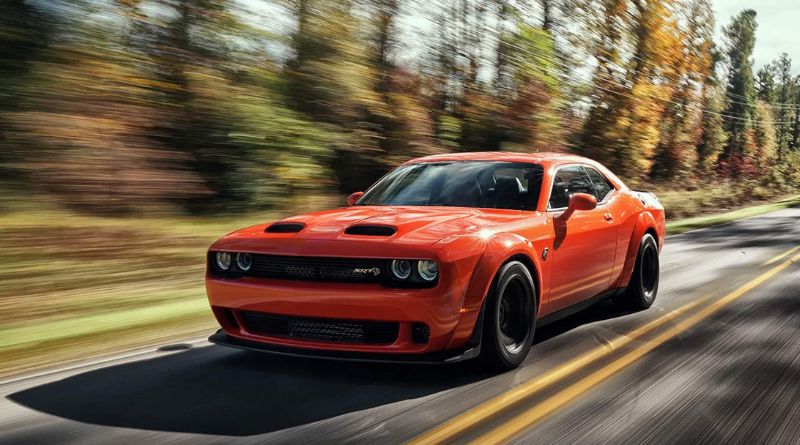
Not everyone suffered the stain of cheaping out. Among the highest-ranking brands, Dodge took top honors, with sister-brand RAM in second, and Buick in third. Among premiums, Alfa Romeo ranks highest, with Porsche and Cadillac rounding out the podium.
Consumer Rights Take A Hit
Earlier this month, Massachusetts Attorney General Andrea Campbell began enforcing the state’s new right-to-repair law. Overwhelmingly approved by voters in 2020, the legislation requires automakers to provide customers and independent repair businesses with vehicle diagnostic data or “telematics.”
The most expensive ballot initiative in Massachusetts history has taken more than a few twists and turns since its proposal. Now, it just took a complete left turn.

He Said, She Said
On June 13, NHTSA sent a letter to two dozen major automakers, instructing them to disregard the Massachusetts law. According to the auto safety regulators, federal law trumps state law – and federal law is not on board.
Citing safety concerns, NHTSA argued that “open access to vehicle manufacturers’ telematics offerings with the ability to remotely send commands allows for manipulation of systems on a vehicle, including safety-critical functions such as steering, acceleration, or braking.”
They paint a bleak picture, one where a cybercriminal “could utilize such open access to remotely command vehicles to operate dangerously, including attacking multiple vehicles concurrently.”

Rebuff Meets Rebuttal
The action has drawn surprise – and ire – from right-to-repair supporters, including Mass. senators Elizabeth Warren and Ed Markey. In a letter to NHTSA and the DOT, the senators accuse the agency of undermining the will of their state’s voters, as well as federal competition policy. They argue that the decision “appears to favor Big Auto” and raises questions “about both the decision process and the substance of the decision by NHTSA’s leadership.”
They also keenly point out how NHTSA’s concerns were only aired now, two weeks after the law went into effect and not once during the preceding 2.5 years when the legislation was being hammered out – despite multiple requests for participation from a judge.
The senators are calling on NHTSA to reconsider its decision and allow Massachusetts “to enforce the will of its voters and protect consumers.” They are also asking Secretary Buttigieg and Deputy Administrator Schulman to respond to a set of questions about NHTSA’s letter.
Real Trucks for “Real People”
From cybersecurity to cybertrucks…

Much to the delight of journalists everywhere, Ford CEO Jim Farley threw a little shade at Tesla’s upcoming EV pickup last week. During an interview with CNBC’s Jim Cramer regarding Ford’s earnings and electric future, Farley declared that he wasn’t worried about the Cybertruck pulling away customers because it’s designed “for Silicon Valley people.”
“It’s like a cool high-end product parked in front of a hotel,” he said. “But I don’t make trucks like that. I make trucks for real people who do real work, and that’s a different kind of truck.”
It’s an interesting statement for a high-profile auto exec to make, especially considering his company’s recent deal to open Tesla’s superchargers to Ford EV owners. Though it’s also fairly accurate, all things considered. It’s hard to imagine a traditional pickup truck owner laying out the money for an avant-garde vehicle that practically screams ‘form over function’.

Still Waiting
Additionally, the Ford Lightning has now been in production for a full year and while it has a few issues to sort out, reviews have been largely glowing. Tesla’s revolutionary new ride, by contrast, has been continually delayed since it’s initial announcement in 2019.
In fact, a report from Wired earlier this month, which referenced leaked internal Tesla documents, notes that the preproduction ‘alpha’ Cybertruck was still struggling with very basic mechanical automotive engineering challenges just last year – specifically, suspension, body sealing, noise levels, handling and braking.
It is likely that the vehicle’s unique stainless-steel and angular design is responsible for many of the issues, as well as the automaker’s promise of features and specs that would allow it to outclass competitors. These include exceptional range, towing capacity, and acceleration time, as well as rear-wheel steering – or as it’s commonly dubbed, “crab-walk mode.”

Regardless, the electric pickup has been seen out and about testing and Musk has promised a special delivery event during the third quarter of this year.
In Case You Missed It…
Tesla gained another charging acolyte last week. Young EV brand Rivian joined big dogs Ford and GM in agreeing to make new EV models compatible with Tesla Supercharging equipment. The deal will open Rivian customers to 12,000 fast-chargers as early as the spring of 2024.
Ghosn Goes For The Wallet
Disgraced former Nissan boss Carlos Ghosn has filed a $1 billion lawsuit against his former employer and about a dozen individuals in Beirut over his “imprisonment” in Japan and what he says is misinformation spread against him, the Associated Press reports.

You may remember Ghosn, less for his savvy business skills and more for his 2019 cartoonish escape from court-imposed house arrest in Japan. You know, the one where he hired a private security firm to smuggle him out of the country in a musical instrument case??
Ghosn insists he did not flee justice, but rather “escaped injustice and political persecution,” but as he lives the life of a free man in his childhood home of Lebanon, the members of his extraction team are serving prison sentences.
Now, the auto tycoon is seeking financial compensation, specifically $588 million in lost remuneration and another $500 million in moral damage.

According to Lebanese officials, Ghosn’s lawsuit accuses Nissan and the Beirut individuals of defamation and of “fabricating charges” against him, which eventually put him behind bars in Japan. The charges in question include breach of trust, misusing company assets for personal gains and violating securities laws by not fully disclosing his compensation, AP explains.
“What I am asking for is only a little compensation compared to what they’ve done to me,” the 69-year-old said, adding that if he were an American citizen filing a lawsuit in the United States, “I would not be asking for $1 billion, but for much more.”
New of the Weird
Ghosn’s bombshell lawsuit wasn’t the only eyebrow-raising headline to emerge last week. Here’s what other weird news you need to know:
U.S. canola producers are eyeing up the trucking industry, now that the EPA said “okay” to using the plant oil as biofuel.

Extracted from rapeseed, canola oil apparently makes a good renewable diesel, as its low saturated fat content (7%) gives it better cold-weather properties. However, the increased production for fuel over food is expected to drive a shortage of vegetable oils for cooking, pushing up consumer costs.
Mercedes plans to integrate ChatGPT into its MBUX voice assistant, creating an “even more intuitive” onboard AI system.

The automaker highlighted “the more natural dialogue format of ChatGPT” as a boon to user experience, noting how drivers will be able to ask for things like details about their destination or even a new dinner recipe to try when they get home. Early adopters can test out the tech as part of a new, three-month-long beta program.
Mormon crickets have invaded Nevada, causing chaos and traffic woes as they blanket highways in search of food.

When squished, the big red bugs create an oil-like covering, causing vehicles to slide off the road in some sort of horror-movie-meets-biblical-plague scenario. The crickets, which can lie dormant underground for years (similar to cicadas) are expected to hang around until mid-August, giving residents the full-blown heebie-jeebies for at least another month and a half.
The Engine Block is your one-stop source for any and all auto industry news. Keep an eye on our weekly round-up of enthusiast coverage, product reviews, vehicle spotlights, auto show/expo features, and more. Be sure to check back Wednesday for tips on road-tripping in a truck and then come back around on Friday for Competition Corner’s round-up of can’t-miss July auto events.


