
Off-Road Instruction: Recovery Gear Maintenance
Vehicle maintenance. It’s not as fun as adding aftermarket parts or planning that next trail run, but it needs to be done. If not, you won’t be able to continue doing those first two things. We all know the normal stuff — change your oil, rotate your tires, clean your filters — but if you’re an off-roader or overlander, a few other things fall under the maintenance umbrella. Namely, your recovery gear.
Your rig’s recovery items play a very important part in the capability and safety of you and your vehicle. In many situations, they are a lifeline for yourself, passengers, and others on the trail. But quite often, when taking the 4×4 out on an adventure, we worry too much about what we’re packing in the vehicle, and not enough time is spent maintaining what’s already on the vehicle. With recovery equipment, many of us wait until something stops working or breaks to diagnose the problem.
It’s time to change that.

We Love A Good Checklist
While not recovery-specific, before or after any major off-road adventure, have yourself a checklist of what to go over on your vehicle. These items should include, but are not limited to:
- Wash/Clean all dirt and debris off your vehicle
- Check and refill tire PSI as needed
- Inspect shocks and other suspension components — tighten as needed
- Examine differentials and ensure 4×4 system is operational
- Pop the hood to inspect for anything like leaks or visibly worn parts
- Top off fluids, check lighting, and replace windshield wipers if needed
- Inspect vehicle frame for any damage
As for recovery-specific gear, there is one piece that shines above all—the winch. It’s the king. But beyond its pulling prestige, there are a few other things to maintain and inspect before your next pilgrimage. Let’s take a look at what you need to keep your recovery gear pristine.
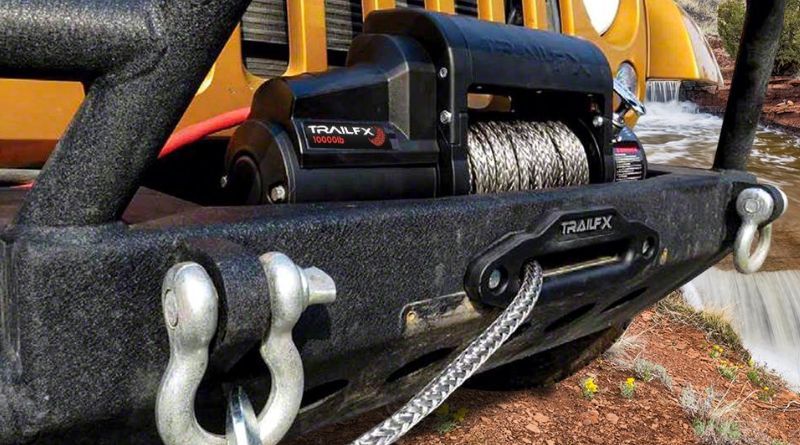
Winch

As noted, we’d put a sizeable wager that when hearing the phrase “recovery gear maintenance,” the first item that comes to mind is the winch. It’s a heavy electrical and mechanical piece of equipment that sits at the head of the class when it comes to recovery.
It also usually sits out in the open and arguably can cause the most damage to yourself, your rig, and others, especially if not maintained properly. While many winches claim to be maintenance-free, we don’t quite buy it. So, let’s go over some of the main ways to ensure it stays working pull after pull.
Use it!
Whether it be some system on your vehicle, in your house, or elsewhere, this is generally good advice, and it may be the number one piece of information to keep it functional: Use it! It’s similar to nice automatic watches — with all their gearing, rotors, and balance mechanisms — it should be run every now and again to maintain proper operation. But while watch winders are a common thing with those who have many automatic timepieces (some costing more than the watches themselves), there isn’t really a hands-off way to operate your winch. You need to take the initiative.

We don’t recommend you go off and find yourself a mudhole to get stuck in, but finding a quiet place to put it in freespool, taking the line out, and reeling it back in works just the same. This will get the gears turning, lube everything up, and work out any trapped moisture. Just remember what happens when you don’t use it.
Speaking of Moisture…
While many newer and higher-end winches may have a waterproof rating, many others do not. Even if you do have one that has an IP68 badge, it’s still a good idea to release as much moisture as you can from the internals. This moisture can come from submerged usage, but many of us run our winches uncovered year-round. They look cool, so we understand wanting to show them off a bit, but we do recommend buying a high-quality cover that fits snuggly and using it when tooling about town. Think of all the rainwater an uncovered winch has seen.
For proper recovery gear maintenance, read your winch manual or find an online video showing you how to open up your winch so you can check for trapped water. While it’s open, go ahead and get yourself a bottle of lubricant to hit all the gearing with as well. Those who regularly submerge their winch (more common in powersports) will want to do this a bit more regularly. But for the rest of us, doing this every couple of months is a good way to keep things dry, and get yourself more intimately familiar with your unit.

Simple Cleaning/Inspection
Perhaps the easiest thing to do is a simple inspection. Check the bolts and terminals for loose connections and corrosion — both the winch side and the battery side. Don’t ignore the hardware that fastens it to your bumper either. Make sure everything is tight and in proper condition.
The same goes with your remote and its connection. Disconnect terminals and give them a good scrub before reattaching as well. And don’t forget your fairlead, especially if you have a roller variety that may need a bit of greasing. Check for any bits that may unnecessarily cause friction to your rope.
Your Rope
For synthetic ropes, ensure that you’re inspecting after each use. Synthetic lines may get a bit fuzzy-looking after use, which is ordinary. What you want to look out for are strands that are completely cut or overly frayed. If this is the case, the rope should be replaced.
Prolonged sun exposure can prematurely weaken synthetic rope as well, another reason to keep it covered if not actively using. Clean water or specialty products are recommended for cleaning, typical household cleaners may react negatively with the rope and aren’t recommended.
A wire rope requires very similar maintenance. Inspect for snapped strands, flat areas, and overall abrasion. Some swear by using kerosene to clean wire ropes, but we suggest looking into specialty cleaners that may be a bit more environmentally conscious.

Battery
While it may not be thought of as a true “aftermarket” off-road item, if you have a bunch of extra things like winches, lights, and coolers connected to the battery, chances are you’ve already replaced it with a unit that can handle all the extra draw. Even if you don’t have a bunch of peripherals connected, don’t neglect it during your recovery gear maintenance routine.
No battery, no go. Run through the following checklist:
- Run a battery load test at least every few months, whether by your hands or a mechanic
- Monitor and clean terminals routinely. Baking soda and water work wonders. If corrosion buildup is occurring frequently, this may be a sign something is wrong.
- Check battery acid levels at least a few times a year. This is especially important it you have accessories connected to it.
- Like the winch, don’t leave it sitting for too long. Make sure your car is being operated frequently — at least twice a week.

Tubular/Metal Accessories
We did a comprehensive piece on how to maintain your metals a few months back. This is a great guide for taking care of various materials to extend their performance and longevity, including meaningful off-road/overlanding equipment like bumpers, steps, and racking.
While they may not be “recovery gear” per se, they still require maintenance. Like we touched on in the winch section, they’re what your recovery equipment is probably mounted to. Checking mounting points and hardware for tightness and giving it a good cleaning after heavy use can prevent major issues down the line.
For example, I learned not too long ago that my roof rack bolts had become loose. This allowed water to seep down into my headliner causing staining, odor, and mildew. A scheduled check of these bolts, and others, could have saved me headache and money spent on jumbo packs of Little Trees.
Wiring
If you’re like many, then you wire something that needs power one time and don’t check it until that something fails — whether it be a winch, lighting, cabin electronics or anything else. Murphy’s Law states that anything that can go wrong, will go wrong. Well, Murphy had a brother who was an off-roader, and he had his own law which stated anything that can go wrong, will go wrong, and it’ll happen on the trail far away from your house.

To put fate back in your hands, make sure to give wiring (especially the aftermarket stuff that you or someone else installed) a good once-over before heading out. Anything connected to the battery we’ve covered in that section, but it’s a good idea to follow the length of your wiring to ensure a few things:
- It isn’t getting pinched or cut by any part of your vehicle
- The wiring is affixed to where you put it and not hanging loosely where it could sever or affect any other mechanisms of your vehicle
- The weather shielding is intact and not torn
- The weather shielding doesn’t show any abnormal spots or burned areas
- The run lines of your wiring aren’t letting water/moisture inside your vehicle. This is especially true for exterior wiring like lighting, where using channels, weather stripping, or drilled holes are common. Make sure that passthrough to the interior is sealed and secure.
Your Recovery Bag
While everyone’s recovery bag is different, a few basic principles hold true for all. Make sure to store your equipment when it’s clean, visually inspect it often, lubricate anything that may need it, and keep it out of direct sunlight.

But there are a few item-specific things we should mention:
- Any recovery items made of synthetic rope, like straps and shackles, need a little extra TLC. Look at our synthetic winch rope tips above; the same holds true.
- A first aid kit should always be in your vehicle, whether in your recovery bag or somewhere else. Make sure to restock and check for any expirations or dried out/unusable products and replace often.
- Visually inspect traction boards for any signs of cracking
- Ensure any jacks are lubed up properly to ensure seamless operation
- Handheld lighting should be charged/have fresh batteries before any heavy use

Sponsored by TrailFX
If you’re looking to add or upgrade your vehicle’s recovery options without dipping into the kids’ college funds, check out TrailFX. It’s been six years since TrailFX’s original Reflex winch turned heads in the aftermarket. It proved that a gorgeous, feature-rich winch didn’t have to carry a $1K price tag. Since then, TrailFX changed up their logo and their winch, introducing the Reflex 2.0—a winch that I’ve often said has the best-looking housing on the market.
But it’s not all looks, as the 2.0 improves its predecessor’s line speeds, braking system, and amp draw. And that good looking housing is also IP68 water/dust resistant certified.
The Reflex 2.0 is available in 9500 lb. and 12000 lb. flavors with both steel or synthetic rope. Plus, with models available in wired or wireless remote, whatever your preference, TrailFX has you covered. And with a mechanical limited lifetime warranty and 6-year coverage on electrical parts, they have your back too. To learn more about TrailFX winches and recovery gear, head to https://www.trailfx.com.


