
Resourceful Traveler: Never Leave Home Without These 10 Essentials
Essential items that every overlander should include in their packing checklist.
When the goal is to “get off the grid,” investing in the right equipment and supplies becomes critical to ensuring maximum safety and enjoyment. With limited access to civilization, the margin of error is pretty wide for anyone who isn’t Scout-level prepared.
That said, your next trip doesn’t require you to be a seasoned explorer ready to summit Everest. (Even if it feels like it when figuring out what to pack.) Being a resourceful traveler doesn’t mean you need to be bogged down with mountains of gear, but it does mean you have to expect and be prepared for just about anything. Safety, convenience, and comfort are of paramount importance when discovering new and remote locations. You want to remember this trip for the rest of your life — in a good way, not because you got an epic helicopter ride to the ER.
With that in mind, we want to offer an essential “packing list” of sorts that will ensure you not only have a great time out there, but that you also make it safely back here.
1. Recovery Tools

Depending on how serious and extensive your off-grid camping and overlanding excursions are, it makes sense to invest in a rugged and reliable off-road recovery kit. Why? Because it will help get you out of an unfortunate jam, and save you hours of time and frustration.
You can buy a ready-to-go kit or build your own. Either way, here are some recovery items you’ll want to include:
- Winch
- Tow straps
- Tree saver straps
- Kinetic recovery straps
- D-rings/soft shackles/bow shackles
- Winching gloves
- Snatch block
- Land anchors
For more details on what to look for in each of these items, check out our overlanding recovery gear guide.
2. Tire Repair Kit

We’ve all seen our fair share of stranded or broken-down trucks, campers, vans, and RVs with flat tires. While blowing a tire along a highway may mean just chilling for a bit while you wait for roadside assistance to show up, having a blowout along a more barren and deserted stretch of road could ruin your entire trip if you lack the essential repair equipment.
Having a spare is great and, yes, that can of fix-a-flat is probably worth the little bit of space it takes up in your toolbox. But, when tackling really rough roads, it’s important to have a proper repair kit on deck (not to mention a good air compressor).
Since most issues will be puncture-related, a plug kit will be your best bet. Look for one with sturdy tools and high-quality repair cords, as this roadside job requires some force and dinky plastic parts won’t do any good. Sidewall cuts are a different animal, and many overlanders will argue they’re not repairable. However, there are manufacturers who offer kits with thick rubber patches specifically designed to address this issue. Just remember they’re short-term solutions.
As with many other repair kits, you can usually find these items neatly prepackaged in a durable case that can be picked up online or at your local parts store.
3. Air Compressor

As noted above, a quality air compressor will greatly supplement any tire repair kit you decide to bring along. However, you’ll also want to keep one on board so you can quickly re-inflate your tires after airing them down for off-road driving. (Lowering tire pressure expands your tire’s contact patch with the ground, improving traction on challenging terrains.)
An air compressor is also useful for inflating gear like air mattresses or rafts, and for powering pneumatic tools like impact wrenches or air ratchets, making it a pretty versatile tool to keep around. Many folks choose to invest in a built-in onboard model, but these can run between $500-$1000. If you’re on a budget, consider picking up a reliable and rugged portable air compressor that you can use with a variety of different vehicles.
If you’re towing or hauling, look for one that offers a capacity of 150 PSI or more, since camper and RV tires usually require more pressure than regular car tires. Also look for generously long hoses, a digital pressure gauge, and something that’s lightweight and easily portable.
4. GPS

For die-hard, off-grid camping, you know you can’t depend on unreliable cell phone signals and Google Maps to always get you out of the literal woods. Today’s satellite-linked GPS units are super compact, uber reliable, and relatively inexpensive. Some even come equipped with handy mapping software.
When purchasing, look for units that have great battery life, and preferably multiple charging options. Durability is obviously important, so keep an eye out for things like impact resistance and IP ratings. You’ll also want something that’s easy to operate. Today’s units have incredible functionality, offering much more than simple global positioning. While additional features like trip-planning, messaging and radio communication, and geocaching are all very useful, just make sure you can figure out how to actually use them.
Need some recs? Check out our list of the top overlanding GPS units.
5. First Aid Kit

This one probably feels like a no-brainer, but it needs mentioning that no resourceful traveler ever goes anywhere without a well-equipped first aid kit. Depending on how remotely and how long you expect to travel, your first aid kit should contain at least the following:
- Assorted adhesive bandages
- Antiseptic wipes
- Antibacterial ointment
- Steri-strips or butterfly bandages
- Nonstick sterile gauze pads
- Adhesive medical tape
- Pain-relief medicine or ibuprofen
- Antihistamines
- Tweezers
- Various splints
- Elastic wrap
- Hemostats
- Liquid bandage
- Aspirin
- A knife or multi-tool
- Medical shears
- Cotton swabs and balls
- Standard oral thermometer
- Sterile gloves
- Irrigation syringe
- Sterile face masks
- CPR mask
- Emergency blanket
Keep it all neatly organized in an easy-to-see pouch or container for quick access.
6. Tool Kit

Camping and overlanding require more than just your run-of-the-mill standard home tool kit which contains the requisite wrenches, screwdrivers, hammer, measuring tape, and pliers.
Again, what you pack will be based on just how far off the beaten path you plan to go, but consider adding some off-road-ready items to your cache of hand tools. A shovel for digging out of soft terrain and traction aids for getting unstuck are both wise additions, as is rope or paracord for securing gear or setting up camp. Items like a flashlight, multi-tool, vehicle-specific tools, and solid work gloves are obvious inclusions but still worth mentioning – as is the Almighty Roll of Duct Tape.
It’s impossible to plan for every scenario and, like any tool kit, yours will evolve over time based on experiences. Just remember to regularly inspect and maintain your tools and equipment, ensuring they are in good condition and restocking any used or expired items. Consider keeping everything safely organized in a heavy-duty waterproof case or a soft-sided MOLLE bag for quick and easy access.
7. Jack

Every resourceful traveler needs an emergency jack on hand. Next to the winch, it’s probably the most versatile bit of gear you’ll have on board.
When pushing your vehicle to its limits, things will inevitably break and a quality jack is what will safely get that big rig up in the air so you can investigate and make repairs. Additionally, a quality jack can provide clearance when hung up on a rock or stump and help you lift the vehicle to place traction aids under the tires.
You’ll certainly have your pick of the litter when shopping, so take care to choose a jack that is suitable for your specific vehicle and off-road needs. Consider features like lift capacity and range, size, weight, cost, and the terrain you’ll be on. For example, a hi-lift jack is a versatile multi-directional jack that can be used vertically or horizontally for added convenience, making it great for off-road. However, what you gain in versatility, you lose in stability and safety, which is why a bottle jack is the better option when you’re back on level ground.
Whichever jack(s) you decide on, be sure to look for a rust-resistant, powder-coated finish and heavy-duty hardware. And remember to keep jack stands on board for safety, as they will support and stabilize the vehicle once lifted.
8. Fire Extinguisher

While most outdoor enthusiasts love a good campfire, no one wants to deal with an unexpected electrical fire. It’s imperative to keep a compact, yet powerful fire extinguisher within easy reach anytime you are trekking off the beaten path.
You can opt for something small and compact enough to fit into your emergency kit, like a mini fire suppressor. With ergonomic and easy-to-use designs, many options use a non-toxic, biodegradable formula that’s specially developed to stop a fire without leaving behind a huge mess or residue. (Leave no trace, right?)
If you’re concerned about needing more fire power (pun intended), then you should consider something bigger and with greater range, like a refillable 2.5-pound extinguisher. It’s still compact, lightweight, and easy to use, but will give you that extra peace of mind should things really go off the rails.
9. Portable Power Supply

Yes, we recognize that camping and overlanding are all about recharging your metaphorical batteries and getting off the grid — but let’s be real, it’s important to keep certain items charged in case of emergency (and even not for emergency). For that reason, you should invest in a portable power solution that allows you to keep at least a cell phone or laptop charged up without having to run your engine.
While a full-blown solar setup can be a real gamechanger, allowing you to both make and store your own power, it’s not always the most convenient or cost-effective method. Generating your own power takes time and proper alignment with the sun, something you may be short on if you’re traveling to, from, and between far-flung destinations. Likewise, dual-battery setups offer a reliable and more permanent solution, but they can be pricey and a bit complicated to install.
Portable power stations are a great compromise. Not only do they provide an impressive amount of juice, but also most options can be charged in multiple ways including residential wall outlets, vehicle 12V outlets, and yes – even the sun, via a compatible solar panel. Whatever you pick, we recommend also adding a portable power bank to the glovebox. Pick one that’s strong enough to provide a jump start, should you need it.
10. Emergency Food & Water Supplies

Lastly, in the event of a true off-grid emergency in which you may be out of touch for several days before you can get help, it’s important to have a back-up supply of freeze-dried food rations and water packets.
Unlike those horrible MRE’s that your uncle in the Marines used to let you sample (okay, some of those were actually pretty tasty), today’s prepackaged emergency food rations can include some pretty clean and high-end ingredients. Some kits even offer a gluten-free option for the digestively challenged.
If you don’t want to store extra water rations onboard, you can always opt for the uber compact, lightweight, and practical personal water filter. They’re relatively cheap, and can be easily carried in a backpack for a lifesaving water option literally anywhere you go.

Sponsored by BEDSLIDE
With so many items deemed “essential,” it’s easy to slip into overpacking – which often leads to a cluttered and disorganized mess. Cargo areas and truck beds fill up fast, making it a nightmare trying to access all that overlanding gear. Even more so, if you’ve got heavy items on board, are shorter in stature, or have mobility issues.
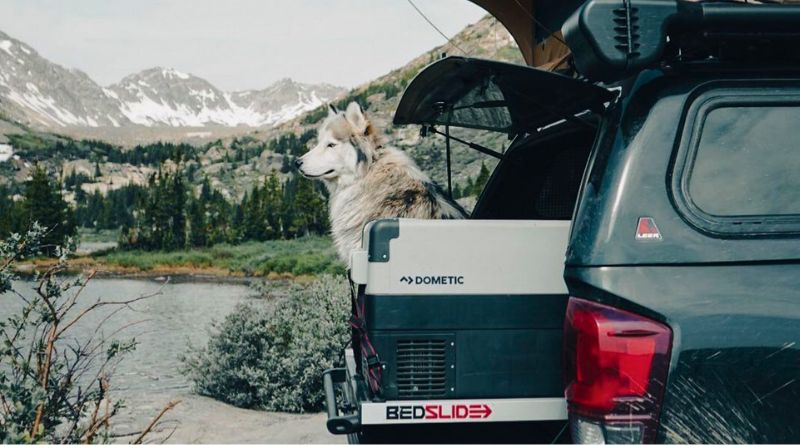
BEDLSIDE sliding storage systems mount directly to your truck, van, or SUV and act as a giant smooth sliding drawer for your items. No more crawling around to get to your tools, gear, or supplies. Simply grab the handle, pull, and the BEDSLIDE rolls all of your stuff out to you–saving time, effort, and back pain. Made in the USA, BEDSLIDE products use 100% weather resistant materials, a super safe and secure latching system, and feature an easy installation.
To learn more about BEDSLIDE’s product lineup, including the new Max Extension 2000, which offers one-ton capacity with 100% extension, head over to https://www.bedslide.com.


