
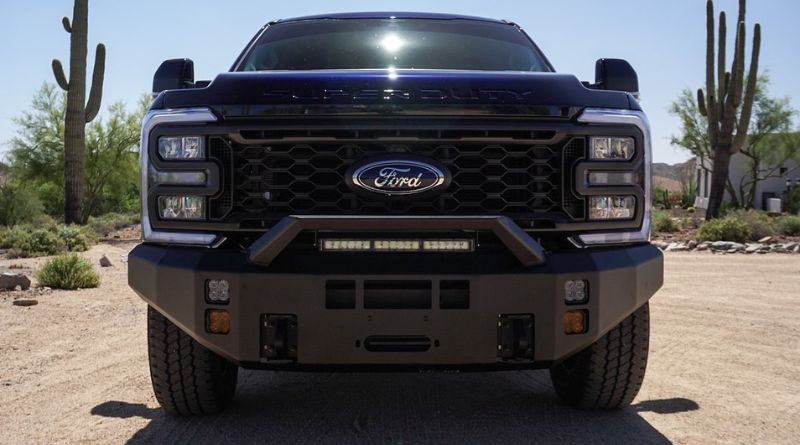
Why You Should Consider Buying An Aluminum Bumper
Aluminum bumpers just keep getting better every year.
We’ve written before about the wonders of opting for aluminum bumpers. But even so, there are still detractors and those who stand by steel. Sure, a certain type of rig may benefit having the latter, but the advantages steel traditionally had over aluminum are slowly closing.
As manufacturers continue to get more and more experience with aluminum, their processes change and engineering improves. It’s reached the point where some companies have switched most or all of their lineup to aluminum. Give it another 10-20 years, and you might be hard pressed to find a steel bumper for your rig.
If you’re not familiar, let’s start out with the two main reasons aluminum is a better choice that steel.
Weight

Perhaps the best reason to go with an aluminum constructed bumper is the weight. A truck-tale as old as time—a new shopper gets their first metal bumper and chooses steel. Within a week of ownership, they realize how raked the front of their vehicle is, how the suspension seems saggy and unresponsive, and the driving dynamics have vastly changed.
It’s just a bumper, right? How can it make so much difference to the whole of your vehicle?
Well, in many cases a steel bumper can weight 150-200+ lbs., while your OEM bumper weighed only half that. It may not seem all that much, but when a truck or SUV has their suspension and drivetrain engineered with a certain front-end weight — and then you go and double it — well, things ain’t gonna be all peachy. You’ll need a beefed-up suspension to get it close to stock, and even then, it might not feel like it did before.
Alternatively, aluminum doesn’t add much weight at all, and in some cases can even be lighter than the stock bumper. Compared to steel, aluminum will only weigh about a third of a comparable steel bumper. Not to mention, the decreased weight means an easier, more manageable install whether you do it yourself with a couple sure-handed friends, or take it to your local installer.
Longevity

Don’t get it twisted, longevity is a completely different ballgame than strength. Something’s that’s strong does not necessarily mean it’s going to last for a long time. This carries over into bumpers, as well.
Steel is typically known as the stronger choice, but no matter what fancy coating they put on it, a steel bumper will rust. It may take a year, it may take five years, or in my case it may take about three months, but a steel bumper will rust. Steel is a type of iron-alloy, and the oxidation of iron is what causes rust to form. Expect this to take place even sooner if you live in a rainy, humid climate, or one where roads are often covered with chemicals and salt. Aluminum on the other hand does not contain iron, therefore you will not have to worry about rust.
My own experience building a rig was fraught with penny pinching. I went with a cheaper steel bumper up front, and was able to find a secondhand aluminum bumper for the rear. Like I said above, my fairlead cutout as well as a few other weld seams rusted within a couple months of ownership. I have owned this bumper for 8 years, and have gone through two complete resprays, with a third looming in the near future. My aluminum rear bumper I’ve had for six years, and it looks just the same as the day I picked it up.
Anyone who knows bumpers understands the above two benefits of aluminum. But let’s take the two often touted benefits of steel and give you a few contrasting reasons why you should still consider aluminum.
Strength: Counterpoint

Yes, everyone will sing the brawny praise of steel, and we will tend to agree. A bulky, heavy steel bumper will generally give you more protection from bumps and scrapes. But there is one thing you should at least give pause and think about—on road and high-impact collision.
If you’re in a minor fender-bender, while you may not take much damage, the other person certainly will. And what would ordinarily be a replacement rear bumper for that poor soul in front of you could turn into a full rear-end repair job. Not a great result for them or your insurance. A big heavy bumper may also transfer more force to the frame of your own car during high impact, causing high-dollar issues.
Alternatively, while you may hear differently on various forums, aluminum by its nature, is a more malleable, ductile, and elastic metal than steel, assisting with impact. And while the high carbon properties of steel generally make it a sturdier choice, the rigidity of the metal cannot be pushed as hard as aluminum without cracking or breaking—this is because of aluminum’s higher elasticity.
Another point you rarely hear is while a cold climate and the road chemicals that come with it spell certain corrosion for steel, aluminum can actually get stronger in colder temperatures.
Cost: Counterpoint

It’s no big secret that the initial cost of an aluminum bumper is more that one made of steel. But you might be surprised to know that the gap between the two gets closer every year. What used to be up to a $1K difference has now shrunk to half that for many popular aftermarket brands. While the price may never be 1:1 for the two, the ever-saturated bumper market and growing aluminum market will create even more competition, which will provide consumers more options and more aggressive pricing.
Additionally, while your mileage may vary, you need to consider the upkeep cost of a steel bumper as well. Some may be able to get by with just a quick rinse every now and again, but many of us will not. Resprays and touch-ups must be considered. I thought I did a decent job taking care of my steel bumper, but after the two resprays, total cost of ownership has now surpassed what I could’ve purchased an aluminum unit for.
In addition, we’ve also mentioned the cost of suspension upgrades earlier. Sure, some of us may get away with sticking to stock, but if you want to keep drivability the same and preserve the lifespan of components, you need to at least consider some kind of shock/spring upgrade. Just another cost to think about.

Better Materials. Better Products.
If you are shopping for an aluminum bumper, firstly we’d like to congratulate you on a good choice. Next, we’d recommend to take a long look at ICI and their Alumilite series. If fact, ICI has changed their ENTIRE step and bumper offerings to aluminum. And when a respected stalwart in the bumper game like ICI makes such a monumental change, it says something about where we are with aluminum and what the future will look like.
And while we challenge the notion that steel is always stronger than aluminum, cheap, thin, weak aluminum bumpers certainly do exist in the market and prop up this notion. But that’s not what ICI is about, as tests show their Alumilite series is 2.4x stronger than steel. Plus, their 5-step finishing process ensures the powder-coat they apply bonds better than anything else.
With an average weight 65% less than comparable steel bumpers, ICI’s Alumilte series also benefits from the more precise and unique angles that are available when working with aluminum. Clean, modern, and perfectly tailored to the application they fit—ICI bumpers look, fit, and perform like nothing else.
To learn more about ICI’s Alumilite front and rear bumpers, as well as other great accessories like side steps, rocker panels, and fender trim, visit https://www.icionline.com/.


