
Auto Industry News: Increased Sales, Looming Strikes, Seat Belt Alerts & Self-Driving Lawsuits
This week, we delve into the latest headlines shaping the auto industry’s current bumpy landscape. As August comes to a close, new-vehicle sales figures paint a picture of rising yearly totals but with day-to-day indicators that hint at a softening market. Adding fuel to the fire are mounting tensions between automakers and union workers in Detroit, whispers of yet another interest rate hike, and a surprise bidding war over major auto supplier, U.S. Steel.
The Engine Block helps you untangle the many moving parts, and also fills you in on NHTSA’s latest safety proposals, Tesla’s newest legal headache, and more.
New-Vehicle Sales Up Double-Digits (Again)

For the fifth consecutive month this year, the auto industry sees double-digit sales growth. According to a joint forecast from J.D. Power and GlobalData, total new-vehicle sales are up an estimated 15.4% from a year ago when supply chain fiascos left dealer lots nearly empty and consumers scrambling for product.
While inventory levels have greatly improved (up 48.4% over last year!), they’re still well below pre-pandemic numbers. Additionally, they now have higher interest rates and selling prices to contend with. J.D. Power puts the average interest rate for new-vehicle loans at a painful 7.3%, and notes that the average new-vehicle transaction price is actually down – ringing in at about $45,537. These numbers translate to an average monthly finance payment of roughly $729.
Despite all these financial pressures, however, consumers still be consumin’. The monthly forecast shows buyers are on track to spend $47.8 billion on new vehicles this month alone – “the highest on record for the month of August and 10.5% higher than August 2022.”

More Context Hints At Cooling Market
Looking at recent (and consistent) sales volume growth, it’s easy to think the auto industry is being spared the worst of consumer budget cuts. However, a closer look shows the market may still be softening.
In a report published this morning, S&P Global noted the daily selling rate metric has been on a downward trend since April. And while the analysts do not expect it to dip further this year, they do caution that new-vehicle affordability concerns “will not be quick to rectify,” thanks to rising interest rates, high MSRPs, and overall credit tightening. They also lowered annual forecasts from 15.7 million estimated units sold in the U.S. to 15.2 million.
Adding insult to injury, just this past Friday, Jerome Powell announced that the Federal Reserve may need to raise interest rates again. Investors expect one more rate hike by year-end.
Strike Threats Loom Large

Downward pressures on consumer spending are certainly a concern for automakers and dealers, but J.D. Power pointed to a much bigger issue that will be the focus of next month’s attention – potential work stoppages that could hinder production.
Inventories of unsold vehicles could grow very tight again if the United Auto Workers or Canada’s Unifor choose to strike. And both unions have the rank and file’s overwhelming support to do just that.
Last week, 97% of UAW members at the Detroit 3 voted to strike if contract negotiations are not resolved by the September 14 deadline. While the vote is a routine part of the bargaining process, the threat of simultaneously striking all three automakers is not. (The union’s traditional approach is to strike one target company, usually the one they feel is the weakest link, and then use the resulting contract as leverage during talks with the other two.)

In addition to the UAW’s 150,000 workers, there are roughly 18,000 Canadian autoworkers supporting the move with similar fervor. Unifor members, whose current contracts expire on September 18, held their own strike votes over the weekend. More than 98% of workers at each automaker supported a strike.
“A disruption in production could create more asymmetry in the market and potentially extend the overall tight supply situation currently in place,” said Thomas King, president of the data and analytics division at J.D. Power.
While this would inevitably give some support to new-vehicle pricing, he noted it would also keep used-vehicle values high – a strange silver lining, if you will. “Trade-in values could remain elevated longer, continuing to help consumers offset higher interest rates and pricing,” he said.

In Case You Missed It…
The UAW did reach a deal on one front. The union’s continued pressure on GM regarding hazardous conditions and low pay at the automaker’s Ultium battery-making plant resulted in wage increases by an average of 25%. The pay hike goes into effect August 28 and came after several U.S. Senators put the company on blast for paying workers as little as $16 an hour, despite receiving billions of dollars in taxpayer-funded subsidies.
Ultium has yet to fully resolve the allegations surrounding health and safety risks. To date, the company has paid $31,078 in fines for violations of OSHA workplace laws, according to Automotive News. Most recently, it faces an investigation stemming from a chemical leak on August 22.
Driver Safety Concerns

Speaking of government intervention in public safety, NHTSA proposed a new rule last week that would require auto manufacturers to equip vehicles with seat belt warnings for both front and rear passengers.
The proposed rule aims to update current driver seat belt warning system requirements, which right now only apply to front seat occupants. According to the federal agency, changes would include:
- A visual warning on vehicle startup lasting at least 60 seconds to notify the driver of the status of the rear seat belts.
- An audio-visual change-of-status warning lasting at least 30 seconds if a rear seat belt is unbuckled while the vehicle is in operation.
- An audio-visual seat belt use warning for the driver and right front passenger seat that (1) remains active until both the driver and right front passenger seat occupants are belted and (2) remains active until the unfastened seat belt is refastened.
NHTSA estimates that the proposed requirements would prevent approximately 300 non-fatal injuries and over 100 fatalities annually. They would apply to passenger cars, trucks, most buses, and multipurpose passenger vehicles with a gross vehicle weight rating of 10,000 pounds or less.

Did you know…?
U.S. auto safety regulators did a notable about-face on Right to Repair last week. After telling automakers in June to disregard a Massachusetts law requiring them to share telematics data with independent repair shops, NHTSA has realized automakers can safely comply – as long as they only share diagnostic data via short-range wireless technology. Using long-range signals poses a threat, the agency cautioned, and could leave critical vehicle functions open to hackers. Thanks to the workaround, automakers are now required to share the data, per state law.
Tesla Defends Autopilot in Court

Tesla may not be new to bad press, lawsuits, and even federal investigations, but this month will mark the first time the automaker must defend itself at trial against allegations that its Autopilot technology led to vehicle accidents resulting in death.
The automaker faces two civil lawsuits, one heading to California court in mid-September and the other set for Florida court in October. Both trials concern gruesome, deadly 2019 crashes involving Model 3 vehicles; both lawsuits also say faulty Autopilot safety software is to blame.
More On The Line
While this may sound like par for the course for Tesla, the stakes are actually quite high. If the company fails to succeed at court, it stands to lose confidence in its cash-cow “self-driving” technology. Plus, vehicle sales and stock values will undoubtedly take a hit.

More importantly, Reuters reports the civil proceedings are likely to bring new evidence to light showing that Elon Musk and other company officials knew about Autopilot’s possible deficiencies. For example, attorneys in the Florida case claim to have internal documents showing Musk and engineers were aware of, and did not fix, shortcomings.
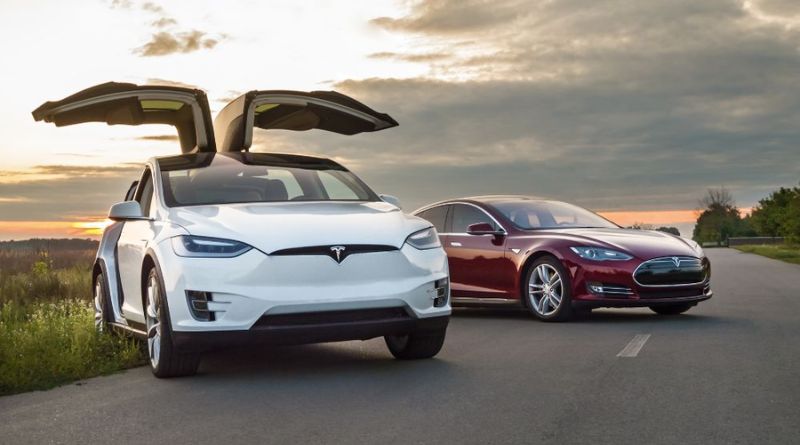
The automaker denies any wrongdoing, saying driver error is to blame for the crashes and stressing that “there are no self-driving cars on the road today” – an interesting defense since the company’s assistance technology is marketed as “Autopilot” and “Full Self-Driving” software.
While Tesla did recently win a landmark trial back in April, where a jury found the company’s system issued a proper number of anti-collision warnings in a Los Angeles-based Model S crash, the automaker still seems to be covering its bases. The company filed an emergency motion last week in an effort to keep deposition transcripts and the aforementioned internal documents secret.
What Else You Need To Know This Week
Fisker Reveals Electric Pickup Details

Earlier this month, California-based EV maker Fisker debuted its mid-size electric pickup. Dubbed the “Alaska,” the smaller hauler is set to arrive at the end of 2025 and will supposedly come wearing a $45,400 price tag. (We’ll believe that one when we see it.) Last week, Fisker unveiled some power specs, noting the Alaska will offer two battery packs – a 75 kWh, good for 230 miles of range and a 113 kWh, good for 340 miles. Performance will vary based on which options a buyer springs for, but Fisker says the fastest Alaska will rip 0-60 in 3.9 seconds.
RealTruck Acquires Go Rhino

Truck accessories juggernaut RealTruck (formerly Truck Hero) strengthened its portfolio of brands when it welcomed Mexico-based Go Rhino to the family last week. A well-known and well-respected off-road brand, Go Rhino’s automotive accessories include side steps and running boards in nearly 20 styles, sports bars for modern trucks, hitch steps, bumpers and products for public safety vehicles, as well as an extensive program of Ford Bronco-specific accessories.
“We’re pleased to welcome the Go Rhino team to our family of leading aftermarket automotive accessories brands,” said RealTruck CEO Carl-Martin Lindahl. “We look forward to joining forces to expand RealTruck’s operations into Mexico with Go Rhino’s impressive product design, development and manufacturing teams.”
U.S. Steel Bidding War

After rejecting a $7.3 billion bid from its rival Cleveland-Cliffs earlier this month, American steelmaker – and major auto supplier – U.S. Steel set off a bidding war and sent its shares soaring. One of the offers came from Pittsburgh-based industrial conglomerate Esmark, to the tune of $7.8 billion cash. In an interesting twist, however, Esmark pulled its bid just last week, citing pressure from the United Steelworkers union – which has transferred its purchasing rights to Cleveland-Cliffs.
As part of its contract with U.S. Steel, the union has a right to bid for the company. Its decision to hitch its wagon to Cleveland-Cliffs (a USW shop) is notable, as a merger between the two would effectively create one major unionized steel producer – a combined entity so powerful that it would not only control more than 50% of the exposed auto market, but also undoubtedly draw the attention of federal antitrust regulators.
The Engine Block is your one-stop source for any and all auto industry news. Keep an eye on our weekly round-up of enthusiast coverage, product reviews, vehicle spotlights, auto show/expo features, and more. Check back Wednesday and learn why you should consider an aluminum bumper for your next purchase. Then, return on Friday for a list of the essentials every overlander needs when heading off-grid.


