
Auto Industry News: OEMs Check In For Q2, Tesla In Trouble AGAIN, and Chevy Bolt EV Returns Before It Ever Really Left
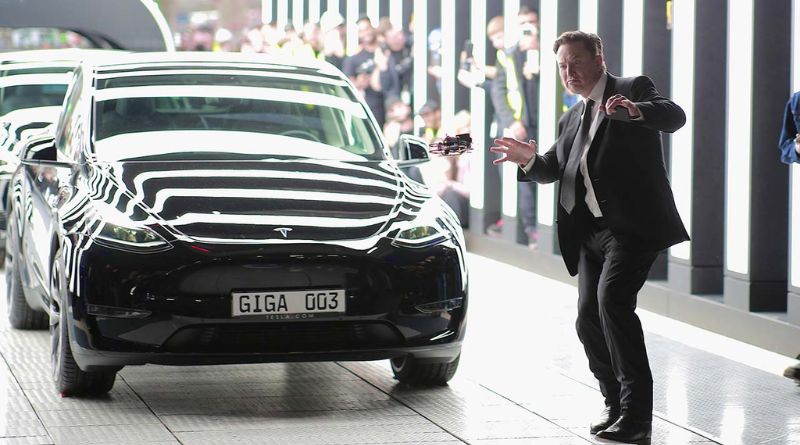
In what is beginning to feel like a bad case of déjà vu, Tesla finds itself back in the hot seat this past week – though, really, did it ever leave? This time, the EV maker is accused of rigging its vehicle’s dashboards to show better-than-actual range estimates… and then creating a secret division tasked with suppressing driver complaints and canceling their service appointments.
Meanwhile, GM sees a 52% earnings rise in Q2 and decides to keep the budget-friendly Chevy Bolt EV on its starting roster; Ford’s electric division Model e is hemorrhaging cash, estimated to cost the company $4.5 billion this year; and AM radio gets a little love from lawmakers. Plus, new NHTSA fuel economy standards, an update on the UPS workers’ contract, and a burning cargo ship full of vehicles.
But first, a quick look at the state of the auto market now that July numbers are in.
Auto Sales Stay High Despite Soaring Interest Rates

Last week, the Federal Reserve raised interest rates by a quarter point, taking the benchmark to its highest level in more than 22 years. While the hike was much-anticipated, it still marks the 11th increase in just 16 months – a sobering reminder of the current economic state in the U.S.
In response to the higher federal funds rate, average interest rates for new-vehicle loans are expected to increase to 7.1%, according to a joint forecast from J.D. Power and GlobalData.
Despite these continually-climbing borrowing costs, it seems car buyers keep on buying. The same forecast also notes that total new-vehicle sales for July are projected to reach 1,320,982 units, a 21.5% increase from last year.
On the bright side, sticker shock might be easing (a little). Average new-vehicle retail transaction prices declined 1.9% from July 2022, and this month only 28.7% of new vehicles are projected to be sold above MSRP – a significant drop from last year’s 49.3%. Buyers still face an uphill battle, as the average monthly finance payment in July is on pace to reach a wallet-burning $720.

In Case You Missed It…
On Thursday, July 27, the U.S. Senate Commerce Committee approved legislation to stop automakers from removing AM broadcast radio from their new vehicles. The bill, which still needs full Senate approval to be passed, would require NHTSA to issue a rule dictating that automakers include AM radio at no additional fee to car buyers.
In recent years, manufacturers have begun phasing out the old-school technology, particularly in EVs. They argue electromagnetic interference from the drivetrains causes too many audio quality problems to justify keeping it on board. Lawmakers disagree, citing AM radio’s critical role in the federal emergency alert system. This recent show of almost-unanimous bipartisan support is certainly a win for the tech.
Chevrolet Bolt EV Coming Back

Speaking of electric vehicles and old things making a comeback… The Chevy Bolt EV is set to make its grand return, just a few months after news broke of its production ending. Surprising many people, CEO Mary Barra made the announcement during GM’s earnings call on July 25.
When exactly the no-longer-discontinued model will hit the market again is still up in the air, but Barra confirmed the model will come back as a new generation and will wear the company’s Ultium batteries.
Consumers Love Affordability
Launched in 2016, the Chevy Bolt subcompact hatchback was the brand’s first long-range battery electric vehicle. The styling and power never quite dazzled buyers, but the low starting price, surprisingly spacious interior, and EPA-estimated 259 miles of range made it an attractive option for budget shoppers keen on EVs. Attractive enough to spawn a larger, mini-SUV version called the Bolt EUV in 2022.

Many people questioned GM’s decision to end production, as it meant killing off America’s cheapest available electric vehicle during a national push for the technology’s adoption.
At the time, GM said the Chevy Bolt and its SUV-sized sibling, the Bolt EUV, were always meant to be transitional. By nixing both models, the automaker could make room for a new generation of electric nameplates like the Silverado EV, Blazer EV, and Equinox EV.
A Change of Heart
It seems that losing such a powerful entry point to the brand didn’t sit well – especially after looking at current sales numbers. Through the first half of 2023, Chevy sold 33,659 Bolts compared to 7,303 during the same time period last year.
“Our customers love today’s Bolt,” Barra said during the earnings call. “It has been delivering record sales and some of the highest customer satisfaction and loyalty scores in the industry. It’s also an important source of conquest sales for the company and for Chevrolet.”

According to Barra, 70% of Bolt customers are new to GM — and 80% of them plan to stay with the Chevy brand. That’s certainly good news for GM, as the automaker’s future plans include a production target of 1 million electric vehicles by 2025.
Did you know…?
Ford expects its EV division, Model e, to lose $4.5 billion in 2023 – up significantly from the $3 billion hit projected back in March. Cash flow from the automaker’s other two units, which consist of internal combustion and commercial vehicles, seem to be largely responsible for positive second quarter earnings. Despite the big wallop on EVs, Ford showed a 12% revenue increase in Q2 and raised its expectations for full-year profitability.
During the earnings call, CEO Jim Farley called the transition to EVs “dynamic” and pointed to the current pricing environment as a key reason for the higher loss estimate. He also said Ford will be taking additional time to reach its 600,000/year EV production rate, which it originally planned for late 2023.
Tesla In Trouble For Fudging Range Estimates

Allegations of false advertising and misleading consumers are nothing new at Tesla. The EV maker is currently being investigated by no fewer than four government agencies over the claims it continues to make regarding its vehicles’ proposed self-driving capabilities.
However, in a lengthy report published last week, news outlet Reuters added fresh fuel to the fire, revealing that Tesla rigged its range-estimating software to exaggerate projections of how far owners could drive before needing to recharge. The company even went so far as to create a “Diversion Team,” whose sole purpose was to cancel as many range-related service appointments as possible.
Can’t Keep Itself Outta Trouble
According to an anonymous source close to the matter, drivers would only see realistic projections when the battery fell below 50% of its maximum charge. To prevent people from getting stranded, the source said Tesla added a “safety buffer” of about 15 miles additional range even after the dashboard showed an empty battery.
Making matter worse, it appears CEO Elon Musk is the one who ordered the software hack in the first place.

Reuters said it could not determine if Tesla is still using algorithms to boost dashboard range estimates, but pointed out the company continues to be flagged for its vehicles failing to meet their advertised ranges.
Just this year, Tesla was fined $2.1 million by South Korean regulators when they discovered the cars delivered as little as half their advertised range in cold weather. Additionally, a recent study by SAE International found that, on average, Teslas fell below their advertised ranges by 12.5% in highway driving. Three models posted even worse numbers, missing their advertised ranges by an average of 26%.
What Else You Need to Know This Week
Cargo Calamity

On July 25, a cargo ship named the Fremantle Highway caught fire off the coast of the Netherlands. It was carrying about 3,800 vehicles on board – 500 of which were EVs. One person died; the remaining 23 crew members were all evacuated, with some actually jumping overboard to escape the flames.
The fire finally subsided enough by July 30 that Dutch salvors could board the vessel and begin towing it to temporary anchorage. No official cause has been reported, but an emergency responder was heard in a Dutch media recording saying an EV car battery was to blame. The speculation has increased conversations and questions regarding the safety of lithium ion batteries.
New Fuel Economy Numbers

NHTSA outlined its new fuel economy standards for the 2027-2032 model years on Friday. The proposal stands to push vehicle mileage to an average of 58 miles per gallon for cars and light-duty trucks.
According to the agency, this breaks down to about a 2% improvement each year in fuel efficiency for passenger cars and a 4% per year improvement for light trucks. Commercial pickups and work vans face a 10% improvement per year, but only for those with a GVWR between 8,500-14,001 pounds and not until 2030.
The proposed standards come on the heels of the EPA’s strictest-ever tailpipe emissions, which both automakers and union workers have called “neither reasonable nor achievable in the timeframe provided.”
No Package Delays

UPS and the Teamsters Union finally reached agreement on a new contract last week, avoiding what could have been an economy-damaging nationwide strike. The tentative five-year agreement covers more than 340,000 workers and includes “industry-leading pay and benefits” according to the company. Union bosses called it “the best contract in the history of UPS” and said it “sets a new standard in the labor movement and raises the bar for all workers.”
The Engine Block is your one-stop source for any and all auto industry news. Keep an eye on our weekly round-up of enthusiast coverage, product reviews, vehicle spotlights, auto show/expo features, and more. Check back Wednesday for help troubleshooting common tonneau issues, and return on Friday for a list of the best boondocking destinations in the United States.


