
Back It Up: Towing Tips for Reverse Trailering
Use these essential tips and techniques to master the nerve-wracking art of backing up with a trailer.
If you’ve ever sat in a long line of boat trailers at the lake on a sunny summer Saturday, then you’ve likely been educated (and entertained) by some poor boat launching techniques or worse, mishaps. Let’s face it, no one wants to have their reverse-trailering escapades uploaded to YouTube for millions to watch and ridicule but it happens – a lot.
Whether it’s a massive 5th wheel, a couple of snowmobiles or jet skis, or even a tiny utility trailer, even experienced drivers will admit that trailering in reverse can be a less-than-pleasant endeavor. For newbies? It can be downright paralyzing.
Since high anxiety and low confidence are a surefire formula for disaster, we’ve got some useful guidance and relevant tips that can help turn your nightmare back-up scenarios into smooth maneuvers.
Challenges of Reverse Trailering
One of the biggest challenges when it comes to backing up a trailer is simply making the mental shift in your brain. Reversing a trailer is the complete opposite of what your brain has become conditioned to do with straight, forward driving. For instance, if you want the trailer to go left, the last thing you want to do is turn your steering wheel to the left. You can see how things can quickly go awry.

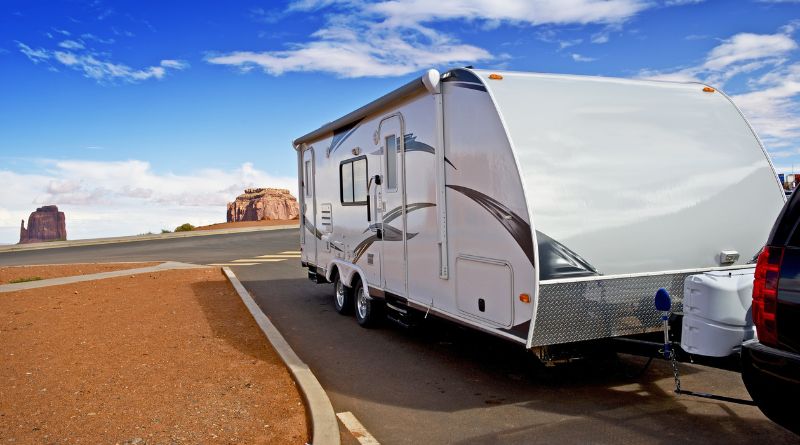
Also, since you’re primarily using your rearview and side mirrors to help judge distances and obstacles, it’s easy to misjudge or miss seeing important obstacles that may be located just outside your field of view This is particularly true if you’re backing up something large and in charge, like a camper, which basically obstructs your entire field of view the entire time.
Another issue with reverse trailering is that the ball hitch provides many opportunities along its circumference for your straight line to break and quickly veer off course. You’ve all seen someone backing up slowly and carefully, only to have the trailer suddenly and unpredictably act like it’s possessed and start making a beeline for the ditch.
And of course, the last — and possibly worst — challenge when it comes to reverse trailering is having an avid audience that always seems to have a smartphone at the ready to accurately capture every agonizing attempt to successfully maneuver. That really ups the ante on the anxiety factor, practically guaranteeing a screw-up.

Tips For Successful Reverse Trailering
1. Proper Equipment is Paramount
Your equipment matters, so make sure you have the proper hitch installed on your vehicle to safely tow whatever it is that you plan on moving.
Remember: This is not a one-size-fits-all kinda thing. If you’re not sure which hitch best suits your setup, then start with our selection guide. It will walk you through the different types, classes, and top manufacturers so you can hit the road with confidence.
For larger and bulkier cargo, like campers, you may want to install a backup camera on your trailer. These can be game changers when it comes to having another set of “eyes” to help you avoid obstacles and gauge distances while reversing.
As for the tow vehicle, you should definitely consider upgrading to extended tow mirrors — like this set from CURT Manufacturing. Quickly mounting on your side mirror, these tow mirrors instantly add 5.0 – 7.5 inches to your mirror, greatly opening up the view behind your rig and minimizing blind spots.

Lastly, if your vehicle comes equipped with any type of on-board towing technology, this can also make your life a lot easier. Consider including it in your next new vehicle purchase if you plan to do a substantial amount of towing or trailering.
2. Proper Preparation Matters Too
Before backing up any trailer, you should always do a pre-flight check of your equipment. Make sure your trailer tires are properly inflated and haven’t suffered any dry rot if they’ve been sitting for a season. Improper tire pressure can have a negative effect on handling and rolling resistance.
Make sure your trailer lights work, as well. (This one really irks us, and it’s illegal to tow a trailer without properly functioning lights.) Additionally, check the axles and the trailer tongue to ensure they’re in good working order. Lastly, adjust your mirrors to create a clear view that extends past the end of your trailer.
3. Picture Your Vehicle Pushing the Trailer
Getting your mind straight when it comes to backing up a trailer can be one of the toughest things to master at first, but it can be much easier if you simply realize that your vehicle and trailer are two independently moving components and not one cohesive unit. As you reverse, your vehicle is nudging the trailer in the opposite direction. As your car swings back to the left, this will push the trailer to the right.

4. Hold the Steering Wheel at the Bottom
Starting with your hand at the 6 o’clock position on your steering wheel is one of the best tips and tricks for successfully maneuvering a trailer backward. As you move your hand to the left, the trailer will go left. And vice versa, moving your hand up to the right will cause the trailer to go right.
When you turn as you’re backing up, your vehicle and trailer will form a V shape. The sharper you turn the wheel, the tighter the V will be, so take it slowly and if you get too tight, just pull forward to straighten out a little before trying again.
5. Look Over Your Shoulder
For larger cargo, roll down your windows and lean out a little so that you can maximize use of your side mirrors to get a wider field of view to keep track of your trailer’s movements.
6. Have a Spotter
Reverse trailering is best done with a helper to stand at the back of the trailer and help guide you. A good spotter will avoid using the terms “right” and “left”. Instead, have them say “driver’s side” or “passenger’s side”. Also, consider using hand signals if they’re in visual range. If not within visual range, chat with them via walkie talkie or cell phone to help guide you.

7. Go Slow
Backing up a trailer isn’t a race, especially for newbies. Hasty and abrupt movements will quickly dissolve into the chaos we’ve all witnessed on social media. You want to make slow, wide turns, but be careful not to go too wide, as this can cause your trailer to jack-knife.
If you do find yourself getting a little messed up, stop moving. Stay calm. Put the vehicle into drive and pull forward until you’re realigned properly and can try again. Breathe. Don’t let anyone else who is waiting for you get you worked up or cause you to rush.
8. Master the Swoop/Scoop
If you’re backing up into a tight parking space, driveway, or narrow campsite, try the “swoop” or “scoop” technique. It can help you get lined up perfectly for an easy and stress-free backing experience.
First, when approaching the spot you plan to back into to, drive toward it at an acute angle and get as close to it as you can. As the nose of your vehicle reaches the spot, swoop away from it and pull past it until the back end of your trailer is just to the end of the inside edge of the spot. This puts your inner rear trailer wheel at an ideal angle. Next, just turn your steering wheel and slowly reverse into the spot while straightening out. Remember to be alert and watch out for obstacles such as mailboxes, telephone poles, etc.
Having trouble visualizing that? Watch this video for a helpful demonstration.

9. Practice, Practice, Practice
If you have a new rig and setup that you’re unfamiliar with, or you’re new to trailering, take your trailer out to a large, open parking lot and practice backing up into various spots or aiming for certain landmarks. This can help get you comfortable with how your particular vehicle and trailer work together.
Turn to the Experts
As any gearhead or DIYer will tell you, finding the right tool for the job is half the battle. The same maxim applies to towing. Using subpar equipment is not only guaranteeing frustration but also potentially setting you up for disaster. Turn to a trusted source with a reputation for quality if you want to ensure you’re “tow-tally” prepared (sorry).

No matter what kind of tow vehicle you choose, CURT Manufacturing offers a complete line of towing products to accommodate its pulling power. From gooseneck, fifth wheel, and weight distribution hitches to electrical components, ball mounts, trailer balls, cargo carriers, bike racks, and those extended tow mirrors we pointed out above, it’s no wonder these guys are referred to as “The First Name In Towing Products.”
With a premium towing brand like CURT on board, you can drive easy knowing that your setup is safe and secure. To learn more about the brand and its long line of quality, American-made products, visit https://www.curtmfg.com/.


